Iraq Amid the U.S.–Israeli War on Iran: Strategic Dilemmas and the Kurdish Factor

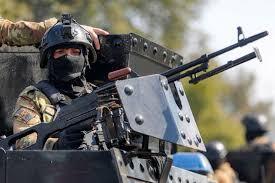
The U.S.–Israeli war against Iran, which erupted on February 28, 2026, placed Iraq in a complex political and security predicament. The caretaker government led by Prime Minister Mohammed Shia’ Al-Sudani, whose term had already expired, found itself tasked with managing the repercussions of this sharp regional escalation while attempting to prevent its spillover into Iraqi territory. This challenge emerged amid increasing activity by some factions of the Popular Mobilization Forces (PMF) aligned with Iran, which carried out military operations in support of Tehran. These operations targeted American facilities inside Iraq, including the U.S. consulate and an intelligence base in Erbil in the Kurdistan Region, in addition to attacks against U.S. diplomatic and military installations in neighboring countries such as Saudi Arabia and Jordan.
Within this context, restraining the movements of Iranian-aligned armed factions became a crucial task for the Iraqi government—not only to preserve internal stability but also to prevent Iraq from becoming part of the potential target list of joint U.S.–Israeli military operations. Failure to control these factions could lead to the direct transfer of the conflict onto Iraqi soil, with serious implications for the country’s security and political landscape.
Moreover, the expansion of confrontation risks exacerbating tensions among Iraqi political actors, particularly between Shiite armed factions and Kurdish political forces in the Kurdistan Region. This tension is further complicated by the nature of the Kurdistan Regional Government’s relations with the United States in economic, security, and intelligence fields, as well as channels of cooperation with Israel. These dynamics have heightened friction between Iraqi factions aligned with Iran and Kurdish political actors maintaining close ties with Washington.
These tensions were reflected in attacks targeting Erbil, which hosts American bases and intelligence centers involved in varying levels of security coordination with the United States and Israel. Such attacks represented responses by Iranian-aligned factions to what they perceived as American and Israeli attempts to exploit the presence of Iranian Kurdish opposition groups in the Kurdistan Region and encourage them to conduct operations inside Iran from Iraqi territory.
Historically, Erbil has frequently appeared on the target list of PMF factions during periods of U.S.–Iran tensions. The city has already faced several attacks in the years following the assassination of Iranian Quds Force commander Qassem Soleimani in 2020. At the same time, the Kurdistan Region has long served as a refuge for Iranian Kurdish opposition groups concentrated along the Iraq–Iran border. Their presence has traditionally been conditioned on refraining from launching attacks against Iran from Iraqi territory, similar to restrictions previously imposed on members of the Kurdistan Workers’ Party (PKK), which Turkey designates as a terrorist organization.
However, developments linked to the current U.S.–Israeli war against Iran have created a new reality in the Kurdistan Region. There are indications that Washington may seek to employ some Iranian Kurdish opposition forces as an additional pressure tool against Tehran from Iraqi territory. Should this occur, it could expose both the Kurdistan Region and Iraq as a whole to the risk of being drawn directly into the ongoing regional conflict.
Consequently, Iraq finds itself facing a highly complex equation involving multiple actors: the United States and Israel on one side, Iran on the other, alongside the Kurdistan Regional Government and the federal government in Baghdad. Within this intricate landscape, Baghdad’s main challenge is how to prevent Iraqi territory from becoming a direct battlefield for competing regional powers.
State Sovereignty Between Shiite Factions and the Kurdistan Region
Since the premiership of Mustafa Al-Kadhimi in May 2020 and continuing through the government of Mohammed Shia’ Al-Sudani, which concluded in November 2025, the question of imposing state authority over Iranian-aligned armed factions has remained one of the most complex challenges facing successive Iraqi governments. During his tenure, Al-Sudani managed to exert a limited degree of influence over some of these factions, which helped mitigate the repercussions of their regional military engagements—particularly during the twelve-day confrontation between Israel and Iran, backed by the United States, in June 2025.
However, the equation shifted dramatically following the assassination of Iran’s Supreme Leader Ali Khamenei on February 28, 2026, and the launch of joint U.S.–Israeli military operations against Iran. Under these circumstances, neutrality ceased to be a viable option for Iraqi factions aligned with Tehran. Many of these groups view participation in supporting Iran as both a political and ideological obligation, especially given Khamenei’s symbolic stature among many Iraqi Shiites. They also perceive the targeting of Iranian leadership and attempts to undermine Iran’s system of “Guardianship of the Jurist” as a direct threat to the Shiite political order established in Iraq after 2003.
In this context, the city of Erbil—the capital of the Kurdistan Region—has become a primary target for attacks by these factions, as it symbolizes Kurdish cooperation with the United States and Israel. Estimates suggest that tensions between Shiite factions and the Kurdistan Region may intensify in the near future, particularly if the regional government allows Washington to train or organize Iranian Kurdish opposition fighters on its territory for potential cross-border operations against Iran.
Employing the Iranian Kurdish Card via the Kurdistan Region
In early March 2026, U.S. President Donald Trump reportedly contacted Kurdish political leaders in the Kurdistan Region to gauge the regional government’s stance on the possibility of using its territory as a logistical platform for engaging Iranian Kurdish opposition groups. The concept involves transforming the Kurdistan Region into a base for training and arming these groups before sending them into Iranian territory. Such a development could effectively turn the region into an operational theater in the broader conflict and place it within the scope of potential Iranian retaliation.
On the ground, signs of this approach have already appeared through military strikes targeting areas along the Iraq–Iran border where PMF units are stationed. These strikes are widely interpreted as attempts to create operational space for Iranian Kurdish opposition forces to move toward Iran from the Kurdistan Region.
Challenges to Utilizing the Iranian Kurdish Card
Despite Washington’s interest in employing Iranian Kurdish opposition groups as part of its strategy against Tehran, several challenges could limit the effectiveness of this approach.
First, Iranian Kurdish factions remain wary of relying entirely on U.S. support, drawing lessons from the experience of the Syrian Democratic Forces in northeastern Syria. After years of partnership against ISIS, the United States significantly reduced its military backing for these forces in recent months, leaving them to negotiate new arrangements with the Syrian state. Consequently, the willingness of Iranian Kurdish groups to engage in a large-scale confrontation with Tehran will depend heavily on the political and military guarantees Washington is prepared to provide.
Second, regional sensitivities pose a major obstacle. Incorporating Iranian Kurdish groups into the conflict could trigger broader regional repercussions, particularly in Turkey and Syria, both of which host significant Kurdish populations with armed organizations. This could transform the wider Levant into a zone of ethnic tensions and prolonged instability.
Third, internal Iraqi dynamics present additional complications. Any American support for Iranian Kurdish opposition groups operating from Iraqi territory could exacerbate tensions between Shiite factions aligned with Iran and Kurdish political forces in the Kurdistan Region. Such tensions could spill into Iraq’s political institutions, potentially affecting parliamentary processes related to the election of the president—traditionally a Kurdish position—and the formation of Shiite-led governments.
Conclusion
Although attempts to utilize the Iranian Kurdish card through the Kurdistan Region have already begun to emerge, the likelihood that this strategy could produce a rapid collapse of the Iranian regime remains low in the near term. Instead, its most plausible outcome may be the emergence of a prolonged war of attrition along the Iraq–Iran border, supported by the geographical depth and logistical capabilities of the Kurdistan Region.
However, such a scenario could trigger continuous retaliation from Iranian-aligned Iraqi factions against the Kurdistan Region, further destabilizing Iraq’s fragile political balance. In the longer term, the continuation of the U.S.–Israeli war against Iran may place Iraq at a strategic crossroads, with significant implications for its internal political equilibrium and its position within the evolving regional conflict landscape.
Most read