China and Africa in the Context of International Transformations:

How Beijing Uses Economics and Politics to Reshape the Global Order
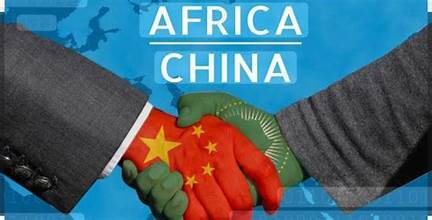
Over the past decades, Africa has become one of the principal arenas of international competition amid the accelerating transformations reshaping the global order and the rise of emerging powers seeking to redistribute global influence. Within this context, China has emerged as the most dynamic external actor on the continent, not only by expanding its economic presence, but also by constructing political, security, and strategic partnerships that reflect Beijing’s broader vision for a multipolar international system.
Sino-African relations extend far beyond conventional trade relations. They are deeply connected to a broader Chinese strategic project aimed at restructuring international balances of power and reducing the historical dominance of Western powers over Africa. Consequently, understanding China’s presence in Africa requires examining the structural transformations taking place in international politics, as well as the growing role of the “Global South” as a political and economic bloc seeking greater influence in global governance.
Africa as a Geopolitical Center in the International System
Africa possesses exceptional strategic importance due to its geographic location and its control over some of the world’s most critical maritime routes, including the Bab el-Mandeb Strait, the Suez Canal, the Strait of Gibraltar, and the Cape of Good Hope. As a result, the continent has become a pivotal arena in calculations related to maritime security, global trade, and energy flows. Regions such as the Sahel, the Horn of Africa, and the Gulf of Guinea have increasingly evolved into spaces of military and strategic competition among major powers.
Africa’s importance is not limited to its geopolitical position. The continent also possesses vast natural resources, including oil, gas, rare minerals, and extensive agricultural land. Africa contains significant reserves of gold, cobalt, uranium, and lithium, in addition to major oil and gas reserves in countries such as Libya, Nigeria, Algeria, and Angola. This reality has transformed Africa into one of the most strategically significant regions for industrialized powers dependent on African resources to sustain their economies and industries.
Despite this strategic significance, Africa continues to suffer from the legacy of Western colonialism, which contributed to economic fragility, political fragmentation, and border conflicts. Former colonial powers, particularly France and the United Kingdom, have maintained various instruments of influence across the continent through military bases, security interventions, and continued control over traditional economic structures.
The Historical Roots of Sino-African Relations
Sino-African relations are rooted in a long historical trajectory that dates back to the era of anti-colonial liberation movements during the 1950s and 1960s, when China supported African struggles against colonialism and presented itself as a partner of the Global South in confronting Western imperialism. This ideological dimension constituted one of the symbolic foundations upon which Beijing later built its relations with the continent.
Within this framework, Chinese leaders such as Mao Zedong and Zhou Enlai emphasized solidarity between China and Africa, linking African anti-colonial struggles to China’s own resistance against Western dominance. The Tanzania-Zambia Railway (TAZARA) became one of the earliest and most prominent symbols of China’s presence in Africa, widely regarded as a model of developmental cooperation independent from Western colonial influence.
However, with the economic reforms initiated in China during the late 1970s, the nature of the relationship gradually evolved from ideological solidarity toward strategic and economic pragmatism. Since the 1990s, Africa has increasingly become an essential extension of China’s global strategy, whether in securing resources, opening markets, or expanding diplomatic and political influence.
China’s Strategy in Africa: Economics as an Instrument of Influence
China adopted in Africa a model centered on investment, infrastructure, and economic cooperation, avoiding the political conditions that Western countries often attach to aid and loans. This approach enabled Beijing to present itself as a developmental partner that respects national sovereignty and refrains from interfering in domestic affairs.
Through the Forum on China-Africa Cooperation (FOCAC), established in 2000, China succeeded in building a broad institutional framework for engagement with Africa, significantly strengthening its political and economic presence. In addition, the Belt and Road Initiative (BRI) provided Beijing with a strategic platform to connect Africa to China’s transcontinental infrastructure projects, particularly in the sectors of ports, roads, railways, energy, and telecommunications.
China has indeed achieved a major economic breakthrough in Africa through large-scale infrastructure projects such as the Mombasa–Nairobi railway in Kenya, energy projects in Algeria and Nigeria, and digital communications initiatives in Ghana and the Democratic Republic of the Congo. These projects have not only strengthened China’s economic footprint but have also granted Beijing increasing political and strategic influence across the continent.
At the same time, China views Africa not merely as a source of raw materials, but also as a strategic partner in constructing the “Global South,” which Beijing seeks to mobilize in response to the international order led by the United States. Consequently, Sino-African cooperation has become closely associated with concepts such as the “community of shared future for mankind,” multipolarity, and reform of global governance institutions.
Africa within China’s Global Strategy
China approaches Africa as an essential component of its broader global project aimed at reshaping international balances of power. Beijing recognizes that broad influence across Africa provides significant political leverage within international institutions, particularly given Africa’s substantial voting bloc in the United Nations and other international organizations. Moreover, strengthening ties with African states enables China to expand international support for its positions regarding Taiwan, reform of the global economic system, and resistance to Western sanctions.
This strategic orientation has become increasingly important amid intensifying competition between China and the United States. Washington views China’s expansion in Africa as a direct challenge to American global influence, particularly given Beijing’s growing presence in the fields of energy, infrastructure, and telecommunications. In response, the United States has sought to reinforce its military and security presence on the continent through the establishment of the United States Africa Command (AFRICOM), while also expanding its political and economic partnerships with African governments.
Nevertheless, China continues to present itself as an alternative to the Western model through a discourse centered on “shared development” and “mutual benefit,” benefiting from growing African criticism of traditional Western policies associated with political and military intervention. Furthermore, the expansion of the BRICS group and the rise of non-Western economic blocs have provided China with greater opportunities to integrate its African partnerships into a broader global project challenging Western hegemony.
Conclusion
Sino-African relations reveal profound transformations in the structure of the contemporary international system, as Africa has become a central arena for the redistribution of global influence among major powers. China no longer views the continent merely as a source of raw materials, but rather as a strategic partner in its project to build a multipolar world order.
Although the Chinese model has gained broad acceptance in Africa due to its emphasis on development, infrastructure, and respect for sovereignty, China’s expanding presence simultaneously raises questions regarding the future of international competition on the continent and the possibility that Africa may become a new arena for geopolitical rivalry between East and West.
Ultimately, the future of Sino-African relations will depend largely on the ability of African states to exploit this international competition in support of their own developmental agendas, rather than once again falling into dependency on major powers, regardless of the rhetoric or instruments of influence they employ.
Most read