Has The War Against The United States Established Iran As A Regional Power In The Middle East?

Introduction
The geopolitical transformation of the Middle East during the last four decades cannot be understood without examining the rise of Iran as a major regional actor. Since the 1979 Islamic Revolution, the Islamic Republic of Iran has defined itself through resistance to American influence, opposition to Israel, and support for anti-Western political movements across the region. The antagonistic relationship between Tehran and Washington has become one of the defining axes of Middle Eastern politics. Through military confrontation, economic sanctions, proxy warfare, ideological mobilization, and diplomatic competition, Iran gradually evolved from a revolutionary state struggling for survival into a strategic actor capable of influencing political and military developments throughout the Middle East.
The central question, however, remains controversial: has the confrontation with the United States truly established Iran as a regional power? On one side, Iran has undeniably expanded its strategic reach through networks of allied militias and political organizations in Iraq, Syria, Lebanon, Yemen, and Palestine. It has developed advanced missile and drone programs, survived decades of sanctions, and demonstrated remarkable resilience against external pressure. According to Jones (2019), Iran’s regional strategy has succeeded in creating a broad sphere of influence extending from the Persian Gulf to the Mediterranean. On the other side, Iran continues to suffer from severe economic crises, diplomatic isolation, internal unrest, and military vulnerabilities. Critics argue that Iran’s influence depends less on sustainable leadership than on regional instability and asymmetric warfare (Marks, 2026).
This essay argues that the prolonged confrontation with the United States has indeed transformed Iran into a major regional power, but not into an uncontested hegemon. Iran’s rise rests primarily on strategic resilience, proxy warfare, ideological influence, and geopolitical opportunism rather than on economic supremacy or consensual regional leadership. The essay will examine the historical roots of Iran’s regional ambitions, the impact of the American invasions of Afghanistan and Iraq, the role of proxy networks, the significance of ideological resistance, the limitations imposed by sanctions and domestic crises, and the broader implications of Iran’s rise for Middle Eastern geopolitics.
Historical Foundations of Iran’s Regional Strategy
The Islamic Revolution and Anti-Americanism
The Islamic Revolution of 1979 marked a decisive turning point in Iranian and Middle Eastern history. Under Shah Mohammad Reza Pahlavi, Iran had been one of the closest allies of the United States in the region. The Shah’s regime was heavily dependent on American military support, economic assistance, and political backing. However, the revolution led by Ayatollah Ruhollah Khomeini transformed Iran into a revolutionary Islamic state fundamentally opposed to Western domination and American influence.
The seizure of the American embassy in Tehran in November 1979 symbolized the ideological rupture between the Islamic Republic and the United States. The new regime portrayed America as the “Great Satan” responsible for imperialism, exploitation, and moral corruption in the Muslim world. This anti-American discourse became central to Iran’s revolutionary identity and foreign policy (Takeyh, 2009).
Iran’s revolutionary leadership sought not merely to defend the revolution internally but also to export its ideological model throughout the Muslim world. Khomeini emphasized the concepts of Islamic unity, resistance against oppression, and the rejection of foreign domination. These themes resonated with segments of Arab and Muslim societies frustrated by authoritarian governments and Western intervention.
Yet the revolution also produced fear among neighboring Arab monarchies, particularly Saudi Arabia and the Gulf states. The revolutionary Shi‘i ideology of Iran was perceived as a direct challenge to Sunni monarchies and conservative political systems. This regional anxiety contributed significantly to the outbreak of the Iran-Iraq War in 1980.
The Iran-Iraq War and the Culture of Resistance
The Iran-Iraq War (1980–1988) profoundly shaped Iran’s strategic doctrine. Saddam Hussein’s Iraq, supported financially and militarily by Gulf monarchies and indirectly backed by Western powers, invaded Iran in an attempt to weaken the revolutionary regime. The war caused catastrophic human and economic losses, with hundreds of thousands killed and immense infrastructural destruction.
Despite these losses, Iran survived the conflict and emerged with a strengthened sense of revolutionary identity. The war fostered a political culture centered on sacrifice, martyrdom, resistance, and strategic self-reliance. According to Abrahamian (2008), the war transformed the Islamic Republic into a militarized state deeply suspicious of foreign powers.
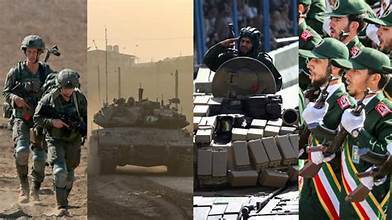
The conflict also taught Iranian leaders that conventional military competition with the United States or its regional allies was impossible. Consequently, Iran developed a strategy based on asymmetric warfare, missile deterrence, and non-state proxy actors. This doctrine later became the foundation of Iran’s regional expansion.
American Interventions and Iran’s Strategic Expansion
The Invasion of Afghanistan
Ironically, American military interventions after September 11, 2001 unintentionally strengthened Iran’s regional position. The U.S. invasion of Afghanistan overthrew the Taliban, a hostile Sunni extremist movement that had nearly gone to war with Iran in the late 1990s. Tehran initially cooperated indirectly with the United States against the Taliban because both shared an interest in eliminating the regime (Parsi, 2007).
he removal of the Taliban reduced pressure on Iran’s eastern border and allowed Tehran to increase its influence within Afghanistan through economic ties, political networks, and cultural diplomacy. However, the most significant geopolitical transformation occurred after the American invasion of Iraq in 2003.
The Iraq War and the Collapse of Regional Balance
The overthrow of Saddam Hussein represented perhaps the greatest strategic victory in modern Iranian foreign policy. Saddam had been Iran’s principal regional enemy, and his removal fundamentally altered the balance of power in the Middle East. The collapse of the Iraqi Ba‘athist regime created a political vacuum that Iran rapidly exploited.
Shi‘i political parties and militias with longstanding connections to Tehran became dominant actors in post-Saddam Iraq. According to Robinson and Merrow (2024), Iranian-backed groups gradually embedded themselves within Iraq’s political and security institutions. Iran thereby gained extraordinary influence over a neighboring Arab state that had once represented a major military threat.
American policymakers underestimated the extent to which the destruction of Iraqi state institutions would benefit Iran. Rather than weakening Tehran, the invasion enabled Iran to expand strategically without engaging in direct conventional warfare. As Mearsheimer and Walt (2007) observed, the Iraq War inadvertently removed one of the principal constraints on Iranian regional ambitions.
Iran’s Proxy Network and Asymmetric Power
Hezbollah and the Lebanese Model
One of the central pillars of Iranian regional influence is Hezbollah in Lebanon. Established during the Lebanese civil war with Iranian support, Hezbollah evolved into one of the most sophisticated non-state military organizations in the world. The group combines military capability, political participation, social services, and ideological mobilization.
For Iran, Hezbollah serves several strategic functions. First, it provides deterrence against Israel by maintaining the capacity to launch missile attacks in the event of war. Second, it allows Tehran to project influence into the Levant without direct military occupation. Third, Hezbollah represents a successful model of Iranian-backed resistance capable of challenging stronger conventional powers.
The 2006 war between Hezbollah and Israel significantly enhanced the prestige of both Hezbollah and Iran among segments of Arab public opinion. Despite massive destruction in Lebanon, Hezbollah’s survival was widely interpreted as a symbolic victory against Israel and indirectly against American regional dominance (Norton, 2007).
Syria and the Preservation of Assad
The Syrian civil war represented another major arena for Iranian power projection. When protests against Bashar al-Assad escalated into armed conflict, Iran intervened decisively to preserve the Syrian regime. Tehran provided financial assistance, military advisers, weapons, and foreign Shi‘i militias recruited from Iraq, Afghanistan, and Pakistan.
Iran viewed the survival of Assad as strategically essential because Syria constituted the geographic bridge connecting Tehran to Hezbollah in Lebanon. The collapse of the Syrian regime would have severely weakened Iran’s regional network. Consequently, Tehran invested enormous resources into the conflict.
According to Jones (2019), Iranian intervention in Syria demonstrated the effectiveness of Tehran’s proxy warfare strategy. Iran avoided large-scale conventional deployment while leveraging local militias and allied groups to achieve strategic objectives.
However, Iran’s role in Syria also intensified sectarian tensions across the region. Many Sunni Arabs perceived Tehran’s intervention as evidence of Shi‘i expansionism rather than anti-imperialist resistance. This perception damaged Iran’s image in much of the Arab world.
Yemen and the Houthis
Iran’s support for the Houthi movement in Yemen further illustrates its strategy of asymmetric regional influence. Although the relationship between Tehran and the Houthis differs from the Hezbollah model, Iranian assistance enabled the Houthis to challenge Saudi Arabia militarily and politically.
The Yemen conflict became a proxy battleground between Iran and Saudi Arabia. Through relatively limited investment, Iran succeeded in forcing Riyadh into a prolonged and costly war. The Houthis also demonstrated the growing importance of drone and missile warfare in Iran’s strategic doctrine.
Iran’s Ideological and Strategic Influence
The “Axis of Resistance”
Iran frequently presents its regional strategy through the concept of the “Axis of Resistance,” which includes Iran, Hezbollah, the Syrian regime, Iraqi militias, Palestinian factions, and the Houthis. This alliance is framed ideologically as a coalition resisting American imperialism and Israeli occupation.
The discourse of resistance has provided Iran with significant symbolic power. Many populations across the Middle East admire Iran’s refusal to submit to American pressure. Tehran’s support for Palestinian groups, particularly Hamas and Islamic Jihad, reinforced its image as a defender of the Palestinian cause.
According to Dabashi (2011), Iran’s ideological influence derives not merely from Shi‘i identity but also from broader anti-imperialist narratives appealing to populations frustrated with Western intervention.
Strategic Deterrence
Iran’s military doctrine focuses heavily on deterrence through asymmetry. Recognizing the superiority of American and Israeli conventional forces, Tehran developed capabilities designed to impose costs on adversaries rather than achieve decisive battlefield victories.
These capabilities include ballistic missiles, drones, cyber warfare, maritime disruption, and proxy militias. Iran’s ability to threaten shipping routes in the Strait of Hormuz gives it additional strategic leverage because a substantial portion of global energy exports passes through this corridor.
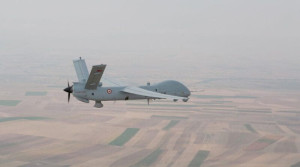
The development of drone warfare particularly enhanced Iran’s regional influence. Iranian drones supplied to allied groups in Iraq, Yemen, Lebanon, and elsewhere transformed regional conflict dynamics by providing relatively inexpensive yet effective military capabilities.
Limitations of Iranian Power
Economic Crisis and Sanctions
Despite its regional successes, Iran suffers from severe structural weaknesses. Decades of American sanctions have damaged the Iranian economy profoundly. Restrictions on oil exports, banking systems, investment, and international trade contributed to inflation, unemployment, and currency devaluation.
Spruk (2026) argues that long-term confrontation with the West significantly undermined Iran’s economic development and institutional stability. Although sanctions failed to produce regime collapse, they imposed enormous social and economic costs.
The contradiction between regional expansion abroad and economic hardship at home increasingly generates domestic dissatisfaction. Many Iranians question why the government spends vast resources supporting foreign militias while living standards decline domestically.
Domestic Unrest
Iran has experienced repeated waves of domestic protest in recent years. Demonstrations related to economic grievances, political repression, and social freedoms reveal growing frustration among segments of the population.
The protests following the death of Mahsa Amini in 2022 highlighted tensions between the state and younger generations demanding greater freedoms and accountability. According to Jahromi and Jaskolka (2026), the Iranian government increasingly relies on internet shutdowns and surveillance to suppress dissent.
These internal challenges complicate Iran’s regional ambitions. A state facing serious domestic instability may struggle to sustain long-term geopolitical competition.
Diplomatic Isolation
Iran’s regional influence also faces diplomatic limitations. Many Arab governments perceive Tehran as a destabilizing force interfering in domestic affairs through militias and sectarian politics. Iran’s relationships with Saudi Arabia, Bahrain, and other Gulf monarchies remain characterized by mistrust despite occasional diplomatic normalization efforts.
Furthermore, Iran lacks the economic attractiveness and global integration enjoyed by Gulf states such as Saudi Arabia, Qatar, and the United Arab Emirates. These states increasingly project influence through investment, infrastructure, finance, tourism, and technology rather than revolutionary ideology.
Marks (2026) argues that Gulf monarchies now represent an alternative model of regional leadership based on economic indispensability rather than military militancy.
Iran in an Emerging Multipolar Order
Relations with Russia and China
Facing Western isolation, Iran increasingly turned toward Russia and China. Cooperation with Russia deepened significantly during the Syrian conflict, where both states supported Assad militarily. Strategic coordination with Moscow enhanced Iran’s regional standing and demonstrated Tehran’s ability to operate within broader anti-Western coalitions.
Relations with China also expanded considerably. Beijing became one of Iran’s principal economic partners and energy customers. China’s growing role in Middle Eastern diplomacy, including mediation between Iran and Saudi Arabia, reflects broader global shifts toward multipolarity.
Iran’s integration into organizations such as BRICS and the Shanghai Cooperation Organization indicates Tehran’s efforts to reduce dependence on Western economic systems and participate in emerging Eurasian geopolitical structures.
Scientific and Technological Development
Despite sanctions, Iran achieved notable progress in scientific and technological sectors. Moed (2016) notes that Iran became one of the leading scientific producers in the Middle East in terms of research output.
Iran also invested heavily in indigenous missile, drone, and cyber capabilities. Although sanctions constrained technological development, they simultaneously encouraged domestic innovation and self-reliance in strategic sectors.
Is Iran a Regional Power?
The answer depends largely on how regional power is defined. If regional power means the ability to shape conflicts, project military influence, survive external pressure, and influence political outcomes beyond national borders, then Iran unquestionably qualifies as a regional power.
Iran’s influence extends across Iraq, Syria, Lebanon, Yemen, and Palestine. Its proxy networks, missile capabilities, and ideological narratives allow Tehran to challenge stronger conventional adversaries. Even the United States and Israel must calculate Iranian reactions carefully before undertaking regional actions.
However, if regional power implies uncontested hegemony, economic dominance, broad regional legitimacy, and stable leadership accepted by neighboring states, Iran falls short. Its economy remains fragile, its diplomatic relations are often confrontational, and its influence frequently depends on instability rather than consensual authority.
Iran therefore represents a paradoxical form of power: strategically influential yet economically constrained, militarily resilient yet diplomatically isolated, ideologically assertive yet regionally contested.
Conclusion
The prolonged confrontation with the United States fundamentally transformed Iran’s position in the Middle East. Through resilience, asymmetric warfare, proxy alliances, ideological mobilization, and geopolitical opportunism, Tehran evolved into one of the most influential actors in the region. American interventions in Afghanistan and Iraq unintentionally facilitated Iran’s expansion by removing hostile regimes and creating political vacuums that Tehran successfully exploited.
Iran’s regional strategy proved remarkably effective in several arenas. Hezbollah in Lebanon, militias in Iraq, intervention in Syria, and support for the Houthis in Yemen collectively enabled Tehran to establish a broad sphere of influence extending across the Middle East. Iran also developed sophisticated missile and drone capabilities that enhanced deterrence against stronger conventional adversaries.
Nevertheless, Iran’s rise remains incomplete and deeply contradictory. Severe economic crises, sanctions, domestic unrest, diplomatic isolation, and regional backlash limit Tehran’s ability to transform strategic influence into sustainable hegemony. Iran can disrupt regional order and impose costs on adversaries, but it has not established a stable and widely accepted regional leadership.
Thus, the war against the United States established Iran not as the uncontested master of the Middle East, but as an unavoidable regional power whose influence shapes every major geopolitical equation in the region. Iran’s strength lies less in domination than in resilience, strategic patience, and the capacity to exploit instability in a fragmented Middle East.
References
-
Abrahamian, E. (2008). A history of modern Iran. Cambridge University Press.
-
Dabashi, H. (2011). Brown skin, white masks. Pluto Press.
-
Jahromi, A. S., & Jaskolka, J. (2026). A multi-perspective study of the internet shutdown in Iran. arXiv.
-
Jones, S. G. (2019). War by proxy: Iran’s growing footprint in the Middle East. Center for Strategic and International Studies.
-
Marks, J. (2026). Iran’s instability and the Gulf’s indispensability. Royal United Services Institute.
-
Mearsheimer, J., & Walt, S. (2007). The Israel lobby and U.S. foreign policy. Farrar, Straus and Giroux.
-
Moed, H. F. (2016). Iran’s scientific dominance and the emergence of South-East Asian countries as scientific collaborators in the Persian Gulf region. Scientometrics, 110(1), 305–344.
-
Norton, A. R. (2007). Hezbollah: A short history. Princeton University Press.
-
Parsi, T. (2007). Treacherous alliance: The secret dealings of Israel, Iran, and the United States. Yale University Press.
-
Robinson, K., & Merrow, W. (2024). Iran’s regional armed network. Council on Foreign Relations.
-
Spruk, R. (2026). Confrontation with the West and long-run economic and institutional outcomes: Evidence from Iran. arXiv.
-
Takeyh, R. (2009). Guardians of the revolution: Iran and the world in the age of the ayatollahs. Oxford University Press.
Most read