
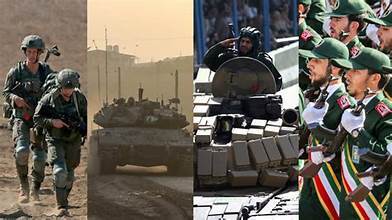
Although the memorandum of understanding signed between the United States and Iran in Islamabad was ostensibly designed to end a months-long war and open a new diplomatic track between the two sides, recent remarks by Iranian Parliament Speaker and chief negotiator Mohammad Bagher Ghalibaf reveal that the real battle has shifted from the battlefield to the realm of political narratives—specifically, the struggle to define who emerged victorious and who suffered defeat in one of the most consequential confrontations the Middle East has witnessed in recent decades.
When Ghalibaf describes the memorandum as a “declaration of America’s defeat,” he is not merely commenting on the outcome of the recent conflict. Rather, he is seeking to consolidate an Iranian narrative that portrays Tehran as having withstood immense military, economic, and political pressure and succeeded in establishing itself as an indispensable actor in any future regional order.
Yet behind these triumphalist statements lies a far more complex reality than either side is willing to publicly acknowledge. Major points of contention remain unresolved, and the current agreement appears closer to a framework for managing conflict than to a comprehensive settlement of its underlying causes.
Iran and the Reproduction of the “Resistance” Narrative
Iran’s leadership understands that any agreement reached after a costly war must be presented domestically as a political and strategic victory.
The Iranian establishment cannot afford to appear as though it was forced into concessions by military pressure or economic sanctions. Consequently, Ghalibaf’s statements emphasized that the agreement was not the product of coercion but rather the result of “resistance” and national steadfastness.
This narrative is particularly important given the internal challenges Iran has faced in recent years—economic hardship, social discontent, and political pressures. The regime needs to convince its domestic audience that the conflict did not end in defeat or strategic retreat, but instead culminated in American recognition of Iran’s regional role and influence.
At the same time, a more realistic reading suggests that Tehran’s willingness to return to technical negotiations on the nuclear program, sanctions, and verification mechanisms is itself an acknowledgment that continued confrontation was becoming increasingly unsustainable.
Washington: Managing the Crisis Rather Than Winning It
For its part, the United States appears less concerned with debates over victory and defeat than with preventing the conflict from evolving into a prolonged regional war that could threaten American interests and destabilize the global economy.
Washington recognizes that the war generated significant disruptions in energy markets and international trade. Any renewed escalation in the Strait of Hormuz could once again push oil prices to levels that would endanger global economic stability and carry political consequences within the United States itself.
This helps explain why the U.S. administration has moved quickly from military operations to technical negotiations. The primary American objective was not necessarily regime change in Tehran or the forcible redrawing of the regional map. Rather, it was to contain security threats and establish new rules of engagement that would reduce the likelihood of future escalation.
The most immediate indicator of this strategy was the decline in oil prices and the gradual normalization of shipping traffic through the Strait of Hormuz following the agreement—clear evidence of Washington’s emphasis on restoring stability to global energy markets.
The Strait of Hormuz: The Next Arena of Competition
If military confrontation has temporarily subsided, the political and strategic struggle appears to have shifted to the Strait of Hormuz.
The exchange of statements between Tehran and Washington regarding future maritime arrangements reveals that the dispute extends far beyond technical questions of shipping fees or navigation procedures. At its core lies a larger question: who exercises meaningful influence over one of the world’s most critical maritime chokepoints?
For Iran, the Strait represents a strategic asset that amplifies its regional leverage. For the United States, any attempt to impose special transit arrangements or fees challenges the principle of freedom of navigation and could set a precedent with global implications.
As a result, the Hormuz file may become the first major test of whether the political understanding reached between the two sides can be translated into practical and sustainable arrangements.
Lebanon: From Battlefield to Negotiating Table
Ghalibaf’s remarks concerning Lebanon highlight an important shift in the nature of the ongoing negotiations.
Iran’s insistence on linking a ceasefire in Lebanon to the broader agreement with Washington reflects its belief that the region’s security theaters are interconnected and cannot be addressed in isolation.
In other words, Tehran seeks to expand the scope of negotiations to encompass the broader regional security architecture, while Washington appears intent on limiting discussions to core bilateral issues and addressing certain regional conflicts through separate channels.
This divergence points to a deeper disagreement regarding the shape of the post-war regional order: whether it should be based on comprehensive understandings or on incremental, issue-specific arrangements.
The Nuclear Issue: The Unresolved Core
Despite the importance of regional matters, Iran’s nuclear program remains the most sensitive and consequential issue on the negotiating agenda.
Uncertainty surrounding Iran’s stockpile of highly enriched uranium following recent military strikes, combined with disagreements over the return of International Atomic Energy Agency (IAEA) inspectors, demonstrates that the two sides remain far from a definitive resolution.
Tehran appears determined to avoid any arrangement that could be portrayed domestically as surrendering to American demands. Meanwhile, Washington continues to insist on robust verification and monitoring mechanisms capable of preventing the nuclear program from returning to trajectories that could raise international concerns.
Consequently, the success of the upcoming technical negotiations will depend largely on the ability of both parties to strike a balance between Iran’s demands for sovereignty and the international community’s requirements for transparency and oversight.
From Ending the War to Reshaping the Region
The true significance of the Islamabad Memorandum lies not merely in ending hostilities, but in its potential to mark the beginning of a broader process of regional realignment.
Iran is seeking to leverage the agreement to reinforce its position as an indispensable regional actor. The United States, meanwhile, hopes to transform the understanding into a foundation for greater stability while reducing the burdens associated with direct military engagement in the Middle East.
The growing diplomatic role of Pakistan, Qatar, and Oman also reflects an emerging trend in regional crisis management—one that relies increasingly on a network of regional and middle-power mediators rather than exclusively on major global powers.
Conclusion
Despite Iranian rhetoric portraying the Islamabad Memorandum as a “declaration of America’s defeat,” the reality suggests that both sides ultimately reached a common conclusion: the costs of continuing the war had become greater than the costs of compromise.
The agreement therefore reflects less a victory for one side over the other than the emergence of a new balance of power shaped by mutual exhaustion and strategic necessity.
The real challenge, however, lies not in signing the agreement but in implementing it. The most difficult issues—from the nuclear program and the Strait of Hormuz to Lebanon and the sanctions regime—remain unresolved. The coming weeks will therefore test not only the durability of the agreement itself, but also the broader capacity of the Middle East to move from a logic of war toward a logic of regional reconstruction and strategic rebalancing.
Most read