A World “Hanging by a Thread”: Have the Great Powers Lost Their Minds?
In the silent corridors of the United Nations, and amid the relentless noise of global oil markets, there is one word whispered by delegations in 2026: fluidity. Not the liquidity of money, but the fluidity of positions and loyalties. We are not merely living through a passing political “crisis”; rather, we are experiencing what may be called the Great Global Disorder—an era in which the old rules have burned away, while the new rules have yet to be written.
A Game of Musical Chairs
For decades, the world functioned according to a clear “catalogue”: everyone knew who stood with whom, and who stood against whom. Today, the map looks as though a child has splashed paint across it. One finds Country A buying weapons from the East, investing its wealth in Western banks, and mediating peace deals in the South. This is not confusion—it is tightrope diplomacy, imposed by a reality in which no one trusts grand promises anymore.
United States is no longer the protective “umbrella” shielding everyone from the rain, and China is no longer merely the “factory of the world” seeking commercial peace. It has become a power that places its conditions firmly on the table. Between the two, fierce regional powers are emerging—refusing to remain mere chess pieces and demanding instead to move the pieces themselves.
Strategic Straits: The World’s Tense Nerves
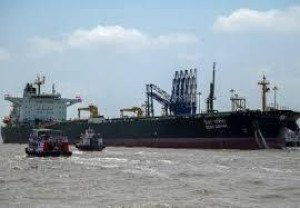
What is happening today in the Strait of Hormuz or Bab el-Mandeb Strait is not simply military skirmishing; it is a global game of brinkmanship. When a general threatens to close a maritime passage, he is not threatening a ship alone—he is threatening the price of bread in a remote African village, and making a European citizen think twice before turning on the heat.
We have discovered, to our alarm, that the nerve system of modern civilization hangs by fragile threads of maritime security. The Artificial Intelligence and technological progress we boast about could collapse entirely if a stray missile strikes an oil tanker in a narrow waterway.
Humanity: The Forgotten Number
What is most tragic in this disorder is that the ordinary person has become the real currency paid in great-power struggles. We speak of geopolitics and balances of power, forgetting that behind every interest rate hike or imposed blockade stands a father unable to secure milk for his children, or a young man watching his future evaporate in conflicts that are none of his making.
We are living in an age of rough diplomacy—where words are polished, but actions are cruel. Everyone speaks of peace, while everyone increases military spending. Everyone speaks of the environment, while everyone races to extract the last drop of oil to finance the next war.
The real question is not “Who will win?” In this kind of total disorder, the winner is merely the one who loses less than the others.
What the world needs is an international breathing space—a moment of honesty in which leaders realize that the Earth is far smaller than their ambitions, and that if this disorder continues, it will leave no one behind to rule it.
The world of 2026 is not searching for a superhero to save it. It is searching for reason—before one misstep sends us all into an abyss with no bottom.
Most read


Read also