The Sovereignty Struggle in Southern Lebanon Between Israel and Hezbollah

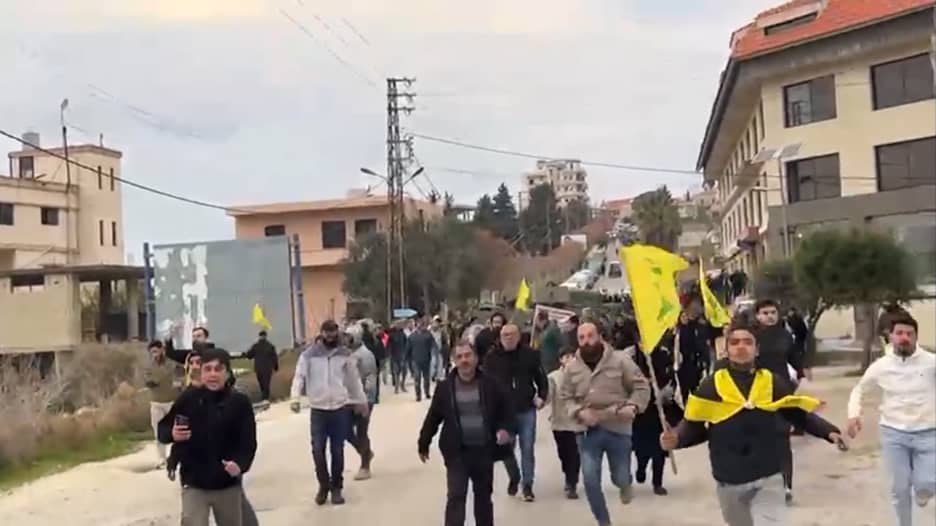
The recent remarks made by Israeli Prime Minister Benjamin Netanyahu, in which he claimed that several Christian villages along Lebanon's southern border had sought annexation to Israel, triggered widespread rejection and condemnation across Lebanon's political and social landscape, particularly within the communities concerned. Municipal councils and local leaders swiftly issued coordinated statements categorically denying these allegations and reaffirming that the future of these communities can only exist within the framework of the Lebanese state and its sovereignty. Yet, the significance of this episode lies less in the veracity of the Israeli claim than in the political and strategic messages Israel sought to convey through such statements, particularly given their timing amid a highly sensitive phase in which southern Lebanon is undergoing a reconfiguration of its security and political landscape following the latest war between Israel and Hezbollah.
Netanyahu's remarks appear to constitute an extension of Israel's psychological and information warfare strategy rather than a genuine political project aimed at territorial annexation. From both legal and political perspectives, Israeli decision-makers are well aware that any attempt to annex Lebanese territory would encounter overwhelming international opposition while further escalating tensions with Lebanon and the broader international community. Consequently, the primary objective behind these statements is to construct a new political narrative suggesting that certain segments of Lebanese society increasingly perceive Israel as a more reliable provider of security and stability than the Lebanese state itself. Such a narrative serves to deepen Lebanon's internal divisions while simultaneously undermining the state's legitimacy before both domestic and international audiences. Furthermore, Israel seeks to employ this narrative to justify its continued military presence in parts of southern Lebanon by portraying it as a necessary security measure to protect local communities from Hezbollah, rather than as an ongoing military occupation of Lebanese territory.
The response from the Christian border communities, however, carried political implications that extended well beyond simply rejecting Israel's narrative. Municipal authorities and local leaders reaffirmed their unwavering commitment to the Lebanese state as the sole legitimate authority while firmly rejecting any attempt to exploit the suffering of southern Lebanese communities in pursuit of external political agendas. At the same time, their statements conveyed a powerful message to Lebanon's domestic political establishment by exposing growing frustration over the state's inability to exercise full sovereignty over its border regions. Residents emphasized that while their loyalty to Lebanon remains unquestionable, they increasingly feel abandoned by state institutions and left alone to bear the consequences of a prolonged conflict shaped by both Israel's continued military occupation of certain areas and the persistence of weapons operating outside the authority of the state. As a result, these communities have spent decades trapped between two competing military actors over whom they exercise little influence.
The current crisis has exposed a significant paradox. While residents of these villages unequivocally reject Israeli occupation, they have also become increasingly vocal in criticizing the continued existence of armed groups operating beyond state authority. Testimonies from local residents indicate that the latest conflict once again demonstrated that southern Lebanon continues to bear the costs of the confrontation between Israel and Hezbollah, while the absence of a unified national security decision leaves civilians as the primary victims of every military escalation. Consequently, the discourse emerging from these communities should not be interpreted as support for either side of the conflict but rather as an expression of a growing desire to restore the Lebanese state's natural role as the sole institution entrusted with managing national defense, security, and the protection of its citizens.
Developments on the ground further reveal what may be described as a "sovereignty vacuum" in southern Lebanon, where multiple actors exercise varying degrees of authority without any possessing the capacity to establish lasting stability. Israeli forces continue to maintain military positions across several border areas while imposing strict restrictions on civilian movement. Hezbollah's military activity has significantly declined following the ceasefire agreement, yet Lebanese state institutions remain unable to fully reestablish their presence throughout the region. Consequently, local communities have been compelled to manage their daily affairs amid the near absence of effective state institutions, deepening uncertainty and further weakening the region's already fragile social and economic environment.
The consequences of this crisis extend well beyond security considerations to encompass severe humanitarian and economic dimensions. Border villages continue to suffer from deteriorating public services, inadequate healthcare infrastructure, limited access to essential facilities, and stringent restrictions on the movement of both people and goods. Agriculture, which represents the principal source of livelihood for much of the local population, has sustained substantial losses due to ongoing security tensions and extensive damage to farmland. Under these conditions, humanitarian assistance has become the principal lifeline for many communities, while growing concerns persist that the continuation of the current situation could trigger a new wave of migration with profound long-term implications for the demographic composition of Lebanon's border regions.
At the same time, the ceasefire agreement reflects a highly complex security equation that makes the restoration of lasting stability difficult to envision in the foreseeable future. The agreement links Israel's withdrawal from occupied territories to the disarmament of Hezbollah south of the Litani River, while Israel insists that its forces will remain deployed as long as Hezbollah continues to pose what it considers a security threat. The implementation of the agreement has therefore become trapped within a circular dilemma: Israel refuses to withdraw before Hezbollah is disarmed, Hezbollah rejects any final settlement prior to a complete Israeli withdrawal, and the Lebanese state lacks the political and military capacity to impose either outcome. This dynamic leaves southern Lebanon suspended in a prolonged state of uncertainty that could endure for years.
Amid these complexities, the United Nations Interim Force in Lebanon (UNIFIL) continues to perform an important role by clearing debris, facilitating humanitarian assistance, and supporting the rehabilitation of essential infrastructure. Nevertheless, the nature of its mandate and the limitations imposed upon its operational authority prevent it from addressing the underlying political and security drivers of the crisis. Its contribution therefore remains largely confined to mitigating humanitarian suffering and reducing immediate security risks, without possessing the means necessary to produce a strategic transformation of conditions on the ground.
Taken together, these developments demonstrate that the current crisis extends far beyond a dispute over controversial political statements or allegations concerning the annexation of border villages. Rather, it reflects the deeper structural crisis facing the Lebanese state itself and highlights the immense challenges confronting its efforts to restore full sovereignty and reclaim the exclusive monopoly over the legitimate use of force. More fundamentally, the conflict in southern Lebanon can no longer be understood solely as a confrontation between Israel and Hezbollah. It has evolved into a broader struggle over the future of the Lebanese state, the scope of its authority, and the security order that will shape southern Lebanon in the years ahead. Caught between Israeli occupation, the persistence of weapons outside state control, and the government's inability to provide security and essential services, the residents of Lebanon's border villages find themselves confronting an increasingly complex reality—one that reinforces both their unwavering national identity and their growing conviction that genuine and lasting stability can only be achieved through the full restoration of the Lebanese state's authority as the sole guarantor of sovereignty, security, and national unity.
Most read