The Gulf In The Gulf

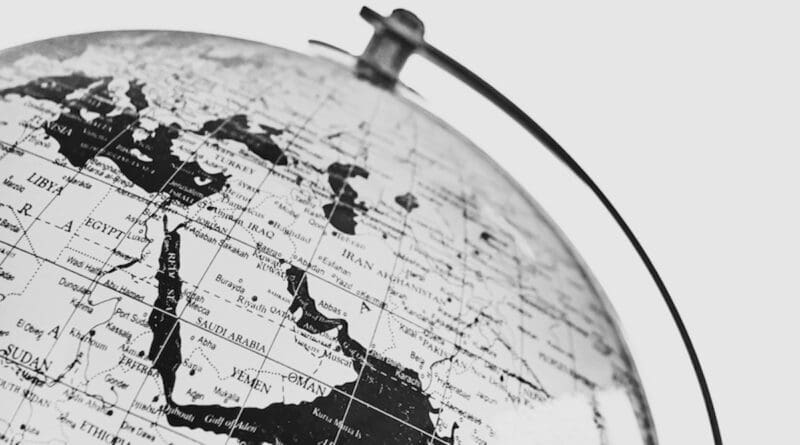
The war in West Asia ricochets between a state of tenuous ceasefire and aggressive bombing. The Memorandum of Understanding (MOU) that was signed between the U.S. and Iran and the framework agreement signed between Israel and Lebanon under the umbrella of the U.S. were baby steps taken to bring some semblance of normalcy in the region, but the reality overwhelmed even those tentative efforts. The fragility of the situation can be gauged from the fact that firing of drones and missiles took place on June 26, 2026, after the framework agreement was signed. Threats and counter-threats have become the norm.
A recent visit to Israel shows the damage but also allows for a revisiting of the original attack in Nova on October 7, 2023, that led to the retaliation and subsequent escalation of the conflict that has had a global impact.
Surprisingly, despite the war, Israel continues to build its cities. There is an enormous amount of new residential construction in Tel Aviv, with the skyline full of cranes, and the strict security measures are very visible. Given Israel’s proximity to countries that are inimical to its existence, these measures are necessary.
The October 7 incident, which the al-Qassam brigades launched during a concert in Nova, which is close to the Gaza border, has left a deep scar on the Israeli psyche. It was a turning point in the relations between Israel and other countries in West Asia. The actions that Israel took after that incident are seen as a response to that incident.
For India, there is deep respect. Prime Minister Modi had sent a tweet sympathising with Israel’s grief right after October 7, and it was followed by a state visit on February 25-26, 2026, just two days before Israel launched its retaliatory attack on Iran. This has played a role in the genuine thankfulness and gratitude for India’s support and relations with Israel. There are expectations from India to influence Saudi Arabia and Qatar to see Israel’s viewpoint and to rework the international laws and the Geneva Convention with other friendly countries. This has not transpired.
A visit to a kibbutz is an eye-opener and necessary to understand the Israeli way. Residents of a kibbutz lead a secluded life away from the cities, and they are well-organised and self-sufficient. The facilities in the kibbutz include a common dining hall, a small medical facility, an elementary school and a play area. For higher classes, a school services two or three adjoining kibbutzim. Each kibbutz has safe places to go to when the sirens are sounded. Each also has a first responder team of 10-15 persons armed with personal weapons.
The arming is necessary, as many Israelis, particularly those living in kibbutzim bordering Gaza, Lebanon, and Syria, feel victimised and do not derive much hope for peace from the U.S.-Iran MOU. The absence of Israel in the MOU has created the impression that Israel’s position in the U.S. is weakening. Self-defence and self-preservation have therefore become the dominant tasks. The checkpoints at Gaza, from where 600 trucks pass per day with supplies to Gazans, undergo strict checking, and no unwanted items like explosives, weapons, or portable generators pass through.
The Israelis say the offensive in Lebanon was necessary, as Hezbollah possessed 150,000 missiles all aimed at Israel. There is keenness to disarm Hezbollah, but no clear indication of how to achieve it, though they feel incentives could work. For now, the framework agreement between Israel and Lebanon is seen as a positive. On Hamas, Israel believes it should be disarmed by force. Threats from Gaza, the West Bank and Syria continue to exist.
Israelis would like to get back to their daily lives. Since the war, the cost of living in Israel has risen. The average monthly income of a middle-class family at $4,000 per month is stretched, and taxes are at 50%, among the highest in the world. The youth tend to marry late, but they believe in having children – a stark contrast to other developed and even developing countries. There is widespread apprehension about the present regime coming back to power in the next elections.
Regionally, there is tremendous change. It is clear that Iran retains the ability to go nuclear despite attacks on its nuclear installations by the U.S. and Israel. Iran is estimated to have 440 kgs of enriched uranium, and with that in its pocket, the regime is expected to become more hardline.
Not unnoticed by the West Asian powers is China’s assistance to Iran in the recent conflict, through the supply of parts and chemicals for manufacturing the missiles and intelligence.
New formations of countries are taking place, either as interlocutors, participants or victims of the war, and a new alphabet soup of influencers is noticeable. For example, PEST (Pakistan, Egypt, Saudi Arabia, Turkey), TIQ (Turkey, Iraq, Qatar) and the Diplomatic Group of Eight with Jordan at the core of activities. The UAE’s leaving OPEC gives it individual standing. All these create a sense of uncertainty in the region, and there is a perceptible apprehension about Qatar because of the role it plays in funding Hamas and Al Jazeera.
Saudi Arabia, which sees itself as a regional power in West Asia, has witnessed a change in position in the course of the crisis. Domestically, implementation of Saudi Arabia’s Vision 2030 is falling short of expectations. Regionally, it is also looking for new friends like Qatar, Pakistan and Egypt.
Despite the positive Western press, Pakistan as an interlocutor for peace is clearly a country fishing in troubled waters. After being reminded that it had to adhere to its defence agreement with Saudi Arabia, Rawalpindi placed a division and a squadron of fighters in Riyadh. In addition, it has forces placed in Qatar earlier and now also in Yemen. All this is inimical to itself, considering its internal security situation is precarious, with an attack on Gwadar killing 30 Pakistani Coast Guard personnel on July 3, 2026, the border issue with Afghanistan flaring up on a weekly basis and the protests in Pakistan-occupied Kashmir.
The Gulf is now in a conundrum. The Gulf Cooperation Council, which was established in 1981, will function sub-optimally due to the internal friction between the member states. The UAE’s leaving OPEC has not helped. The expectation that Iran will be neutralised by the U.S. and Israel has been belied. The countries that hosted U.S. bases in the Gulf, which are targeted by Iran every day, are in a dilemma on how to view and manage their alliances with Washington. The hope that the Abraham Accords will include more countries from West Asia has been shattered – and with it, the operationalisation of the ambitious IMEC, the India-Middle East-Europe Economic Corridor that was to be an alternate connectivity offering to China’s Belt and Road Initiative. The Saudi Arabia-Iran agreement that was signed at the behest of China in 2023 has been wrecked due to the recent crisis. The internal dynamics between the countries of the GCC add to the problem.
With Iran effectively able to control the Strait of Hormuz and Bab El Mandeb through its proxies, it may be pragmatic for the West Asian countries to consider a better relationship with Iran. Its proxies in the region have little to lose by keeping the West Asia pot boiling.
Originally Published on: Gateway House
Most read