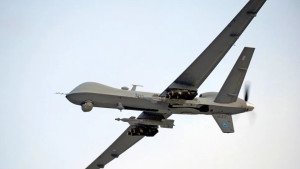


The latest Israeli strike on the Abu al-Duhur airbase in northern Syria was not merely another operation in the long series of Israeli strikes inside Syrian territory. Rather, it reveals a more dangerous shift in the nature of the struggle over the new Syria. The location of the target, its proximity to the Turkish border, the political and military circumstances surrounding the attack, and the unusually strong American warning that a lack of coordination between Israel and Turkey could lead to a direct confrontation all indicate that the competition between Ankara and Tel Aviv is moving from a struggle over influence toward a far more sensitive contest involving military deployments, airspace management, and rules of engagement.
The statements by Tom Barrack, the U.S. Special Envoy for Syria and Iraq and U.S. Ambassador to Turkey, are particularly significant in this context. When a senior American official warns that sending aircraft into a border area “without notification and without agreement” constitutes a “dangerous game,” he is not merely commenting on an isolated military incident. He is reflecting Washington’s concern that an operational environment could emerge in which a tactical incident becomes the starting point for a strategic escalation that none of the parties actually wants. Barrack’s reference to Turkey’s downing of a Russian aircraft in 2015 was therefore not simply a historical analogy. It was a reminder that Syrian airspace can become a theater in which, in the absence of effective communication channels, rapid military decisions can overtake the political calculations that are supposed to constrain them.
The paradox is that Syria, which during the years of civil war was a battlefield involving the Syrian regime, opposition groups, and multiple international and regional powers, is now becoming a battleground over the very shape of the state after the fall of Bashar al-Assad. The collapse of the regime dismantled much of the structure that had previously determined the distribution of regional influence inside Syria and opened the way for a sweeping realignment of roles. As Iranian influence has receded and Russia’s role has diminished compared with its previous position, Turkey has emerged as one of the external actors best positioned to shape Syria’s political, security, and military future. At the same time, Israel is seeking to ensure that the process of rebuilding the Syrian state does not produce a security environment that it regards as threatening.
This is why Israel’s concerns about the Turkish presence in Syria should be understood within a broader context than the possibility of establishing a military base at Abu al-Duhur. Ankara does not view Syria simply as a temporary border issue. It regards the country as directly connected to its national security and to the regional balance surrounding Turkey. Military relations between Ankara and Damascus have developed significantly, including cooperation in training, consultations, technical assistance, logistics, cyber defense, and other areas. Turkey has also begun training Syrian military personnel within its own military institutions, indicating that its role extends beyond political support for the new Syrian government to participation in the rebuilding of Syria’s security and military institutions.
This is precisely what complicates Israel’s calculations. The Israeli concern is not necessarily the presence of Turkish forces at a particular base, but the possibility that a Syrian military institution could emerge over the coming years with close links to Turkey. In other words, Israel’s question is increasingly about the future: What will the Syrian military look like in five or ten years if it is trained, equipped, and organized within a Turkish strategic environment? Could the new Syria, which for years served as a platform for Iranian influence, eventually become a state with close security and military ties to Ankara?
From this perspective, Israeli behavior can be understood as an attempt to prevent a threat before all of its components are fully established. This logic is not new to Israeli strategy. For years, Israel has used military force to prevent Iran and Hezbollah from establishing an advanced military infrastructure inside Syria. But applying the same logic to Turkey is fundamentally different. Iran was a direct regional adversary, whereas Turkey is a NATO member with a shared border with Syria and legitimate national-security interests there. Consequently, moving from strikes against Iranian military infrastructure to attacks on Syrian facilities believed to have potential future links to Turkey significantly increases the risk of escalation.
The sensitivity of the issue is heightened by the uncertainty surrounding the alleged Turkish military presence at Abu al-Duhur itself. Reports referred to a Turkish delegation visiting the site shortly before the strike, while Ankara denied that a military delegation had been there. Damascus also said it had informed Israel that there were no plans to establish a permanent Turkish base at the site. More significantly, Barrack’s statements indicated that U.S. intelligence had not confirmed the presence of Turkish military personnel at the base. If that is accurate, then the issue goes beyond the airstrike itself and raises a more serious question concerning the limits of Israel’s use of force inside Syria: Has Israel become willing to strike facilities based on the possibility that they could become part of a future Turkish military infrastructure, rather than on the basis of an existing military threat?
If so, the rules of the game are changing. There is a major strategic difference between striking an existing threat and striking the possibility of a future threat. The former can be justified within the framework of deterrence and prevention; the latter substantially expands the scope of what Israel may regard as a legitimate security risk. In the case of Turkey, such an expansion could place Israel and Turkey on a collision course, particularly if Ankara begins to perceive Israeli strikes as an attempt to prevent it from exercising what it considers legitimate influence inside Syria.
That is why the most important element of the American statements may not be whether Washington condemns or supports the Israeli strike, but rather its effort to establish a deconfliction mechanism among Israel, Turkey, and Syria. Washington understands that the real danger is not necessarily that Israel or Turkey will deliberately decide to go to war. The greater danger is that a battlefield incident could set off a chain of reciprocal decisions that causes escalation to feed upon itself. An Israeli aircraft approaching Turkish airspace, a Turkish aircraft moving to intercept it, or an air-defense system interpreting a maneuver as an attack could transform a limited incident within minutes into a political and military crisis between two states that may not want a full-scale war.
This explains why Barrack’s reference to Turkey’s downing of a Russian aircraft in 2015 was so significant. At the time, a limited aerial incident triggered one of the most serious crises between Ankara and Moscow since the end of the Cold War. Neither Turkey nor Russia had necessarily decided to wage a full-scale war, but the rules of engagement, political tensions, and competing interests in Syria made a single incident sufficient to dramatically raise the level of confrontation. Repeating such a scenario between Israel and Turkey would be even more complicated because both countries are connected, in different ways, to the Western security system, and because any confrontation between them would place the United States in an exceptionally difficult political position.
Turkey, for its part, does not appear eager to enter a direct war with Israel, but it cannot abandon its project in Syria either. Ankara believes that building a unified Syrian state capable of exercising authority over its territory serves its national-security interests, particularly regarding its southern border and the future of Kurdish armed groups. Strengthening Syria’s state military and security institutions also provides Turkey with a means of reducing the need for a prolonged direct Turkish military presence. For that reason, the most rational Turkish approach may be to continue developing Syrian capabilities gradually rather than moving quickly toward the establishment of permanent and publicly declared Turkish bases that could become direct targets of Israeli strikes.
Israel, however, may regard even this gradual process as a strategic problem if it ultimately produces a stronger Syrian military closely aligned with Ankara. This reveals a fundamental contradiction between the two approaches. Turkey wants a stable and unified Syria capable of restoring the state’s monopoly over armed force, while Israel prefers a stable Syria whose military capabilities remain below a level that could eventually constitute a threat. What Ankara sees as a prerequisite for Syrian stability may therefore be viewed in Tel Aviv as a potential source of danger.
The real struggle, therefore, is not over Abu al-Duhur airbase itself, but over the shape of the Syria that will emerge in the coming years. Israel wants to prevent a repetition of the Iranian model of influence, but it does not want Iran to be replaced by Turkey as the external power with the greatest influence over Syria’s military establishment. Turkey, meanwhile, wants to prevent Syria from becoming a weak and fragmented state open to regional intervention, while ensuring that it retains significant influence over the rebuilding of its institutions.
The United States finds itself facing a genuine dilemma. Washington wants the political process in Syria to succeed and wants to preserve its strategic relationship with Israel, but it also needs Turkey as a major regional power and an important NATO member. More importantly, Washington does not want Syria—which is supposed to become a platform for stabilization after years of war—to turn into a theater of confrontation between two partners or allies of the United States.
This explains Washington’s push for a deconfliction mechanism as an attempt to manage the competition rather than resolve it. The United States may not be able to persuade Israel to abandon what it considers its right to strike security threats, nor can it ask Turkey to abandon its interests in Syria. But it can attempt to establish rules governing military movements that reduce the risk of accidental confrontation, including advance notifications, defined operational areas, direct communication channels between military commands, and clear procedures for dealing with aerial incidents.
Yet the success of such a mechanism will not be guaranteed if political competition between Ankara and Tel Aviv continues to intensify. Deconfliction mechanisms do not prevent wars when states have already decided that their fundamental interests are incompatible. They are effective when the parties share an interest in preventing a tactical incident from becoming a strategic confrontation. That is the question that the coming months will answer.
The most likely scenario in the short term is therefore not a full-scale Turkish-Israeli war, but the emergence of what could be described as a “Cold War” inside Syria. Israel may continue monitoring Turkish activities and striking Syrian facilities if it believes they could become part of a military infrastructure threatening its security, while Turkey will continue supporting the Syrian government and developing its military capabilities without establishing an overt military presence that would force Israel into direct confrontation. Under such a scenario, Syria would become an arena of indirect competition between two regional powers, with the United States acting more as a manager of tensions than as an actor capable of eliminating them.
The greatest danger, however, will remain the possibility of an unintended military incident. If Israeli aircraft approach the Turkish border, if a Turkish interception takes place, or if an aircraft belonging to either side is hit, the crisis could quickly become a test of deterrence and national credibility. Under such circumstances, political leaders may find it increasingly difficult to step back, because any government could feel compelled to respond in order to preserve its credibility, even if it does not actually want escalation.
This is what makes Syria different from many other conflict arenas. It is now an area where Israeli security calculations intersect with Turkish interests, American influence, Russia’s residual presence, and the rebuilding of the Syrian state. As a result, no military move inside Syria can be interpreted independently of this complex web of competing interests.
The greatest paradox is that the conflict is unfolding on Syrian territory while Damascus remains the least capable party of controlling the rules of the game. Israel establishes its own operational parameters for military activity inside Syria; Turkey is building security and military influence with the new government; Washington is attempting to manage the relationship between the two; and Russia is seeking to preserve its remaining foothold. The new Syrian state therefore faces an extremely difficult sovereignty test: How can it build a strong national army and restore control over its territory without turning that army into a pretext for conflict among regional and international powers?
Ultimately, the Israeli strike on Abu al-Duhur should be understood as an indicator of a new phase in the struggle over Syria. The central question is no longer simply who supports the new Syrian government, but who will be able to shape its security and military institutions and who will determine the limits within which external powers can operate inside the country.
The danger in the coming phase is that Israeli-Turkish competition could gradually move from a struggle over influence to a struggle over the rules governing military presence itself. If Washington succeeds in establishing an effective deconfliction mechanism, the dispute may remain a controlled competition for influence governed by clear rules. But if those efforts fail, and Israel continues targeting what it sees as an emerging extension of Turkish influence inside Syria while Ankara continues expanding its military and security role, Syria could become the most dangerous point of friction between two regional powers that are, to varying degrees, connected to the Western security system.
Ultimately, the most important message in Tom Barrack’s remarks is not that Ankara and Tel Aviv disagree over Syria; that has already become clear. The more important point is that Washington has begun to see a realistic possibility that this disagreement could turn into a military confrontation as a result of an aerial incident or miscalculation.
The real question is therefore no longer whether Turkey and Israel will compete over Syria, but whether they can manage that competition without allowing a single tactical mistake to trigger a strategic confrontation that neither side actually wants.
The most dangerous wars in Syria may not be those deliberately planned, but those that begin with an incident nobody intended to turn into a war.
Most read