
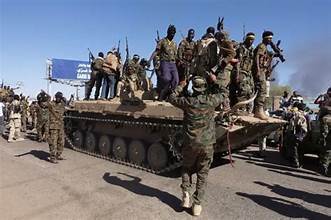
Since war erupted between the Sudanese Armed Forces (SAF) and the Rapid Support Forces (RSF) in April 2023, Sudan has become the scene of one of the world’s most devastating humanitarian catastrophes. Hundreds of thousands have reportedly been killed, millions have been displaced or forced to flee the country, towns and villages have been destroyed or emptied of their inhabitants, and millions more face hunger and the collapse of essential healthcare and basic services.
Yet a striking paradox remains: as Sudan’s tragedy has deepened, its place on the international agenda has appeared increasingly disproportionate to the scale of the catastrophe.
A war whose consequences have produced one of the world’s largest displacement and hunger crises has not generated sustained international pressure commensurate with its severity. Nor has it inspired a global political and public movement capable of forcing a meaningful end to the fighting. Meanwhile, repeated diplomatic initiatives have failed to establish a durable path toward settlement.
This disparity between the magnitude of the tragedy and the limited attention it receives raises a question that goes beyond the familiar description of Sudan as a “forgotten war”: Why do some conflicts rapidly become global crises that mobilize governments, media, and public opinion, while a war of this magnitude remains relatively peripheral to international priorities?
The answer cannot be reduced to a single factor. Rather, it lies in a complex interplay of political and economic interests, compounded by the weakness of the Sudanese state, internal divisions, the war economy, and severe restrictions on media access to conflict zones. Together, these factors have condemned Sudan to a double tragedy: a devastating war at home and growing marginalization abroad.
Interests First: When Does a War Become an International Crisis?
The international system does not respond to wars according to the number of victims alone. Conflicts acquire political urgency largely according to their impact on the interests of major powers, the direct threats they pose to regional balances, and their potential consequences beyond national borders.
From this perspective, Sudanese journalist Durra Gambo argues that one reason for the limited international attention is that the conflict continues to be viewed primarily as an internal power struggle between two military forces, despite its unmistakable regional and international dimensions.
This framing has helped keep Sudan relatively low on the list of international priorities. Although the war’s repercussions extend into neighboring countries and affect the security of the Red Sea and the Horn of Africa, as well as migration and regional trade, these consequences have not yet translated into a sufficiently direct and severe threat to the vital interests of major powers to compel extraordinary political investment in ending the conflict.
Yet the characterization of the war as primarily “internal” is deeply misleading.
Sudan occupies an exceptionally sensitive geopolitical crossroads linking North Africa, the Sahel, the Horn of Africa, and the Red Sea. It is surrounded by countries already struggling with varying degrees of political and security fragility. The continuation of the war therefore threatens more than the collapse of a single state. It carries the risk of expanding arms trafficking, strengthening armed networks, accelerating displacement, and exporting instability across national borders.
Nevertheless, the international response often appears more focused on “managing” the crisis than resolving its underlying causes—containing its spillover and preventing it from reaching areas of greater strategic concern rather than exerting sufficient pressure to bring the war itself to an end.
Sudan Between a “Balance of Weakness” and Conflict Management
The war also raises a more complex question related to what might be described as a “balance of weakness”: a situation in which neither side is capable of achieving a decisive victory, while each remains sufficiently powerful to prevent the other from doing so.
In such conflicts, military stalemate can itself become sustainable for long periods, particularly when the interests of multiple external actors intersect and no genuine international consensus exists over the political order that should emerge once the fighting ends.
This is one of the central problems surrounding Sudan’s crisis. There may be broad rhetorical agreement internationally on the need to stop the fighting, but that does not necessarily mean there is comparable agreement over who should govern Sudan, how the state should be rebuilt, or what role the military, armed groups, and civilian forces should play in the future political system.
These differences make any settlement considerably more difficult.
Regional and international actors view Sudan through different lenses: security, the Red Sea, political influence, natural resources, trade, migration, and broader regional balances of power. When these interests multiply and conflict, ending the war may remain a declared objective without becoming a unified political priority backed by sufficient leverage to impose a settlement.
The War Economy: When Natural Wealth Becomes Part of the Problem
The continuation of Sudan’s war cannot be understood without examining its economic foundations.
Sudan is not inherently poor in resources. Rather, it has historically struggled to convert its considerable wealth into sustainable development. The country possesses gold, gum arabic, vast agricultural land, livestock, and a strategically important geographic position. Yet these assets have often been tied more closely to domestic and external networks of influence than to the construction of a coherent national economy.
With the outbreak of war, some of these resources have become embedded in the conflict economy itself.
Gold, trade and smuggling routes, border crossings, agricultural regions, and sources of revenue are no longer merely economic assets. They have become instruments of power that can help armed actors and their associated networks finance military operations and preserve their influence.
Gum arabic provides a revealing example. Sudan occupies a pivotal position in the production of this strategically important commodity, which is used in numerous industries worldwide. International bodies have raised concerns that commercial networks surrounding certain natural resources may generate revenues that ultimately sustain the war economy.
The problem, however, extends far beyond the smuggling of any single commodity. When state institutions collapse and control over borders and markets weakens, parallel economies emerge and thrive on disorder. Economic actors may then develop a vested interest not in the restoration of the state, but in its continued absence.
The equation is therefore reversed: resources that should have strengthened Sudan economically can, in the absence of effective institutions, become factors that make conflict more sustainable.
Why Does Sudan Lack a Strong International Voice?
Wars do not reach the top of the international agenda through the scale of human suffering alone. They also require actors capable of transforming that suffering into a sustained political and media issue.
This is where one of Sudan’s fundamental weaknesses becomes apparent.
Civilian and political forces, which might otherwise provide an alternative to the logic of armed power, remain deeply divided and have struggled to develop a unified message to the outside world. While military actors compete on the battlefield, political forces also compete over how the war should be interpreted, who bears responsibility for it, and what kind of state should emerge afterward.
This fragmentation directly affects how the crisis is perceived abroad.
The world does not hear a single “Sudanese narrative,” but rather multiple competing narratives. Each side offers its own interpretation of the conflict, assigns blame to its opponents, and seeks external support.
In such an environment, those who possess weapons become more capable of imposing themselves as indispensable participants in negotiations, while civilians, victims, and grassroots forces are pushed further to the margins.
Here lies one of the war’s cruelest paradoxes: those who carry weapons secure seats at the negotiating table, while those who bear the consequences of the war may have far less influence over its outcome.
Africa and Its Persistent Marginalization in the International System
Sudan’s crisis also exposes a broader problem concerning Africa’s position within the international system.
The continent has experienced civil wars, military coups, and recurring humanitarian crises for decades, yet its conflicts often fail to receive the same sustained attention as wars occurring in regions more directly connected to the strategic interests of major powers.
This does not mean that Africa is entirely absent from international attention. Rather, that attention is often selective. It intensifies when energy, minerals, counterterrorism, migration, or geopolitical competition are at stake, but frequently diminishes when the central challenge becomes protecting civilians or rebuilding functioning states.
From this perspective, the “forgetting of Sudan” is not an isolated phenomenon. It can be understood as part of a broader pattern in which many African crises remain peripheral within the global political and media order.
Yet geography alone cannot explain the limited attention Sudan receives. Another crucial factor is at work: the world cannot fully see a war when those responsible for documenting it are unable to reach its victims.
A War Fought Beyond the Cameras
One of the most dangerous features of Sudan’s war is the obscurity surrounding many of its atrocities.
Journalists operate in an extraordinarily dangerous environment, facing severe restrictions on movement between areas controlled by rival forces, the risk of detention or attack, pressure from armed actors, and the collapse of local media infrastructure across large parts of the country.
A Sudanese journalist who requested anonymity describes conditions that make professional reporting nearly impossible in some areas. Traveling between territories controlled by the Sudanese Armed Forces and the Rapid Support Forces can be extremely dangerous, while access to regions such as Darfur is often restricted. As a result, massacres and other abuses may occur without reaching international media in a timely manner—or, in some cases, without being independently documented at all.
More troubling still, the challenge extends beyond physical access.
According to the journalist’s testimony, reporters have faced direct pressure and threats intended to prevent the publication of reports documenting abuses. Restrictions have reportedly extended even to humanitarian stories about hunger and civilian suffering.
This creates a dangerous cycle: limited media access leads to inadequate documentation; inadequate documentation weakens public attention; diminished attention reduces international pressure; and the absence of pressure gives perpetrators greater space to continue committing abuses.
It is a cycle in which “media silence” becomes part of the structure that allows the war to persist, even when that silence is not deliberate.
When Reaching the Victims Becomes Another Battle
The problem is not limited to restrictions imposed by the warring parties.
Journalists may also face bureaucratic and procedural obstacles when attempting to work in displacement camps or areas where humanitarian organizations operate. Obtaining permits can take longer than the time available to produce a report, while concerns over privacy, security, and the protection of displaced people can restrict interviews and filming.
Many of these procedures have legitimate professional and ethical purposes, particularly when designed to protect vulnerable victims. Yet excessive bureaucracy can produce the opposite effect: protecting individuals from the risks associated with media exposure while simultaneously allowing their suffering to disappear almost entirely from public view.
In wartime, journalism is not merely a means of transmitting information. Images, testimonies, and field investigations are essential tools for transforming individual suffering into a matter of public concern.
When journalists cannot reach victims, casualty, displacement, and hunger figures can easily become abstract statistics repeated in international reports without generating the political or public response they warrant.
The Selectivity of Global Empathy
Another factor is difficult to ignore: global public attention is itself selective.
Not every tragedy has the same capacity to capture international attention.
Some crises possess a historical, political, and media presence that places them at the center of daily debate in major societies. Others remain distant from public consciousness regardless of the scale of human suffering involved.
Media organizations and social platforms play a decisive role in this equation. The more images, eyewitness accounts, and direct reporting a crisis generates, the greater its ability to inspire public empathy and political pressure. By contrast, a war that is difficult to access and document gradually loses the competition for global attention.
In Sudan, nearly all these disadvantages have converged: a complex war that resists simple narratives, multiple competing actors and interests, inaccessible conflict zones, journalists working under severe constraints, and political divisions that make it difficult to present a coherent message to the outside world.
The result is that one of the world’s gravest humanitarian crises can continue while the international community gradually becomes accustomed to hearing about it.
The Problem Begins at Home—But the Solution Cannot Be Entirely Domestic
Despite the importance of international responsibility, reducing the crisis solely to the world’s “neglect” of Sudan risks absolving Sudanese actors of their own responsibilities.
Durra Gambo argues that any meaningful solution must begin with Sudanese people listening to one another and acknowledging that the roots of the crisis are also domestic. Building a national position capable of transcending internal divisions is essential if Sudan is to recover a stronger voice internationally.
This point is fundamental.
Effective international pressure is difficult to build while Sudanese political forces remain divided over how the war itself should be defined, who legitimately represents the state, who bears responsibility for prolonging the conflict, and what political system should follow it.
Likewise, any settlement that simply reproduces military domination or political exclusion without addressing the underlying causes of the crisis will remain vulnerable to renewed conflict.
The current war did not emerge from a vacuum. It is the product of accumulated failures in state-building, tensions between the center and marginalized regions, the proliferation of weapons, the politicization of military institutions, competing armed centers of power, and the weakness of civilian institutions.
A ceasefire, therefore, is urgently necessary—but it will not be sufficient unless accompanied by a broader project to rebuild the state.
Sudan Needs More Than Sympathy
The real question is not simply why the world does not sympathize enough with Sudan. It is why this catastrophe has not yet generated a sufficient political cost for the actors capable of prolonging the war—or helping to end it.
Sympathy alone does not stop wars.
Wars end when calculations of interest change: when the cost of continued fighting becomes greater than the cost of compromise; when belligerents lose access to financing, weapons, and political support; and when a credible domestic political alternative emerges.
Bringing Sudan out of the category of a “forgotten war” therefore requires more than temporary media campaigns. It requires journalists who can safely reach victims, stronger mechanisms for tracking the war economy and flows of resources and weapons, political pressure on external actors connected to the conflict, and, above all, a Sudanese civilian front capable of presenting a political project that transcends military polarization.
Sudan’s war is not a distant humanitarian emergency that the world can postpone confronting indefinitely. The continued collapse of a country of Sudan’s size and strategic location carries consequences far beyond its borders—from the Red Sea to the Sahel and the Horn of Africa, and from cross-border migration to arms trafficking and expanding networks of instability.
Perhaps the greatest paradox is that Sudan does not lack evidence of the gravity of its crisis. The deaths, displacement, hunger, and institutional collapse are all visible. What remains absent is the ability to translate these realities into sufficient political will.
Until that changes, the war will continue producing new victims while facing an even more dangerous prospect: that the world will gradually come to regard its continuation as normal.
For when the world becomes accustomed to war, silence ceases to be merely an absence of attention—it becomes one of the conditions that allow the war to endure.
Most read