Sudan Between Prolonged War and Fragile Alliances: Egypt’s Strategic Dilemma in the Post-Settlement Era

When the administration of U.S. President Donald Trump admitted its inability to bring the warring Sudanese parties to the same negotiating table, and when explosions struck near Khartoum International Airport on May 5, 2026, these were not isolated developments. Rather, they were interconnected signals reshaping the incentives of the principal actors in the Sudanese conflict. External pressure, combined with the absence of a viable political horizon, has temporarily frozen internal fractures within the Sudanese military camp while simultaneously laying the foundations for future post-victory conflicts. In this evolving landscape, Egypt has emerged as the regional actor most capable of influencing the trajectory of the Sudanese crisis.
At the heart of the current Sudanese scene lies a striking paradox: the greater the external pressure on the conflict’s actors, the stronger the temporary cohesion within the coalition surrounding the Sudanese Armed Forces. Yet this cohesion is not driven by a unified national project, but rather by the logic of survival and immediate tactical interests.
When U.S. presidential adviser for Arab and African affairs Massad Boulos, supported by Secretary of State Marco Rubio, acknowledged that Washington could no longer bring the Sudanese Armed Forces and the Rapid Support Forces (RSF) into direct negotiations—and that the Berlin Conference represented the final diplomatic initiative—this was not merely an admission of diplomatic failure. It effectively redrew the internal incentive structure for all actors involved in the conflict.
A War Without a Political Horizon
Sudan today stands suspended between temporary coordination and delayed fragmentation. The most dangerous aspect of the crisis is that it shows little indication of nearing resolution. Although the Sudanese army has made military advances across several fronts, battlefield gains have not translated into a political settlement. Meanwhile, the RSF continues to consolidate control over large parts of Darfur and sections of Kordofan, relying on regional financing and supply networks that have not been entirely severed.
Between these two poles stand the army’s allies—armed movements and Islamist factions—carefully calculating the balance between their investment in the war and the political price of the postwar order.
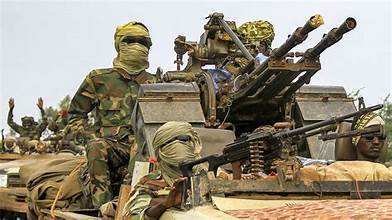
The military landscape reveals the involvement of three major forces aligned with the Sudanese army, each possessing distinct interests despite their shared hostility toward the RSF.
The first consists of the armed movements that signed the Juba Peace Agreement in October 2020, particularly the movements led by Minni Arko Minnawi and Gibril Ibrahim. These Darfuri factions entered the alliance while carrying their own political agenda, prioritizing the guarantees embedded in the Juba Agreement above any future constitutional arrangement. Their demands focus on governance, resource distribution, and military representation in the postwar state.
The second actor is the Islamist current, which has gradually re-emerged through its networks within state institutions and mobilization structures since the outbreak of the war. This camp views the military conflict as an opportunity to restore the political influence it lost following Sudan’s December 2019 revolution. However, successive U.S. sanctions targeting Islamist leaders have increasingly constrained the movement’s regional, economic, and diplomatic maneuverability. Consequently, any future rapprochement between Khartoum and Gulf or Western powers could threaten the Islamists’ ambitions for political reintegration rather than serve their interests.
The third component is the Sudan People’s Liberation Movement–North (SPLM-N) led by Malik Agar, which continues expanding militarily in Blue Nile State toward Damazin. Although it maintains an active operational partnership with the army, deep sensitivities remain regarding the future status of the Nuba Mountains and southern Blue Nile, as well as the military establishment’s willingness to share power after the conflict ends.
Together, these actors form a coalition united by a common enemy rather than a shared political vision. Historically, Sudan’s military institution has favored functional alliances rather than structural partnerships—alliances designed to preserve centralized authority before eventually marginalizing wartime partners once stability is restored. This dynamic explains why Darfuri factions insisted from the outset that the Juba Peace Agreement should supersede any transitional constitutional framework, fearing a repetition of earlier failed integration experiences.
The Airport Strike and the Regionalization of the Conflict
The explosions near Khartoum International Airport on May 5, 2026, marked a critical turning point. The airport had resumed limited international operations only days earlier after three years of closure, making the attack symbolically significant. The Sudanese military accused Ethiopia of responsibility, within the broader context of escalating tensions linked to the disputed al-Fashaga border region and mutual accusations concerning support for armed groups.
Paradoxically, the attack temporarily strengthened cohesion within the army’s coalition. External threats tend to suspend internal divisions because all actors understand that abandoning the alliance under pressure would mean forfeiting the political and military investments they have accumulated throughout the war.
For armed movements operating in border regions such as Blue Nile and South Kordofan, defending territorial sovereignty aligns directly with their own strategic interests. Any perceived military weakness by the Sudanese army in responding to Ethiopian pressure would undermine its credibility not only before its enemies, but also among its allies. Yet this regional escalation also carries another consequence: diverting the army’s focus toward external tensions inevitably reduces pressure on the RSF in several internal fronts.
The Shift in American Diplomacy
At the diplomatic level, Washington’s acknowledgment that it could not bring both sides to negotiations reflects a deeper transformation in the international mediation model.
The previous “Jeddah model” relied on balanced pressure applied to both parties in pursuit of a negotiated settlement. By contrast, the emerging “Berlin model” implicitly grants greater legitimacy to the Sudanese army as the principal interlocutor with the international community, while leaving the RSF outside formal diplomatic frameworks.
This shift carries contradictory consequences. On one hand, it strengthens the army’s standing among its domestic allies by granting it enhanced international legitimacy. On the other hand, it reduces the external pressure that previously compelled those allies to remain coordinated under a unified umbrella.
As external pressure diminishes, every actor begins calculating what it must secure before the war ends rather than afterward. Functional wartime alliances thus gradually transform into internal bargaining arenas whose outcomes become increasingly difficult to control.
Moreover, the statements by Boulos and Rubio also send an implicit message to the RSF that the U.S.-backed political process is effectively closed to them. This increases the likelihood that the conflict will continue despite mounting military exhaustion on both sides, particularly in volatile regions such as Kordofan, which may remain long-term centers of instability.
Egypt’s Strategic Calculations
Against this backdrop, Egypt emerges as the most consequential regional actor. Cairo possesses three strategic assets unavailable to most regional powers: military capability, geographic depth, and the leverage associated with the large Sudanese refugee population residing on Egyptian territory.
These factors give Egypt both the incentive and the capacity to play a more assertive role as the war drags on and concerns grow regarding the potential fragmentation of the Sudanese state. For Cairo, prolonged instability in Sudan represents a direct threat to Egyptian national security, particularly along its southern frontier.
At the same time, opportunities are emerging for Egyptian diplomacy, especially given Cairo’s expanding areas of coordination with Saudi Arabia. Such coordination could facilitate the development of an Arab consensus regarding postwar arrangements in Sudan, including the composition of future political structures and the balance of influence among the army’s wartime allies.
This issue is especially critical because a purely military victory by the Sudanese army—without a political settlement addressing the structural roots of Sudan’s crisis—would likely produce a new cycle of instability that could threaten Egyptian and Gulf interests alike.
Consequently, regional coordination involving Cairo, Riyadh, and potentially Abu Dhabi may represent the only viable framework for managing Sudan’s postwar transition and preventing state collapse.
From Functional Partnership to Political Sponsorship
Ultimately, the continuation of the Sudanese war requires Egypt to move beyond its current functional partnership with the Sudanese army toward sponsoring a broader political process that includes armed movements and regional stakeholders in shaping the postwar order.
Cairo will increasingly need to present the international community with a comprehensive constitutional vision capable of redefining the relationship between Sudan’s center and peripheries while transforming diplomatic initiatives such as the Berlin Conference into a genuine negotiating framework rather than merely another temporary diplomatic platform.
Most read