China and Pakistan Step Up Mediation: Can Economic Interests Open a Path to Ending the War?

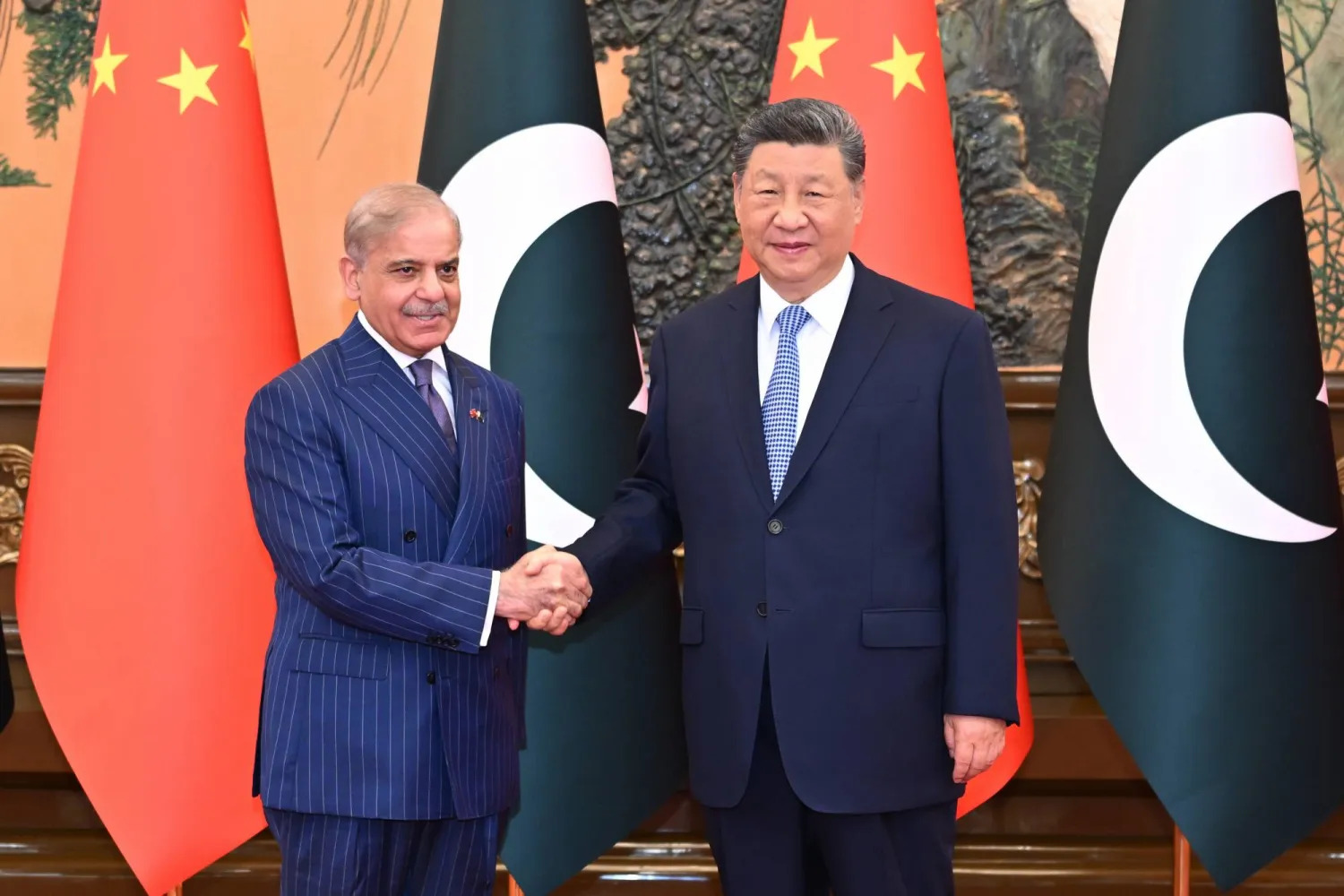
After nearly five months of war between the United States and Iran, the latest Chinese-Pakistani diplomatic moves appear to represent an attempt to reopen a channel that has been closed by successive rounds of fighting and the failure of previous understandings. Yet the significance of this initiative lies not only in the prospects for renewed mediation, but also in the fact that the war is beginning to directly affect the interests of powers that can no longer afford to watch the conflict from the sidelines—China foremost among them.
Exploratory talks held in Islamabad during Iranian Interior Minister Eskandar Momeni’s visit, including meetings with Pakistani officials and Army Chief Asim Munir, alongside Pakistani Foreign Minister Ishaq Dar’s consultations in Beijing, suggest that an effort is under way to rebuild a negotiating channel between Washington and Tehran.
This attempt, however, begins from a more complicated position than previous mediation efforts, because the war has altered the calculations of the parties involved and broadened the range of interests affected by the conflict.
China Enters Through the Gateway of Interests
Pakistan may be at the forefront of the diplomatic initiative, but China is the more consequential power behind it. Beijing is not merely an international actor seeking stability; it has direct interests that are increasingly threatened by the continuation and expansion of the war.
China is Iran’s largest trading partner and the principal buyer of its crude oil. At the same time, Beijing maintains extensive economic and strategic relationships with the Gulf states. The continuation of the war therefore places China in a difficult position: it does not want Iran to collapse or become so weakened that the regional balance shifts in ways detrimental to Chinese interests, but neither can it accept Iranian policies that threaten the energy flows and trade routes on which its economy depends.
This is where the Strait of Hormuz becomes critical. When control over the strait—or the disruption of navigation through it—becomes an instrument of warfare, the crisis for Beijing ceases to be merely a U.S.-Iranian confrontation. It becomes a direct threat to Chinese energy security, supply chains, and international trade.
The situation becomes even more complicated if instability spreads to the Red Sea and Bab al-Mandab. China would then face simultaneous threats to two strategic corridors essential to its economy: the Gulf route for energy supplies and the maritime trade route through the Red Sea and the Suez Canal.
Beijing’s support for mediation, therefore, should not be viewed merely as an expression of diplomatic neutrality. It is also a defense of economic and strategic interests that are now directly endangered by the war.
Why Pakistan?
Pakistan possesses a combination of characteristics that make it a potential mediator, although this does not necessarily mean that it has the power to impose a settlement.
Islamabad maintains relations with Iran while also preserving channels of communication with the United States. It has a close strategic partnership with China and important ties with the Gulf states. This position gives Pakistan an ability to communicate with actors that are difficult to bring together directly at the same negotiating table.
Yet the source of Islamabad’s strength is also a source of vulnerability. Pakistan does not operate entirely independently of the calculations of larger powers. Rather, it functions within a complex network of economic dependencies, security relationships, and regional interests. Ultimately, its ability to mediate depends on whether Washington and Tehran themselves are prepared to make concessions.
The real value of Pakistan’s role, therefore, may lie less in drafting a final agreement than in providing a channel through which intentions can be tested, messages exchanged, and preliminary understandings developed that could later evolve into more serious negotiations.
Pakistan played a similar role in earlier mediation efforts alongside Qatar, which led in June to a memorandum of understanding intended to provide a 60-day window for negotiations toward a permanent settlement. The collapse of that process and the resumption of fighting, however, demonstrated that establishing a negotiating channel is not the most difficult part. The real challenge is constructing an agreement capable of surviving deep mistrust and fundamentally conflicting strategic objectives.
The Dilemma of Negotiating Under Fire
The principal obstacle facing any new mediation effort is that the two sides may not yet have reached the point at which compromise becomes less costly than continuing the war.
The United States continues to use military force and economic sanctions as instruments for improving its negotiating position and weakening Iran’s ability to sustain the confrontation. The latest sanctions targeting networks linked to sanctioned Iranian financier Babak Zanjani suggest that Washington does not treat the economic, military, and diplomatic tracks as separate. Rather, it is employing all three as part of an integrated pressure strategy.
Iran, meanwhile, needs to demonstrate that continued pressure against it will carry costs beyond its own borders, whether by threatening energy security, disrupting maritime navigation, or widening regional instability.
This creates a fundamental paradox: the very instruments Tehran uses to strengthen its negotiating position may simultaneously weaken international sympathy for it and push even its partners—China foremost among them—to exert pressure on the Iranian leadership.
If disrupting the Strait of Hormuz or threatening Gulf states is intended to increase the cost of the war for the United States and its allies, it also raises the cost for China, India, and other energy-importing economies. One of Iran’s most important instruments of leverage could therefore become a factor driving even countries not directly involved in the fighting to demand restraint from Tehran.
China Between Iran and the United States
China’s position becomes even more sensitive in light of U.S. President Donald Trump’s warnings to Beijing and Moscow against supplying weapons to Iran.
These warnings reveal an important red line in Washington’s calculations. The United States may tolerate continued economic and political relations between China and Iran within certain limits, but it would view any move toward military support capable of altering the balance of the war or prolonging the conflict very differently.
Beijing, for its part, has an interest in avoiding a shift from potential mediator to direct participant in the confrontation. Open military support for Iran could transform the conflict into another arena of U.S.-China strategic rivalry and expose Chinese interests across the Gulf to considerable pressure.
Diplomacy therefore appears to be China’s most useful instrument at this stage. It allows Beijing to preserve its relationship with Tehran, protect its interests in the Gulf, and present itself as an international power capable of contributing to crisis management—all without bearing the costs of direct military involvement.
Can Economic Interests End What War Began?
The most important question is not whether China and Pakistan can bring the Americans and Iranians back into a negotiating process. It is whether the political and military conditions are now sufficiently mature for a genuine settlement.
There is a significant difference between a ceasefire and a resolution of the underlying causes of conflict. Mediation may succeed in producing a truce if both sides feel the need to regroup and reassess their positions. A lasting agreement, however, would require addressing far more complex issues involving regional security, sanctions, military capabilities, and the future of Iran’s relations with its neighbors.
The latest American and European sanctions also demonstrate that the crisis is no longer exclusively military. Alongside the war, accumulated financial, political, and human-rights pressures make any settlement more difficult, because escalating a confrontation is often far easier than dismantling the architecture of sanctions and hostility built around it.
Nevertheless, the current mediation effort contains a new element that could give it greater weight: the economic interests of major powers are shifting from an external consideration to a source of pressure within the war itself.
China needs stable energy flows and secure trade routes. The Gulf states need to prevent their territories and infrastructure from becoming extended arenas of conflict. The global economy cannot easily absorb prolonged disruption in the Strait of Hormuz and the Red Sea. Even the United States, regardless of its military superiority, ultimately needs a political framework capable of translating battlefield gains into a sustainable arrangement.
Beijing and Islamabad may therefore have an opportunity. But it is less an opportunity to create peace from scratch than to capitalize on a moment when the continuation of the war is imposing mounting costs even on states that are not directly fighting it.
The success of mediation will ultimately depend on whether Washington and Tehran reach the political conclusion that what can be achieved through negotiation is more valuable than what might be gained by continuing the war. If each side continues to believe that another round of fighting will produce better terms, mediation efforts will remain little more than brief intervals between successive rounds of conflict.
In the end, the paradox may be that the path toward ending the war will be opened not only by military losses or political pressure, but also by oil tankers, supply chains, and global trade routes. Once Hormuz and the Red Sea become part of the cost of conflict, the war ceases to be an exclusively U.S.-Iranian affair. It becomes an international crisis that pushes affected powers—China foremost among them—from the position of observers to that of active seekers of a settlement.
Most read