Yemen Between Regional Escalation and the Struggle for Influence:

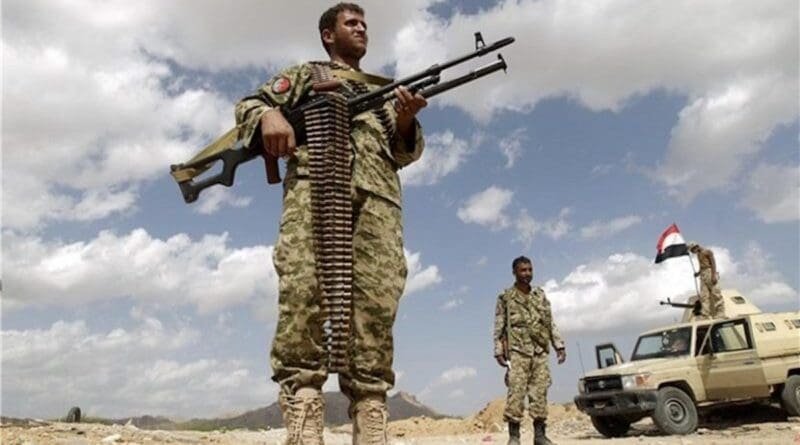
Yemen’s conflict is entering a new phase of escalation, coinciding with the widening regional confrontation between Iran and its rivals and once again placing Yemen at the center of regional security calculations. The current escalation is not merely another round in a war that has lasted for more than a decade; it is increasingly intertwined with broader considerations involving Red Sea security, international trade, energy routes, and the balance of power between Saudi Arabia and Iran.
The latest developments are particularly significant because military operations have moved toward the western coast and closer to the Bab al-Mandab Strait, one of the most sensitive points in the international maritime system. If this trend continues, the Yemeni conflict could once again evolve from an internal war with regional dimensions into a crisis with direct implications for maritime security and international trade.
However, interpreting the current escalation simply as a confrontation between the Houthis and the Yemeni government would be insufficient to capture the complexity of the situation. Over the years, Yemen’s war has evolved into an intricate network of local and regional conflicts involving multiple political and military actors whose objectives sometimes diverge, even when they temporarily cooperate against the Houthis.
A New Escalation That Is Reshaping the Balance of the War
The latest developments come against the backdrop of a fragile period of relative calm that followed the truce brokered by the United Nations in 2022. Although the truce did not formally end the war, it contributed to a significant reduction in direct military operations compared with previous years.
The return of escalation, however, combined with Houthi movements toward the western coast and areas near the Bab al-Mandab Strait, suggests that the balance that emerged during the period of relative calm is once again under strain.
According to the developments cited in the report, the Houthis have taken control of the strategically important city of Mokha and continued to exert pressure toward areas near Bab al-Mandab, while Saudi-backed government forces have engaged in increasingly intense fighting to recover positions lost in recent days.
Mokha is particularly important because of its location on Yemen’s western coast. Control of the area provides more than a battlefield advantage; it gives the controlling side a more consequential position in the strategic equation surrounding the coast and the Red Sea.
The question, therefore, is not simply whether the Houthis can continue to advance militarily, but whether such advances could translate into a lasting shift in the balance of power along Yemen’s western coast.
The Houthis: From a Domestic Force to a Regional Actor
The Houthis, officially known as Ansar Allah, have emerged as the most influential military force in northern Yemen, controlling Sana’a and large areas that are home to the majority of the country’s population.
The continuation of the war has enabled the group to develop significant military capabilities, particularly in missiles and drones. The Houthis have used these capabilities to attack targets in Saudi Arabia and the United Arab Emirates, as well as vessels in the Red Sea.
Saudi Arabia, the United States, and other countries accuse Iran of providing military and technical support to the Houthis, while Tehran and the group deny the existence of a direct relationship of dependency.
Regardless of the precise nature of that relationship, the more significant development is that the Houthis have acquired the ability to exploit Yemen’s geographic position and their military capabilities to influence the security environment beyond Yemen’s borders.
This transformation partly explains the concern in Saudi Arabia and elsewhere in the region. Houthi power is no longer measured solely by its control of Sana’a and northern territories, but also by its ability to threaten vital infrastructure and interests across the region and affect maritime security in the Red Sea.
Saudi Arabia: Between Border Security and Preventing Yemen from Becoming an Iranian Platform
Saudi Arabia has been one of the actors most directly involved in Yemen’s war since its military intervention in 2015.
Riyadh viewed the Houthi takeover of Sana’a, amid allegations of Iranian support for the group, as a development affecting its national security, particularly given the two countries’ long shared border.
Although the level of direct confrontation declined during the past several years, the resumption of Houthi missile and drone attacks has once again placed Yemen at the center of Saudi security priorities.
According to the developments cited in the report, recent Houthi attacks on cities and facilities in southern Saudi Arabia injured 73 people and targeted facilities associated with the energy sector.
This highlights the strategic dilemma facing Riyadh. On the one hand, it seeks to prevent the return of a large-scale war along its southern border. On the other, it cannot ignore the expansion of Houthi military capabilities or the possibility that Yemen’s coastal areas could become additional pressure points against Saudi security, maritime routes, and energy infrastructure.
Saudi policy, therefore, cannot be understood solely as support for the internationally recognized Yemeni government. It is also part of a broader strategy aimed at protecting Saudi border security and preventing a potential regional rival from acquiring additional leverage in its immediate geographic environment.
The United Arab Emirates: Indirect Influence and a Network of Local Forces
The UAE’s role differs from Saudi Arabia’s in terms of both its presence and the tools it employs.
The Emirates participated in the Saudi-led coalition at the beginning of the war and subsequently withdrew its forces gradually, while maintaining influence through its support for local Yemeni actors, most notably the Southern Transitional Council and the National Resistance Forces.
This approach reflects a broader shift in the nature of regional intervention in Yemen—from direct military presence toward building networks of local partners.
Yet this has added another layer of complexity to the conflict.
The forces supported by Saudi Arabia and the UAE do not necessarily share the same vision for Yemen’s future. While the internationally recognized government emphasizes preserving Yemen’s unity, the Southern Transitional Council advocates autonomy or the restoration of the former southern state.
The anti-Houthi camp is therefore not a politically or militarily homogeneous bloc. It consists of forces that may cooperate against a common adversary while maintaining different positions regarding the structure of the Yemeni state and its political future.
Bab al-Mandab: When Geography Becomes a Strategic Instrument
Perhaps the most important element of the latest developments is the Bab al-Mandab Strait.
Yemen occupies an exceptionally strategic geographic position along the Red Sea and the Gulf of Aden, overlooking the Bab al-Mandab Strait, which connects the Red Sea with the Gulf of Aden and the Indian Ocean.
This geography means that any major military shift along Yemen’s western coast could have consequences extending far beyond the country’s internal conflict.
The strait is an important corridor for global trade and the transportation of commodities and energy. Any sustained threat to its security could therefore increase maritime transportation costs and disrupt international supply chains.
From this perspective, the movement of military operations toward Bab al-Mandab does not necessarily mean that the conflict will automatically become an international crisis. It does, however, raise the level of risk and increases international interest in the trajectory of the war.
Control of strategically important coastal areas also gives the controlling party greater leverage in political and military negotiations.
For this reason, Yemen’s western coast could become one of the most important arenas for testing the balance of influence in the country.
A Multi-Layered War
The latest developments demonstrate that Yemen’s war can no longer be reduced to a simple confrontation between the Houthis and the government.
Alongside the Houthis and the internationally recognized government, the conflict involves the Southern Transitional Council, the National Resistance Forces led by Tareq Saleh, the Islah Party, and other local formations with different interests and agendas.
These forces operate within three principal layers of conflict.
The first is the domestic struggle over power and the structure of the state.
The second is the regional rivalry between Saudi Arabia and Iran.
The third is the struggle over strategically valuable geographic locations, particularly ports, coastlines, and energy and trade routes.
These three layers do not operate independently. Rather, they constantly intersect. As a result, any shift in the balance of power on the ground can produce repercussions extending well beyond the immediate area in which it occurs.
Could the Confrontation Develop into a Full-Scale War?
The most important question is whether the current escalation represents a limited round of fighting or the beginning of a return to the levels of warfare witnessed previously.
Several factors make the possibility of a broader escalation plausible.
First, the expansion of Houthi operations against targets in Saudi Arabia.
Second, military movements along the western coast.
Third, the possibility that the Yemeni escalation could become increasingly linked to the wider regional confrontation involving Iran and its rivals.
Fourth, the fragility of the understandings that emerged after the 2022 truce and the absence of a comprehensive political settlement.
Escalation, however, does not necessarily mean that all parties want to return to an open-ended war.
The humanitarian, economic, and political costs of the previous conflict were extremely high for the various actors. Regional powers also have an interest in preventing the conflict from moving beyond a level they can reasonably contain.
The more likely scenario, therefore, may be one of calibrated escalation—the use of military force to improve negotiating and battlefield positions without immediately moving toward a full-scale war.
The Greatest Risks May Lie Beyond the Battlefield
If fighting continues near Bab al-Mandab, the consequences may extend well beyond Yemen.
The most sensitive risk lies in the possibility that the conflict could increasingly affect international maritime traffic.
If commercial vessels or maritime infrastructure face repeated threats, shipping companies may be forced to alter their routes or adopt additional security measures, increasing transportation costs and affecting global trade flows.
Similarly, sustained disruption at one of the world’s major maritime corridors could have repercussions for energy markets and supply chains, even if maritime traffic is not completely halted.
The significance of Bab al-Mandab, therefore, lies not only in its military value but also in its role as a point where regional security and the global economy intersect.
The Political Dilemma: Who Has a Vision for the State?
The Yemeni crisis also reveals a problem that extends beyond military operations.
Even if the government and its allies succeed in halting the Houthi advance, that would not automatically resolve the disputes within the anti-Houthi camp.
Conversely, a Houthi military advance would not necessarily translate into the group’s ability to establish a broad political consensus over Yemen’s future.
The fundamental dilemma, therefore, is not simply control of territory. It is the absence of a broadly accepted agreement over the structure of the state and the distribution of power between the center, the regions, and local political and military forces.
Without addressing this issue, military victories are likely to remain temporary and the underlying conflict susceptible to renewed escalation.
Between a Military Solution and a Political Settlement
The latest developments demonstrate the limitations of a purely military approach to Yemen’s conflict.
Military force can alter front lines, but it cannot by itself resolve the political and geographic divisions that have fueled the war.
At the same time, any sustainable political settlement will have to take into account the realities of power on the ground rather than attempting to ignore them.
This means that any eventual settlement is unlikely to be limited to an agreement between the government and the Houthis. It will also need, to varying degrees, to address the interests of southern and local forces, as well as the security calculations of Saudi Arabia and the UAE and the role of Iran.
In other words, ending the war requires a shift from managing the conflict to rebuilding a political balance capable of allowing the competing parties to accept a long-term settlement.
Conclusion: Bab al-Mandab as a Mirror of Yemen’s Conflict
The current escalation in Yemen appears to be more than a simple return to military confrontation. It exposes the continued fragility of the situation that emerged after the 2022 truce and once again highlights the central role of Yemen’s geography in regional and international calculations.
The Houthi advance toward the western coast, if sustained, would be particularly significant because it connects the internal conflict with the risks surrounding maritime security.
The greatest danger, however, lies not only in the possibility of expanded military operations, but in the continuation of the war as a multi-party, multi-layered conflict without a political framework capable of accommodating the interests of competing forces.
In this context, Bab al-Mandab may represent more than another military front. It is a point where geography, politics, security, and economics converge. A prolonged escalation around the strait could therefore make the Yemeni crisis an increasingly visible component of the broader regional conflict system.
The future of the escalation will ultimately depend on the ability of the various actors to prevent the confrontation from evolving from a conflict that can still be contained into an open-ended war.
If regional and local actors succeed in keeping the confrontation within manageable limits, the current developments may remain a means of strengthening negotiating positions. But if the fighting expands to include sustained attacks on Saudi territory and international maritime routes, containing the crisis could become considerably more difficult, potentially turning the Yemeni war once again into a direct source of broad regional and international instability.
In either case, Yemen’s future will not be determined solely by who controls a particular city or battlefield. It will depend on who can translate military control into sustainable political influence—and on whether the competing parties can formulate a settlement that addresses the roots of the conflict rather than merely redrawing its lines on the map.
Most read



Read also