Iraq Between Restoring State Authority and Competing Power Structures

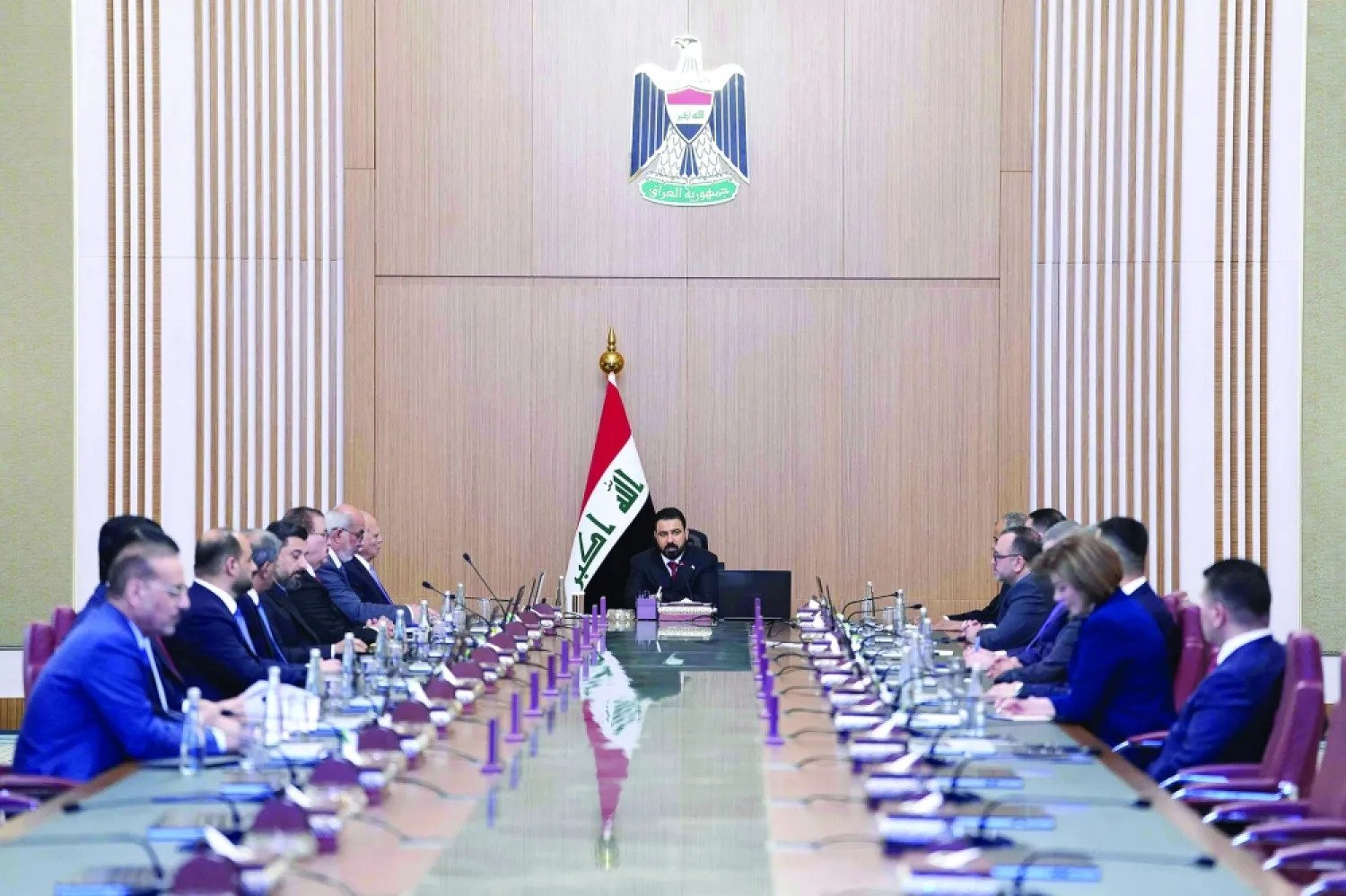
Iraq’s struggle over corruption and uncontrolled weapons is no longer simply an attempt by Prime Minister Ali Al-Zaidi to implement two items in his government program. Behind these two issues lies one of the most sensitive political confrontations in Iraq since 2003, because they touch upon the fundamental question that has remained unresolved for years: Who ultimately holds power and decision-making authority within the Iraqi state?
Combating corruption, at its core, means attempting to dismantle the networks of interests that have developed around state institutions. Bringing weapons under state control, meanwhile, means redefining the relationship between the formal authorities and armed groups that have accumulated political, security, and economic influence extending well beyond the boundaries of constitutional institutions.
For this reason, the two issues are difficult to separate. Both concern the restoration of state authority. Corruption undermines the state’s financial and administrative capacity from within, while uncontrolled weapons undermine its monopoly over the legitimate use of force.
A Battle Over the State, Not Merely the Government
The significance of Al-Zaidi’s actions lies in his decision to open two files that have long been politically sensitive. During the first 100 days of his government, the prime minister sought to translate the principle of restoring state authority into concrete measures, placing the fight against corruption and the consolidation of state control over weapons at the top of his agenda.
The problem, however, is that the government itself operates in a political environment that does not easily allow such objectives to be implemented.
The delay in completing the cabinet, with nine ministries still being run in an acting capacity, is not merely an administrative deficiency. It is an indication that political forces continue to possess the ability to use the state’s own institutional structure as leverage against the prime minister.
An incomplete government remains more vulnerable to political pressure, forcing the prime minister to manage the competing interests of parliamentary blocs while simultaneously attempting to manage state institutions.
This produces a fundamental paradox: Al-Zaidi wants to strengthen the state, but he remains dependent on political forces that benefit from its institutional and political weakness in order to preserve his government.
The real struggle, therefore, is not simply whether the prime minister can fight corruption or bring weapons under state control. It is whether he can transform the popular support he has accumulated into independent political and institutional power beyond the reach of the traditional system of political bargaining.
Corruption: Dismantling the System or Prosecuting Individuals?
The anti-corruption campaign began with what was described as the “Dawn Offensive,” which resulted in the arrest of a number of lawmakers and senior officials, while others fled the country.
But the challenge is no longer simply whether suspects are arrested. The crucial question is what happens next: will arrests lead to a full judicial process culminating in convictions and accountability, or will they become bargaining chips in political negotiations?
Delays in referring some detainees to court, or continuing to hold them without judicial resolution, have fueled suspicions that financial or political settlements could eventually be reached.
More importantly, the expansion of the campaign toward lower-ranking officials could alter the very nature of the fight.
If anti-corruption efforts are reduced to bribery cases involving lower-level employees, the state will merely be treating the symptoms rather than dismantling the underlying structure.
Corruption in Iraq is fundamentally not just a collection of officials accepting bribes. It is a network connecting money, politics, administration, public contracts, and political influence.
The seriousness of Al-Zaidi’s campaign will therefore not be measured by the number of arrests, but by its ability to reach the centers where corruption is generated and prevent institutions from reproducing it.
That is precisely where political resistance begins.
Weapons: A Red Line That Extends Beyond Iraq
While corruption is primarily an internal issue, the weapons question is fundamentally different.
Weapons outside state control are directly connected to the security and political order that emerged in Iraq after 2003. But they are also tied to a broader regional network of relationships, particularly the relationship between some Iraqi armed factions and Iran, as well as Iraq’s security and strategic relationship with the United States.
For that reason, the weapons issue cannot be viewed solely from Baghdad.
For the Iraqi government, the issue is one of sovereignty and the state’s monopoly over the legitimate use of force.
For Iran-linked armed factions, weapons constitute part of their political and security doctrine and are regarded as an element of “resistance” against American influence.
For Washington, meanwhile, the existence of armed groups that are not fully subordinate to the Iraqi government represents a direct challenge to the security arrangements surrounding Iraq and the wider region.
The Iraqi weapons issue has therefore become the point where Iraqi sovereignty, Iranian interests, and American strategic calculations intersect.
September 30: Deadline or Beginning of a New Crisis?
The decision to set September 30 as the deadline for bringing weapons under state control carried more than a procedural significance.
The date was connected not only to Iraq’s internal political situation but also to arrangements surrounding the withdrawal of the international coalition, making the weapons issue part of a broader effort to redefine Iraq’s security balance.
Yet extending the deadline or reopening discussions over implementation mechanisms reveals the scale of political resistance confronting Al-Zaidi.
The problem is not whether committees can be formed or negotiations initiated over which weapons should be surrendered. The deeper question is:
Does the Iraqi state possess the political and security capacity to enforce its decision if some factions refuse to comply?
If the answer is no, extending the deadline becomes more than a technical measure. It becomes a mechanism for managing the crisis and postponing the moment of confrontation.
This appears to be precisely the outcome that Iran-linked forces are seeking: avoiding a direct confrontation with the government, preventing unnecessary provocation of the United States, while simultaneously blocking the full and rapid implementation of state control over weapons.
Iran: Preventing Confrontation Without Abandoning Influence
Iran’s intervention in the issue does not necessarily appear aimed at bringing down Al-Zaidi’s government.
Rather, the more realistic objective appears to be managing the level of confrontation and preventing the dispute from escalating into an open clash.
Iranian diplomatic and political movements, both public and private, reflect an effort to recalibrate relations between armed factions and the Iraqi government so that the crisis does not reach a point at which the prime minister is forced to use force to impose the authority of the state.
This explains the emphasis on forming committees, conducting negotiations, and establishing mechanisms for weapons handovers.
Such measures shift the central question from:
“Will the factions surrender their weapons to the state?”
to:
“Which weapons will be surrendered? When? Under what arrangements? And what will be offered in return?”
This shift is politically significant because it transforms a clear question of sovereignty into an open-ended negotiating process.
In this way, Iran can pursue two seemingly contradictory objectives: preventing a confrontation with the Iraqi government while preserving as much of its influence through allied factions as possible.
Why Would Iran Not Want the Government to Fall?
At first glance, confronting Al-Zaidi might appear to serve the interests of the armed factions. But bringing down the government could prove more dangerous than containing it.
The current government, despite its cooperation with Washington on certain issues, remains a political framework with which negotiations are possible. Its collapse, by contrast, could create a political vacuum that might be exploited by more radical forces or popular movements that are harder to control.
A direct confrontation between the government and armed factions could also generate greater American pressure and provide Washington with a stronger justification for redefining its security presence in Iraq.
Iran’s most rational option, therefore, appears to be containing Al-Zaidi rather than removing him, restricting his moves rather than eliminating them, and postponing confrontation rather than triggering it.
The Coordination Framework Caught Between Two Fears
The political forces within the Coordination Framework face an equally complicated equation.
They do not want a confrontation with the United States, but neither do they want the prime minister to turn the weapons issue into a historic achievement that would strengthen his popularity and political independence.
The success of the anti-corruption campaign could also threaten networks of political and economic interests linked to some factions.
For these forces, the preferred scenario may therefore be to allow Al-Zaidi to achieve limited and controlled successes, without allowing him to transform those achievements into a fundamental redistribution of political power.
This helps explain attempts to keep the major issues in an intermediate zone: neither outright rejection nor full implementation; neither confrontation with the government nor complete submission to its decisions.
It is a strategy of containment through delay and negotiation.
Al-Zaidi’s Battle for Popular Legitimacy
Al-Zaidi’s principal source of strength, by contrast, appears to be his popularity.
If the prime minister succeeds in presenting himself as the leader defending state sovereignty against armed factions while pursuing corruption without regard to political quotas, he could move the confrontation from negotiations among political blocs into the public arena.
That is where the greatest danger lies for his opponents.
Political forces can contain a prime minister who depends primarily on parliamentary balances. It becomes considerably more difficult to contain a prime minister who commands a popular base capable of exerting pressure on those forces.
This is why any decision by Al-Zaidi to address the public directly could change the nature of the confrontation.
If Muqtada al-Sadr were to join such a trajectory, the balance of power could become even more complicated. Support from the Sadrist movement for restoring state authority could provide Al-Zaidi with political and popular cover that would be difficult to ignore.
Maliki and the Message of “No Government Overthrow”
In this context, Nouri al-Maliki’s statements rejecting attempts to bring down the government are particularly significant.
Opposing a change of government does not necessarily mean giving Al-Zaidi an open mandate to implement his agenda. It may instead reflect an attempt to preserve stability and prevent political disagreements from developing into an internal confrontation.
This partially overlaps with Iran’s interests: preserving the government while attempting to constrain its trajectory.
Neither Iran nor the major Shiite political forces appear to want a broad internal explosion at this stage. Such a confrontation could destroy the political equilibrium from which their influence derives.
But preserving the government does not mean that the conflict has ended. It means that the conflict is moving into a quieter and more complicated phase.
The “Shiite-Shiite War” as a Political Deterrent
Warnings of a possible Shiite-Shiite conflict also reveal the sensitivity of the current moment.
Iraqi Shiite political forces understand that any confrontation between the state and armed factions could rapidly move beyond their control, particularly if regional and international actors become directly involved.
Calls for the formation of a Shiite “leadership council” or for greater internal coordination can therefore be interpreted as attempts to establish a political mechanism for preventing an explosion.
But there is another dimension to the issue.
The warning of a “Shiite-Shiite war” can also be used to constrain the government’s ability to confront armed factions by portraying any attempt to enforce the law as a threat to communal peace.
The fear of war can thus become not only a mechanism for preventing confrontation, but also a political tool for postponing difficult decisions.
Washington: The Next Test
If Iraq represents a sphere of influence for Iran, it is also an important component of a broader regional security equation for the United States.
Washington therefore views the weapons issue not merely as an internal Iraqi matter, but as an indicator of the Iraqi government’s ability to control armed groups capable of threatening U.S. interests and personnel.
The September 30 deadline consequently represents a dual test for Al-Zaidi.
If he fully implements the decision, he strengthens state authority but could trigger a confrontation with armed factions and Iran.
If he retreats, he avoids an internal clash but risks losing part of Washington’s support and weakening his credibility as a leader capable of fulfilling his commitments.
The third scenario—and arguably the most likely—is a gradual settlement that postpones the final confrontation by integrating some armed capabilities into state institutions, reorganizing others, and leaving certain elements within informal arrangements.
Such a scenario could preserve stability, but it would not necessarily resolve the fundamental question of the state’s monopoly over weapons.
The Real Test: Can Iraq Build a State Above Competing Power Centers?
Iraq’s central problem is not the absence of decisions. It is the weakness of the state’s ability to implement them when they collide with the interests of powerful actors.
The Iraqi state can declare war on corruption, but it faces deeply entrenched political and economic networks.
It can declare that weapons must be brought under state control, but it faces armed forces with political influence, social networks, and regional ties.
The government can assert the independence of Iraqi decision-making, but it operates within a complex triangle involving Iran, the United States, and domestic political forces.
Al-Zaidi’s success will therefore not be measured by the number of files he opens, but by his ability to change the rules of the game that have made opening such files difficult in the first place.
Three Possible Paths
Three broad scenarios can be envisioned for Iraq’s political trajectory in the coming period.
First: Political containment.
Deadlines are extended, committees are formed, negotiations continue, and mutual concessions prevent confrontation. This scenario preserves stability but leaves the fundamental weapons issue unresolved.
Second: Institutional and political confrontation.
Al-Zaidi insists on implementing his agenda and uses popular support, judicial institutions, and security agencies, while political forces attempt to obstruct his efforts. This could produce a severe political crisis without necessarily escalating into armed conflict.
Third: A restructuring of relations with armed factions.
The process moves from the concept of “disarming” factions toward gradually reorganizing and integrating their capabilities into the state security system in exchange for political and security guarantees.
This may be the most practical scenario, but it also carries the risk of turning the principle of state monopoly over weapons into nothing more than a redistribution of authority rather than genuine state control.
Conclusion: Iraq at a Defining Test of Statehood
What is happening in Iraq is not simply a dispute over the implementation date of an administrative decision or a political struggle between the prime minister and rival factions.
It is a deeper test of the very nature of the Iraqi state.
Corruption and uncontrolled weapons represent two dimensions of the same crisis: the state’s inability to monopolize authority, resources, and legitimate force.
If Al-Zaidi succeeds in dismantling corruption networks and reaching their true centers while simultaneously enforcing the principle that weapons must remain under constitutional authority, he will have moved Iraq into a different political phase. The prime minister would become more independent from the system of political quotas that has shaped the country for years.
If, however, the confrontation ends in settlements that postpone the core issues, exclude the real centers of power, and reproduce the existing balance, the government will have succeeded in managing the crisis rather than resolving it.
The confrontation is unlikely to be settled through a single decisive move.
Iran does not appear to want Iraq to descend into internal conflict. The United States does not appear eager to trigger a comprehensive confrontation. And Iraqi political forces fear that a direct clash could destroy the equilibrium on which their interests depend.
But this does not mean that all sides agree on the future of the Iraqi state.
The real battle is over the limits of state authority and who ultimately controls decision-making inside Iraq.
Al-Zaidi is attempting to transform the state from a space divided among political forces and armed factions into the center of national decision-making. Iran seeks to preserve its influence without pushing Iraq into chaos. The United States wants a state capable of controlling armed groups and preventing Iraqi territory from becoming a platform for threats against American interests. Domestic political forces, meanwhile, seek to preserve their influence without bearing the costs of open confrontation.
Between these competing calculations, Iraq faces a question that has remained unresolved since 2003:
Can Iraq become a state that controls its weapons, decisions, and resources—or will it remain a political system in which the formal state coexists with parallel centers of power?
The answer will determine not only the future of Ali Al-Zaidi’s government, but potentially the shape of Iraq’s political system for years to come.
Most read


Read also