Can Washington Turn Economic Strangulation into Political Capitulation?

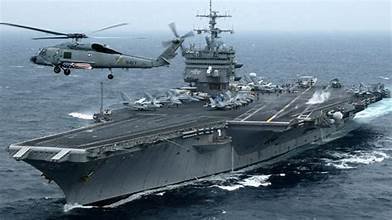
The U.S. naval blockade imposed on Iranian oil exports appears to be more than an economic measure designed to reduce Tehran's revenues. If it continues at its current pace, it could represent an attempt to fundamentally reshape the pressure equation on Iran by targeting one of the principal sources of the state's ability to finance its economy, government, and foreign policy simultaneously.
According to a report by The Wall Street Journal, the blockade reinstated by the U.S. Navy in mid-July has brought new Iranian oil exports through the Persian Gulf to a complete halt. The newspaper, citing data from the vessel-tracking company Kpler, reported that no Iranian crude shipment has passed through the blockade since its reinstatement, while Tehran continues to load limited quantities of oil onto tankers that remain stranded inside the Gulf.
If these developments persist, Iran's problem is not simply a decline in the volume of oil exports. Rather, it is the disruption of the financial cycle through which oil is converted into foreign currency and usable state revenues.
That is precisely what makes the development strategically significant. Traditional oil sanctions often leave room for evasion, smuggling, and the rerouting of shipments. An effective maritime blockade, by contrast, targets the next stage directly: Iran's ability to move the oil it has produced and sold beyond the region and into international markets.
From Sanctions to Effective Economic Strangulation
For years, Iran has developed mechanisms to adapt to restrictions on its oil exports. Yet the current situation, as described in the report, suggests a shift from merely limiting Iran's ability to sell oil toward preventing exported oil from physically reaching international buyers.
That is a strategically important distinction.
A state that can produce oil but cannot export it faces a fundamentally different problem from one whose production capacity has declined. In the former case, production capacity itself can become a liability, while existing inventories become a finite source of temporary relief rather than a sustainable stream of revenue.
The Wall Street Journal estimates that Iran is currently relying on floating inventories that left the region before the blockade was reinstated in July. Those stocks are expected to run out by mid-October, with oil revenues potentially coming to a complete halt by mid-December.
If that scenario materializes, the consequences will extend well beyond the energy sector to public finances, the exchange rate, inflation, and household purchasing power.
Oil Is More Than a Commodity in the Iranian Economy
The sensitivity of oil to Iran's economy lies in the fact that it is not simply a productive sector whose decline can occur without affecting the rest of the economy.
When oil revenues disappear or foreign-currency inflows decline sharply, the impact is transmitted to the value of the national currency and to the state's ability to finance imports and manage its fiscal needs.
This helps explain the reported sharp depreciation of the rial and the rise in inflation.
But the situation contains an important political paradox: the more successful Washington is in weakening the Iranian economy, the greater the potential social pressure on the Iranian state—but this does not necessarily mean that the pressure will translate into political concessions.
An economy can deteriorate faster than a political system changes its strategic calculations.
This is the central dilemma confronting a strategy of maximum pressure: how can economic pain be converted into a specific political outcome?
The American Bet: Economics as a Negotiating Instrument
The blockade can be interpreted as an attempt to create a widening gap between the cost of continued confrontation and Iran's ability to sustain it.
Pressure on oil exports is designed to reduce the resources available to the state, while depreciation of the rial and rising inflation transfer part of the cost of the crisis directly to society.
The result is a two-level pressure equation:
pressure on the state through declining revenues, and pressure on society through prices, incomes, and purchasing power.
The success of this strategy, however, depends on a fundamental political assumption: that accumulating economic pressure will eventually push Iran's leadership toward concessions at the negotiating table.
This is where the limits of the strategy become apparent.
If Tehran concludes that concessions made under pressure will simply invite additional demands, the result may be the opposite of what Washington intends. Economic pressure could reinforce resistance rather than produce capitulation, particularly if the Iranian leadership views the ability to withstand external pressure as part of its broader deterrence strategy.
Why Economic Strangulation May Not Produce Capitulation
The assessment offered by Ellie Geranmayeh, an Iran expert at the European Council on Foreign Relations, captures this contradiction. She expects the U.S. campaign to have a significant impact on ordinary Iranian households, while expressing considerable doubt that this pressure will necessarily lead Iran to capitulate at the negotiating table. In her assessment, the available evidence suggests that the Iranian system is more likely to resist.
This highlights the need to distinguish between a society's ability to endure an economic crisis and a regime's ability to endure it.
Political systems do not make foreign-policy decisions on the basis of economic indicators alone. They may interpret external pressure as a national-security challenge, a question of sovereignty, or a broader struggle over the regional balance of power.
Economic deterioration can therefore increase public dissatisfaction without automatically producing a change in foreign policy.
Indeed, some political systems may respond to external pressure by tightening domestic controls, redefining priorities, and mobilizing society around a narrative of resistance.
The Battle of Time
The most consequential aspect of the current situation, according to the material, is that time itself is becoming a weapon.
If floating inventories represent Iran's temporary buffer, then their expected depletion means Tehran's ability to postpone the financial consequences of the blockade will gradually diminish.
The coming months could therefore become a genuine test between two competing strategies:
a U.S. strategy that assumes tightening economic pressure will force Iran to recalculate, and an Iranian strategy that relies on endurance and the search for alternative mechanisms to survive the peak of the pressure.
The longer the blockade continues, the more important Iran's ability to preserve even minimal foreign-currency inflows and manage domestic markets will become.
For Washington, however, sustaining the blockade over an extended period also carries political and strategic costs. Economic pressure does not operate in a vacuum; it operates within an extremely sensitive regional environment, where additional escalation could open confrontation pathways extending well beyond the oil sector.
Between Economics and Security
The issue therefore increasingly becomes a matter of regional security rather than merely an oil dispute.
The Persian Gulf is not simply an energy-producing and exporting region. It is one of the world's most strategically important economic and maritime corridors. A naval blockade targeting Iranian oil exports therefore places economic and maritime security in direct confrontation.
As pressure on Iran intensifies, the question of how Tehran will respond becomes increasingly important.
Will Iran accept a gradual erosion of its revenues? Or will it attempt to raise the cost of the blockade? And will its response remain economic and political, or could it take broader security-related forms?
The available material does not provide definitive answers. It does, however, reveal a potentially dangerous equation: the closer economic pressure comes to strangling Iranian revenues, the more important the ability of both sides to manage escalation becomes relative to their ability to achieve an isolated economic advantage.
The Rial and Inflation: The Domestic Front of the Blockade
If oil tankers represent the external front of the crisis, the rial and inflation represent its domestic front.
The depreciation of the national currency means that the impact of the blockade does not remain confined to government accounts. It reaches everyday life through higher prices for goods and services and increased costs of imports.
This is the most politically sensitive dimension of the crisis.
Governments can, to a certain extent, manage declining revenues by cutting expenditure, drawing on reserves, or reallocating resources. But their ability to prevent deterioration in living standards becomes increasingly difficult as the crisis persists.
Yet rising social costs do not automatically translate into organized political pressure capable of changing the regime's behavior.
This leaves one of the most important uncertainties in the current situation: will economic pain become a source of pressure on the leadership, or will it instead become a source of mobilization against external pressure?
A Battle of Resolve, Not a Battle Over Barrels
At its core, the current confrontation is not simply about how many barrels of oil Iran can export. It is about the willingness and ability of each side to absorb the cost of its strategy.
Washington seeks to demonstrate that its ability to control maritime trade and energy flows can make sanctions more effective and that depriving Iran of revenue will raise the cost of continued confrontation.
Tehran, by contrast, is likely to view the issue through a different strategic lens. If Iran can withstand economic strangulation, it can portray the blockade itself as evidence of its ability to resist external coercion.
The continuation of the crisis therefore becomes part of the deterrence struggle.
The side that backs down first risks losing more than an economic contest; it could also lose part of its political credibility.
Can Iran Hold Out Until December?
If the situation remains as described, mid-December represents a particularly sensitive point, given that it is the projected date by which Iranian oil revenues could potentially cease altogether.
But treating this date as a predetermined "collapse deadline" for Iran would be an overstatement.
The depletion of a particular stockpile does not necessarily mean the collapse of a state, just as the cessation of oil revenues does not mean the disappearance of all other sources of income or the complete shutdown of the economy.
The more precise question is: to what extent can Iran reallocate its resources, reduce its foreign-currency consumption, seek alternative channels, and absorb the effects of inflation and currency depreciation?
For Washington, the corresponding question is not simply whether the blockade will hurt Iran, but whether that pain will be sufficient to achieve the political objective it seeks.
This is the fundamental distinction between the success of a punishment and the success of a strategy.
The United States may succeed in sharply reducing Iranian oil revenues without necessarily achieving the political outcome it seeks.
Conclusion: Economic Strangulation Does Not Equal Political Settlement
The current developments point to a new phase in the U.S.–Iran confrontation, one in which economic pressure is increasingly being used as an instrument for reshaping political behavior.
Yet the history and politics of sanctions counsel against assuming an automatic relationship between economic deterioration and political concession.
Political systems may negotiate when they conclude that settlement is less costly than continued confrontation. But they may also refuse if they believe that concessions threaten their survival, strategic position, or deterrence credibility.
The U.S. naval blockade, if sustained, will therefore subject Iran to severe economic pressure. But it will also test the American strategy itself:
Can Washington transform Iran's economic losses into measurable political concessions, or will it merely succeed in making Iran poorer without making it more willing to compromise?
Ultimately, the coming months may become a contest of time, resolve, and the capacity to absorb costs.
If Iran's existing inventories are exhausted before Tehran can establish alternative channels, the pressure will intensify significantly. If, however, Iran manages to overcome the bottleneck or rebuild alternative financial and commercial channels, the blockade could evolve from an instrument intended to force negotiations into another factor prolonging the confrontation.
This is ultimately what will determine the success of the American strategy: not its ability to prevent a tanker from leaving the Gulf, but its ability to turn that interdiction into a political outcome capable of changing Tehran's strategic calculations.
Most read



Read also