
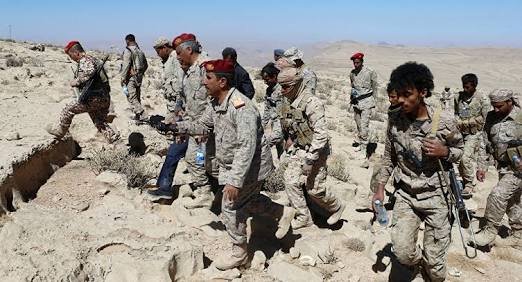
The significance of Saada lies not merely in its status as a border governorate, but in its position as a link between the Saudi border and Yemen’s interior, connecting it to Hajjah, Amran, and Al-Jawf and to the wider geographic space leading toward Sana’a. Its geography has therefore become a variable that extends beyond the local level, directly affecting Saudi border security and the broader security environment of the Gulf and the Red Sea.
The danger posed by Saada stems from the fact that its borders are not simply a dividing line between two states, but rather a functional space where population movements, trade, official and unofficial crossings, and social ties intersect with smuggling and security risks. Border security, therefore, cannot be achieved through a purely military approach. Closing borders without addressing the informal economy and local development may simply cause the problem to re-emerge in different forms.
Saada’s history also demonstrates that its strategic value increases when its border location coincides with weak state institutions. Geography, terrain, and social linkages can then become instruments for reproducing influence. The issue, therefore, is not the nature of the local community or its sectarian diversity in itself, but rather the politicization of identity and its transformation into an instrument of competition over power and influence.
For Saudi Arabia, stability in Saada constitutes an important component of the security of its southern border, but it should not be treated as a security issue isolated from developments inside Yemen. Sustainable security requires effective border and crossing-point management and efforts to combat smuggling, alongside local development, the regulation of trade, and the establishment of institutional relations with local communities. In this sense, development itself becomes an instrument of national security, rather than merely an economic policy.
This reveals the central paradox: the same geography that has made Saada a source of conflict can also make it a platform for stability. Borders can be transformed from spaces for smuggling into commercial corridors; border crossings can become logistics hubs; social ties can serve as channels of communication; and the informal economy can gradually be transformed into a legal economy that creates interests vested in stability.
Accordingly, the most sustainable scenario is not the achievement of temporary security calm, but the redefinition of Saada’s function within the Yemeni state: effective institutions, organized border security, a legitimate economy, local development, and community partnership. By contrast, continued institutional weakness and the persistence of the informal economy would leave the governorate vulnerable to renewed conflict and regional power competition.
Conclusion: Saada is not a center of conflict merely because of its location, but because its geography interacts with weak state institutions, the informal economy, and competition for influence. Transforming it from a “geography of conflict” into a “geography of stability” therefore requires an approach that goes beyond security measures to encompass state-building, development, and border management. Political forces and alliances may change, but geography remains; what changes is the political and security function assigned to it.
Most read