
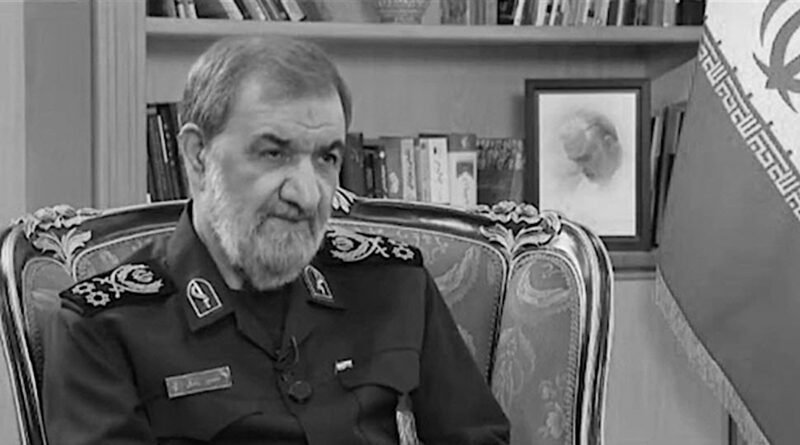
Statements by Mohsen Rezaei, one of Iran’s most prominent former Islamic Revolutionary Guard Corps commanders, regarding the possibility of developing nuclear weapons and threatening the flow of oil through the Persian Gulf and the Strait of Hormuz point to a sharpening of Iran’s strategic rhetoric amid the military and economic pressures facing Tehran.
The significance of these statements lies in the fact that they bring together three interconnected dimensions of Iranian policy: the future of Iran’s nuclear program, maritime and energy security in the Gulf, and the way Tehran manages its external relations and internal political balance. The statements do not necessarily mean that a final Iranian decision has been made to develop nuclear weapons or close the Strait of Hormuz. They do, however, reflect the widening range of options being openly discussed within Iran’s political and security discourse.
A Shift in the Nuclear Discourse
Public discussion of the possibility of developing nuclear weapons represents a notable shift in Iranian rhetoric, particularly when it comes from a figure with a prominent military and security background. Rezaei based his argument on the premise that possessing nuclear weapons could provide Iran with greater deterrent capabilities at a lower cost than building massive conventional forces capable of confronting adversaries with clear military and technological superiority.
This argument reflects a view of nuclear capability as a potential means of strengthening deterrence and preventing future attacks against Iran. At the same time, any transition from possessing nuclear capabilities to actually developing a nuclear weapon would represent a qualitative change with far-reaching implications for Iran’s international relations and the regional security architecture.
The issue is particularly sensitive given the continuing tensions surrounding Iran’s nuclear program and international monitoring mechanisms. Questioning the effectiveness of the Nuclear Non-Proliferation Treaty and the International Atomic Energy Agency reflects, from the Iranian perspective, a perception that existing international arrangements and safeguards have failed to provide Tehran with the protection it expected.
From a broader perspective, however, any Iranian move toward nuclear weaponization could simultaneously trigger greater international and regional pressure and prompt other countries to reassess their own security and nuclear policies.
The Strait of Hormuz as a Strategic Instrument
The threat to halt the flow of oil through the Persian Gulf and the Strait of Hormuz is linked to one of the most important strategic assets Iran possesses by virtue of its geographic position.
The Strait is a vital corridor for global energy flows, meaning that any major disruption to maritime traffic through it could affect oil and gas prices, financial markets, and international supply chains.
From the perspective of Iranian policy, threatening to disrupt maritime traffic could serve as a means of increasing the cost of sanctions and military pressure. Yet actually using this instrument would also carry significant risks for Iran itself, given the Iranian economy’s reliance on maritime trade and energy exports.
Any attempt to disrupt international shipping could also trigger broad military and diplomatic responses, particularly from the United States and countries that depend heavily on freedom of navigation in the region.
The threat to close the Strait can therefore serve a deterrent or negotiating function, but it would also represent a high-cost option if it moved from rhetoric to implementation.
Targeting U.S. and Regional Interests
Rezaei’s statements also included warnings about targeting American and regional facilities connected to energy and commerce if pressure on Iran continues.
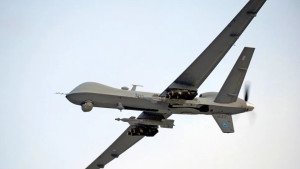
These threats fit into a broader Iranian strategy based on possessing asymmetric means of increasing the cost of any direct confrontation. Rather than relying solely on conventional military power, Iran can employ missiles, drones, regional networks of influence, and its ability to affect maritime and energy security.
This does not necessarily mean that Tehran has decided to use these instruments directly. Rather, it points to an expansion of the range of options it could employ if the conflict escalates.
At the same time, expanding the range of potential targets could increase the risk of miscalculation, particularly in an extremely sensitive regional environment where Iranian, American, Israeli, and Gulf interests overlap.
The Domestic Dimension of Escalation
Rezaei’s statements are not limited to foreign policy and military capabilities. They also emphasize the need to unify state institutions behind the Supreme Leader and portray political cohesion as an essential component of managing the coming period.
This can be understood in the context of Iran’s political system, in which the Supreme Leader retains a central role in matters of security, foreign policy, and defense, while centers of power are distributed among various political, security, and military institutions.
The emphasis on “obedience” and “unity” highlights the importance of institutional cohesion in managing crises, particularly when the country faces significant external pressure. Determining the extent of actual internal disagreements, however, or assessing their influence on Iranian decision-making requires evidence beyond political statements alone.
It is therefore more appropriate to view this rhetoric as an affirmation of the central role of the Supreme Leader in managing the current phase, rather than as conclusive evidence of extensive internal divisions.
Negotiations Amid Rising Pressure
The Iranian discourse also suggests a shift in the way negotiations are perceived. The insistence that Iran will not approach negotiations in the same manner as before can be understood as an attempt to link diplomacy more closely to elements of power and deterrence.
In international relations, states frequently use military and economic capabilities to strengthen their negotiating positions. Accordingly, an escalation in rhetoric may be intended as much to improve Iran’s negotiating position as to signal an actual readiness for confrontation.
The success of such a strategy, however, depends on the ability of the various parties to keep escalation under control. If reciprocal pressure leads to practical measures affecting maritime traffic, military installations, or energy infrastructure, it may become increasingly difficult to distinguish between negotiating pressure and direct confrontation.
The Deterrence Equation and the Risk of Miscalculation
The current developments place Iran in a complex strategic equation. On one hand, signaling nuclear capabilities and the ability to influence maritime traffic can strengthen deterrence and increase the cost of any military action against Iran. On the other hand, raising the level of threats could encourage its adversaries to adopt further military and economic measures.
This equation depends heavily on how the different parties interpret each other’s messages. What Tehran regards as a deterrent measure may be perceived by Washington or Israel as an indication of preparations for escalation or attack, and vice versa.
This makes communication channels and diplomatic signaling particularly important, even during periods of intense confrontation, in order to reduce the risk of misunderstanding and miscalculation.
The Economy and Energy as Part of the Conflict
The security escalation cannot be separated from Iran’s economic circumstances. Sanctions and financial restrictions affect Tehran’s ability to export oil, access markets, and secure international financial resources.
At the same time, the energy sector represents one of the most important instruments Iran can use in dealing with its adversaries, both through its exports and through its geographic position along major energy routes.
This creates a reciprocal relationship between economics and security: increased pressure on Iranian oil exports could encourage Tehran to make greater use of its geographic and military instruments, while any disruption to maritime traffic could push energy prices higher, with potential consequences for the global economy.
The security of the Gulf is therefore not merely a regional issue; it is directly connected to the stability of global energy markets.
What Can Be Inferred from the Statements?
It would be premature to regard Rezaei’s statements as an official declaration that Iran has adopted a policy of developing nuclear weapons or closing the Strait of Hormuz. Such decisions must be assessed through the actions of the various state institutions involved, rather than through individual statements alone.
The remarks nevertheless remain significant because they reveal an expanding discussion of more escalatory options within Iranian discourse and indicate that some prominent figures view nuclear capabilities and control over energy routes as potential instruments for strengthening Iran’s deterrence.
They also reflect an effort to redefine the relationship between power and diplomacy, so that negotiations are not viewed separately from the military, geographic, and economic capabilities available to Iran.
A New Phase of Risk Management
The current situation does not necessarily point toward an inevitable war, but it does reveal a rising level of risk associated with any new step taken by the parties to the conflict.
If the threats remain within the realm of political rhetoric, they may continue to serve as instruments of deterrence and negotiation. If, however, they develop into concrete measures—such as attacks on energy facilities, disruption of maritime traffic, or tangible steps toward nuclear weaponization—the nature of the crisis would change fundamentally.
In such a scenario, the challenge would not be limited to Iran. It would extend to all parties concerned with Gulf security and global energy supplies, requiring them to manage escalation without allowing it to develop into an open-ended confrontation.
The coming period therefore appears to represent a dual test: a test of Iran’s ability to use its strategic instruments to strengthen its position without crossing thresholds that could trigger a major military response, and a test of its adversaries’ ability to exert pressure without pushing the crisis to a point beyond which a return to diplomacy becomes increasingly difficult.
Between these two trajectories, the nuclear program and the Strait of Hormuz are likely to remain the two most consequential instruments in the regional security equation—not only because of the capabilities Iran possesses, but also because of the consequences that could follow if threats move from rhetoric to action.
Most read