Armenia Between European Opening and Strategic Repositioning in the South Caucasus

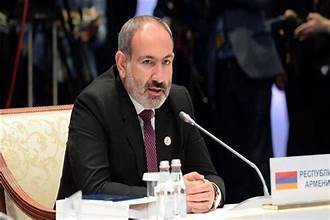
The transformations unfolding in Armenia's foreign policy are no longer merely a reaction to the outcome of the 2020 Nagorno-Karabakh War or a reflection of declining confidence in Russia's security umbrella. Rather, they have evolved into a comprehensive project aimed at redefining Armenia's geopolitical position within the strategic landscape of the South Caucasus. Recent developments—including the deepening of Armenia's partnership with the European Union, the continuation of cautious dialogue with Russia, and increased engagement with European and international institutions—indicate that Yerevan is pursuing a more independent foreign policy based on diversifying its strategic partnerships rather than remaining tied to a single geopolitical axis.
In this context, the government led by Prime Minister Nikol Pashinyan appears to be undertaking a gradual process of strategic repositioning that carefully balances regional power dynamics without pursuing a complete rupture with Moscow. Simultaneously, it seeks to capitalize on its growing engagement with Europe to reduce Armenia's economic and security dependence on Russia.
From Unilateral Dependence to Strategic Diversification
Armenian-Russian relations have deteriorated significantly in recent years as the Armenian political leadership increasingly questioned Russia's ability to provide traditional security guarantees, particularly following developments in Nagorno-Karabakh and what Yerevan perceived as Moscow's failure to safeguard Armenia's strategic interests.
Against this backdrop, Armenia has adopted a strategy centered on diversifying its international partnerships rather than merely replacing one strategic partner with another. Closer ties with the European Union do not necessarily signify Armenia's accession to an anti-Russian camp. Instead, they represent an effort to expand the country's strategic autonomy by distributing its political and economic dependencies across multiple international actors.
This approach explains Pashinyan's continued emphasis on the importance of Armenia's membership in the Eurasian Economic Union (EAEU), even as his government steadily advances its rapprochement with the European Union, despite Moscow's insistence that the two trajectories are strategically incompatible.
The EU's latest assistance package illustrates a qualitative shift in the philosophy of Europe's engagement with Armenia. The newly announced €18 million initiative to support trade diversification is far more than economic assistance; it constitutes an instrument for restructuring Armenia's economic orientation away from the Russian market.
This objective is reflected in European plans to open the EU market to the majority of Armenia's agricultural exports, reduce dependence on Russian markets for food products and beverages, establish national export-promotion institutions, and dispatch European experts to assist Armenian companies in integrating into the European Single Market.
This approach demonstrates the European Union's transition from a policy of providing financial assistance to one of reshaping Armenia's economic structure, thereby creating a long-term institutional linkage between the Armenian economy and the European economic system. From a strategic perspective, redirecting Armenia's trade patterns represents one of the most effective tools for reducing Russian influence, as Moscow has long employed economic dependence as a mechanism of political leverage, most notably through the restrictions it imposed on Armenian food imports during the period preceding the country's parliamentary elections.
Demining: The Security Dimension of Europe's Expanding Role
European assistance for humanitarian demining may appear to be primarily humanitarian in nature, yet it carries far broader strategic implications. The support package includes advanced remotely operated demining equipment, training for Armenian personnel, protective gear, and assistance for border delimitation efforts with Azerbaijan.
This effectively places the European Union—albeit indirectly—within one of the most sensitive security issues in the South Caucasus: the post-conflict demarcation of the Armenian-Azerbaijani border.
Moreover, Europe's involvement in demining operations provides it with an operational presence in border regions, an area traditionally dominated by Russia in its capacity as the region's principal security guarantor. Consequently, the European role is gradually evolving from that of an economic actor into that of a security-building partner, even if it still falls short of providing direct defense guarantees.
The recent meeting between Prime Minister Pashinyan and Russian Prime Minister Mikhail Mishustin reflects an important shift in Moscow's approach. After relying on economic pressure and information campaigns against the Armenian leadership, Russia now appears increasingly inclined to contain Armenia's strategic drift rather than escalate tensions further.
Several factors explain this adjustment. First, Moscow has recognized that previous pressure tactics failed to weaken Pashinyan politically and instead culminated in his electoral victory. Second, Russia's strategic preoccupations elsewhere have increased the costs of opening another front of confrontation with Armenia. Third, the Kremlin fears that continued escalation could accelerate Armenia's irreversible integration into the European political and economic sphere.
Nevertheless, Russia's conciliatory rhetoric has been accompanied by implicit warnings, particularly regarding the protection of Russian investments and Armenia's continued adherence to its obligations within the Eurasian Economic Union. In essence, Moscow appears to have shifted from a strategy of punishment to one of damage limitation, seeking to preserve at least a minimum level of influence within Armenia.
Pashinyan's strategy rests upon an exceptionally delicate balancing act. He seeks neither to lose access to the Russian market abruptly nor to forgo the long-term opportunity of European integration, while fully recognizing that full EU membership remains a distant prospect.
Accordingly, his government has pursued a policy that combines maintaining Armenia's membership in the Eurasian Economic Union, deepening economic cooperation with the European Union, avoiding openly confrontational rhetoric toward Moscow, and expanding Armenia's diplomatic room for maneuver without formally aligning itself with the West.
This approach embodies what may be described as "limited strategic autonomy," whereby Armenia seeks to maximize its strategic options without provoking the major powers surrounding it.
It is equally noteworthy that Armenia's European opening extends beyond economics and security to encompass stronger engagement with European and international institutions.
The re-election of Sargis Khandanyan as Chair of the OSCE Parliamentary Assembly's Committee on Democracy, Human Rights and Humanitarian Questions reflects Armenia's determination to strengthen its presence within multilateral institutions and present itself as a partner committed to democratic governance and human rights—messages that carry particular significance within the broader framework of Armenia's rapprochement with Europe.
Likewise, meetings between the Vice Speaker of the Armenian Parliament and the European Union's Special Representative for the South Caucasus concerning regional security and the Armenia-Azerbaijan peace process underscore that the European Union is no longer merely an economic partner but has increasingly become an influential political actor in managing regional affairs.
Ultimately, the cumulative evidence suggests that Armenia has entered a new phase of geopolitical repositioning aimed at reducing its excessive dependence on Russia without severing ties altogether, while simultaneously deepening its gradual integration with the European Union across the economic, political, and security domains.
Conversely, Russia appears to have shifted from a policy of direct coercion toward one of strategic accommodation, recognizing that losing Armenia entirely would constitute another significant setback for its influence in the South Caucasus.
The essence of the current geopolitical contest, therefore, is not Armenia's choice between East and West, but rather its effort to redefine its place within a rapidly evolving regional order in a manner that maximizes its strategic autonomy and reduces its vulnerability to external pressure. The success of this strategy, however, will ultimately depend on Yerevan's ability to maintain a delicate equilibrium between two major partners whose strategic priorities and geopolitical visions remain fundamentally at odds in a region where competition extends far beyond economics and diplomacy to encompass the broader balance of power throughout the South Caucasus.
Most read