
Yemen’s reconstruction is no longer an exclusively economic or humanitarian issue detached from the political and security transformations taking place across the region. It has become a test of the Yemeni state’s ability to restore its core functions, rebuild its institutions, and turn its geographical position and human resources into assets for regional stability. Situated at the crossroads of maritime trade routes connecting Asia, Africa and Europe, Yemen does not lack strategic potential. Rather, its central challenge lies in its inability to harness that potential amid political fragmentation, institutional disintegration, disrupted transport and trade networks, and declining investor confidence.
From this perspective, Yemen’s future should not be reduced to political negotiations and security arrangements alone. It requires a broader vision for rebuilding the national economy and connecting it to regional and international networks of mutual interest. Sustainable peace cannot rest solely on ending armed confrontations. It also requires shared economic interests, employment opportunities, commercial networks, and institutions capable of providing a stable environment on which citizens and investors can rely.
The Yemeni State Crisis and the Challenge of Economic Fragmentation
One of the most fundamental challenges facing Yemen is that political fragmentation has extended beyond the institutions of government into the economic sphere. It has disrupted trade and transport, weakened investment, and undermined the country’s ability to develop a coherent national economic policy. Under these conditions, reconstruction becomes considerably more complicated. Its success depends not simply on securing funding or building infrastructure, but on establishing unified institutions or reliable coordination arrangements, stable legal and administrative frameworks, and the capacity to ensure the movement of goods and people across different regions.
Rebuilding Yemen’s economy should therefore begin with restoring the state’s basic functions: transparent customs and tax regulations, contractual protection, secure property rights, commercial dispute resolution, reliable public services, and safe transport networks. Whether Yemeni or foreign, investors need more than geographical advantages. They need to know which authority issues permits, which institution guarantees the enforcement of contracts, and what legal framework protects their capital and enables the lawful and predictable transfer of profits.
This highlights an important political reality: reconstruction is not merely an economic process that follows peace. It can also become an instrument for rebuilding the state and restoring its legitimacy, provided that investment does not reinforce political fragmentation or finance unaccountable networks of influence.
Aden and Its Strategic Position: From Geographical Advantage to Commercial Influence
Aden illustrates the gap between geographical potential and the institutional capacity to translate it into economic influence. The city historically enjoyed an important commercial position, benefiting from its location along international shipping routes and the role of its port in maritime trade and vessel services. Restoring that role in the contemporary global economy, however, requires far more than modernising port facilities or increasing handling capacity. It demands an integrated logistics system encompassing storage, customs clearance, inland transport, maritime services, and efficient commercial procedures.
Aden’s strategic value lies not only in its ability to receive ships, but also in its potential to become a distribution hub connecting Asian and African markets with Yemen’s domestic economy. Such a role could create opportunities for local businesses in warehousing, packaging, processing, transport, and ship maintenance. Free zones could also attract industrial and logistics investment from regional and international partners, provided that electricity, security, and predictable investment regulations are in place.
These opportunities, however, remain conditional on addressing institutional and administrative bottlenecks that could make the cost of moving goods through Yemen higher than through competing routes. Competition between ports and trade corridors is therefore not determined by location alone. It depends on service efficiency, administrative speed, legal stability, and the ability to predict costs and delivery times.
The Yemen–Saudi Corridor and the Reconfiguration of Regional Connectivity
Developing commercial links between Aden and Saudi markets represents one of the most promising avenues for reintegrating Yemen into the regional economy. Relations between the two countries are based not only on geographical proximity and shared security interests, but also on historical and commercial connections that could be revived through modern transport and trade networks.
A practical starting point could be the establishment of a regular road freight service between Aden and an agreed distribution point in Saudi Arabia. An operational pilot could assess actual demand, transport costs, border waiting times, and security and insurance requirements. Such a step would provide a practical test before moving towards more costly and complex projects, including a railway linking Yemen with Saudi Arabia and potentially extending into other parts of the Arabian Peninsula and wider regional transport networks.
The significance of this proposal extends beyond trade. Economic connectivity could strengthen interdependence between Yemen and its neighbours, creating direct interests among business sectors and local communities in maintaining stability. Saudi Arabia could also contribute to Yemen’s economic recovery through investment, logistics, training, and the transfer of expertise, rather than limiting bilateral engagement to security and political challenges.
Nevertheless, any road or railway project would require clear intergovernmental agreements, secure transit arrangements, predictable border procedures, and independent feasibility studies. Regional connectivity should not be treated as an end in itself, but as a means of lowering trade costs, expanding markets, and improving production and employment opportunities within Yemen.
Yemen and International Competition over Trade Corridors
This vision acquires a broader geopolitical dimension when viewed against the transformation of global trade routes and international initiatives designed to connect transport networks across Asia, Africa, and Europe. Yemen’s position on the Arabian Sea and the Gulf of Aden, close to one of the world’s major maritime routes, offers it a potential opportunity to participate in intercontinental trade networks.
In this context, Aden could explore maritime links with Pakistani ports, including Gwadar, as well as other Asian and African ports. These links could subsequently be complemented by road and railway connections through Saudi Arabia and other countries willing to facilitate transit towards Türkiye and Europe. Different branches could be developed through Iraq or through Jordan and Syria, depending on the political, security, and economic conditions in each country.
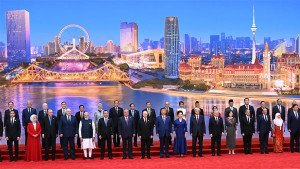
However, participation in international connectivity initiatives, including China’s Belt and Road Initiative, should not be based on the assumption that geographical location alone will attract investment. Trade corridors compete on the basis of cost, time, reliability, and security. Any proposed route must also be assessed against established maritime alternatives, including routes through the Suez Canal, taking into account transport, unloading, trans-shipment, border delays, and insurance costs.
Yemen’s interests therefore require a realistic and balanced approach to international partners. This means diversifying economic relationships, avoiding dependence on a single route or international power, and ensuring that proposed projects generate domestic economic value rather than turning Yemeni territory into a transit corridor from which local communities derive little benefit.
Productive Sectors as the Foundation of Social Peace
Sustainable economic recovery cannot rely on ports and roads alone. Major infrastructure projects need a domestic productive base capable of generating employment and connecting local communities directly to the benefits of development. This makes sectors such as agriculture, fisheries, food processing, digital services, and heritage conservation particularly important.
Yemeni coffee, with its longstanding reputation in international markets, offers an opportunity to strengthen agricultural exports and increase farmers’ incomes. The challenge, however, extends beyond production. It concerns farmers’ access to markets and finance, improvements in drying, storage, grading, and packaging, and the establishment of stable relationships with buyers. Agricultural expansion must also take account of limited water resources, prioritising productivity and value addition over uncontrolled increases in water consumption.
In the fisheries sector, investment in refrigeration, storage, and transport facilities could reduce post-harvest losses and improve fishermen’s incomes without necessarily increasing the volume of fishing. This approach is important because it connects economic development with environmental sustainability and the protection of resources on which coastal communities depend.
Restoring historic towns and buildings could also serve a purpose beyond heritage conservation. It could generate employment, transfer traditional crafts to younger generations, and revitalise local markets. Domestic visitors and Yemenis returning from abroad could provide an initial market for the gradual revival of tourism, while international tourism could expand as security, public services, and infrastructure improve.
These sectors carry particular political and social significance because they distribute the benefits of recovery more widely, reducing the concentration of economic opportunities in major urban centres or among limited business groups. The more closely development is connected to local sources of income, the greater the potential to rebuild public confidence in state institutions and strengthen social stability.
Youth and the Digital Economy: Addressing the Pressures Driving Migration
Unemployment and limited economic opportunities deepen the vulnerability of societies affected by conflict, pushing some young people towards migration or unstable economic activities. Creating productive employment within Yemen is therefore part of addressing broader social and security challenges, rather than simply an economic objective.
The digital economy offers opportunities that could be developed gradually in areas such as software development, design, translation, accounting, and remote professional services. Yet these opportunities require more than training programmes. They depend on reliable and affordable electricity and internet access, the ability to receive payments through lawful and dependable banking channels, shared workspaces, and connections between young professionals and clients and companies in overseas markets.
Equal opportunities must also be ensured for young women and men across different regions, rather than concentrating digital initiatives in major cities. Yemeni businesspeople abroad, particularly those based in Saudi Arabia and other Gulf countries, could help open markets, provide professional guidance, and create contractual opportunities. In this way, the diaspora could evolve from being primarily a source of remittances into a wider economic and knowledge network supporting national recovery.
Yemeni Capital Abroad and the Test of Confidence in the State
Yemeni businesspeople living abroad, including established investors in Saudi Arabia, represent an important resource for reconstruction. Their contribution could extend beyond finance to include expertise, commercial relationships, and access to markets. Attracting this capital, however, requires addressing the fundamental problem of investor confidence.
Investors need clear guarantees concerning property ownership, the validity of contracts, the authority of those signing agreements, dispute-resolution mechanisms, taxes and fees, and the lawful transfer of profits. These requirements apply not only to major foreign companies, but also to Yemenis seeking to invest family savings or establish small businesses.
National appeals for investment cannot substitute for these institutional safeguards. Nor should expatriate remittances be treated as an automatically available source of project financing. What is required is an institutional environment that makes investment a rational and secure economic choice, while ensuring that Yemenis retain a meaningful role in project ownership, management, and the employment opportunities generated.
From Infrastructure Projects to the Restoration of the Social Contract
Yemen’s reconstruction requires a balance between long-term strategic projects and smaller initiatives that can deliver immediate benefits. Discussions about ports, railways, and international trade corridors may offer an ambitious economic vision, but they do not by themselves address the daily needs of families seeking income, essential services, and employment.
Early recovery priorities should therefore include repairing local roads, restoring homes and markets, clearing irrigation channels, and improving fishing facilities and municipal services. Such projects can create paid employment relatively quickly, revive local economies, and offer young people—including those leaving armed groups—an opportunity to move towards more stable livelihoods.
Employment alone will not end the conflict. It can, however, reduce one of the factors that makes peace fragile: the absence of economic prospects. A political settlement that fails to produce tangible improvements in people’s lives remains vulnerable to a loss of public confidence.
Yemen Between State Reconstruction and a New Regional Role
Rebuilding Yemen offers an opportunity to redefine its position in the region, transforming it from a country burdened by conflict and dependence on aid into an economic partner capable of connecting markets, ports, and human resources across a wider regional space. Yet this transformation will depend not on the ambition of proposed projects or the strategic importance of geography alone, but on clear political and institutional conditions: a sustainable settlement, effective coordination among institutions, durable security, stable investment regulations, and regional partnerships that respect Yemen’s national interests.
Partnership with Saudi Arabia could provide a practical starting point through pilot transport and trade corridors, expanded investment in productive sectors, support for training and skills development, and stronger links between Yemeni businesses and regional markets. Cooperation with Asian, African, and international partners could further broaden Yemen’s options, provided that projects are based on realistic feasibility assessments and genuine commercial competitiveness.
Ultimately, the issue is not simply about building a port, a railway, or an industrial zone. It is about building a state capable of turning these projects into opportunities for its citizens, shared interests with neighbouring countries, and a foundation for more sustainable social and economic peace. Yemen will not regain its regional standing merely by returning to the maps of global trade. It will do so when its people become genuine participants in that return, and when geography is transformed from a latent advantage into an effective economic and political asset.
Most read




Read also