The Shenzhen Summit: Peace Among Great Powers or a Rearrangement of Spheres of Influence?

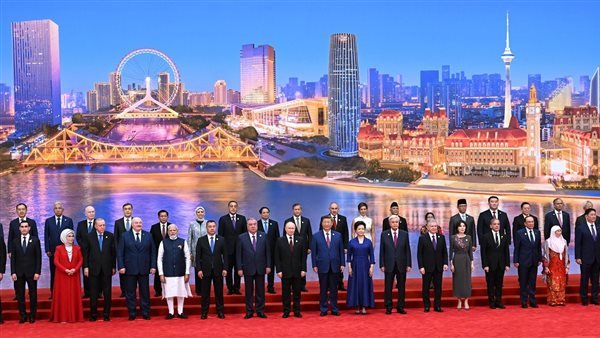
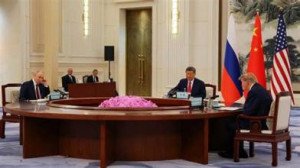
The Shenzhen summit, which brought together Donald Trump, Vladimir Putin and Xi Jinping on 19 November 2026, was more than a diplomatic meeting between three of the world's most powerful states. It reflected an attempt to redefine the rules governing international competition at a time marked by escalating wars, an accelerating arms race and the declining effectiveness of international institutions. Despite the ceremonial grandeur surrounding the summit and the claims that its concluding declaration heralded a new era in international relations, its actual achievements appear considerably more modest than the ambitions expressed in its accompanying political rhetoric.
The central paradox lies in the fact that the three leaders issued a declaration calling for international peace and stability without taking a clear position on the war in Ukraine or the military confrontation involving Iran, two of the most prominent sources of international conflict, directly connected to the policies of two of the participating powers. This raises fundamental questions about the nature of the peace advocated by the great powers: is it concerned with ending wars and protecting populations, or with managing conflicts in ways that preserve existing power balances and strategic interests?
Nevertheless, the significance of bringing together three major nuclear powers should not be underestimated, particularly amid growing risks of international confrontation. Dialogue, even in the absence of tangible outcomes, remains preferable to continued escalation and may create opportunities for understandings that reduce the risks of military miscalculation. Yet the value of diplomatic engagement should not automatically be confused with the credibility of the participants or the seriousness of their commitments.
The summit also exposes another contradiction concerning the future of international security. While the three powers emphasise the need to avoid nuclear confrontation, military modernisation programmes continue to expand, defence spending is increasing, and Europe is undergoing an extensive process of rearmament. This trajectory reflects a broader trend towards the militarisation of international relations, in which peace increasingly becomes a diplomatic narrative while preparations for war remain central to national economic and strategic policies. The contradiction becomes even more serious when military expenditure comes at the expense of social and developmental priorities, particularly amid mounting economic pressures on large sections of society.
One of the most revealing issues in the Shenzhen Declaration concerns the relationship with the International Criminal Court and the limits of accountability for violations of international law. The apparent convergence of views on restricting the Court's jurisdiction is particularly striking given the different positions of the three powers within the international justice system. It nevertheless points to a shared concern: the reluctance of major powers to accept international mechanisms capable of holding their decisions and military conduct to account. Here lies one of the most profound crises of the contemporary international order: the application of double standards, whereby international law is invoked to hold adversaries accountable, while sovereignty and immunity become justifications for limiting accountability when powerful states and their allies are concerned.
These contradictions cannot be separated from the economic and strategic interests shaping global competition. Disruptions to energy markets and supply chains, competition over critical minerals, and rivalry in artificial intelligence, semiconductors and military technologies have all become central elements in the reconfiguration of global influence. Control over strategic resources is no longer confined to oil and natural gas; it increasingly encompasses rare earth elements and the materials essential to advanced industries and digital transformation. In this context, regions such as Africa, Latin America and Central Asia are becoming increasingly important arenas of competition among major powers, raising the risk of reproducing established patterns of economic and political dependency.
Politically, the summit delivered different benefits to each participant. Trump found an opportunity to demonstrate his capacity to achieve a diplomatic breakthrough at a time of domestic political pressure and economic repercussions associated with the war. Putin gained an opportunity to reinforce the argument that Western efforts to isolate Russia had failed. Xi Jinping, meanwhile, appeared to emerge as the principal symbolic beneficiary, with China presenting itself as a power capable of bringing competing parties together and facilitating dialogue, thereby strengthening its position in shaping future international arrangements.
However, describing the summit as a 'new Yalta' is historically and politically exaggerated. The Yalta Conference of 1945 took place as the Second World War was drawing to a close, when the participating powers were negotiating the foundations of the post-war international order. The Shenzhen summit, by contrast, brought together powers that share no common international project but remain engaged in competition over influence, strategic interests and spheres of control. Moreover, reducing the future of the international system to arrangements negotiated by three major powers overlooks the transformations that have made it increasingly difficult to govern the world without the participation of other international actors, particularly countries of the Global South.
Multipolarity, important as it may be in challenging the monopoly of a single power over international decision-making, does not necessarily produce a more just or democratic order. It may simply lead to multiple centres of hegemony and competing spheres of influence, without fundamentally changing the position of smaller states and peoples whose capacity to shape global decisions remains limited.
Ultimately, the significance of the Shenzhen summit lies less in its declaration of peace than in what it reveals about the contradictions governing the contemporary international order. Its real measure of success will not be the number of agreements signed or diplomatic statements issued, but the ability of its participants to end ongoing wars, curb the arms race, respect state sovereignty and accept the principle of international accountability without selectivity. If peace remains merely an understanding among powerful states to manage their disagreements and redistribute spheres of influence, the world will not be moving towards a more stable international order. Rather, it will be witnessing a reconfiguration of existing structures of hegemony through new instruments and political narratives.
Most read



Read also