
The escalating political crisis in the Kurdistan Region of Iraq appears to be more than an electoral dispute between the Kurdistan Democratic Party (KDP) and the Patriotic Union of Kurdistan (PUK) over the formation of a new government and the distribution of official positions. Rather, it reflects a deeper crisis concerning the nature of governance in the Region, the future of political partnership between its two main political forces, and the balance between electoral legitimacy and the party-based power-sharing arrangements that have shaped their relationship for decades.
The resumption of the Kurdistan Parliament’s sessions after nearly two years of suspension, accompanied by disputes over the legitimacy of the session and the procedures for electing its leadership, has brought longstanding tensions between Erbil and Sulaymaniyah back to the forefront. While the KDP, drawing on its parliamentary majority, insists on its right to complete the constitutional process and form a government, the PUK argues that bypassing political understandings and marginalising its role amount to an attempt to monopolise decision-making within the Region’s institutions.
This confrontation reveals a structural problem in the Kurdish experience of governance. Despite the significance of electoral and institutional developments, they have failed to overcome the dual nature of power, which has remained based on the division of influence between the two parties and the allocation of administrative, security and political power centres through arrangements that have often extended beyond electoral results alone.
From an Electoral Dispute to a Crisis of Governance
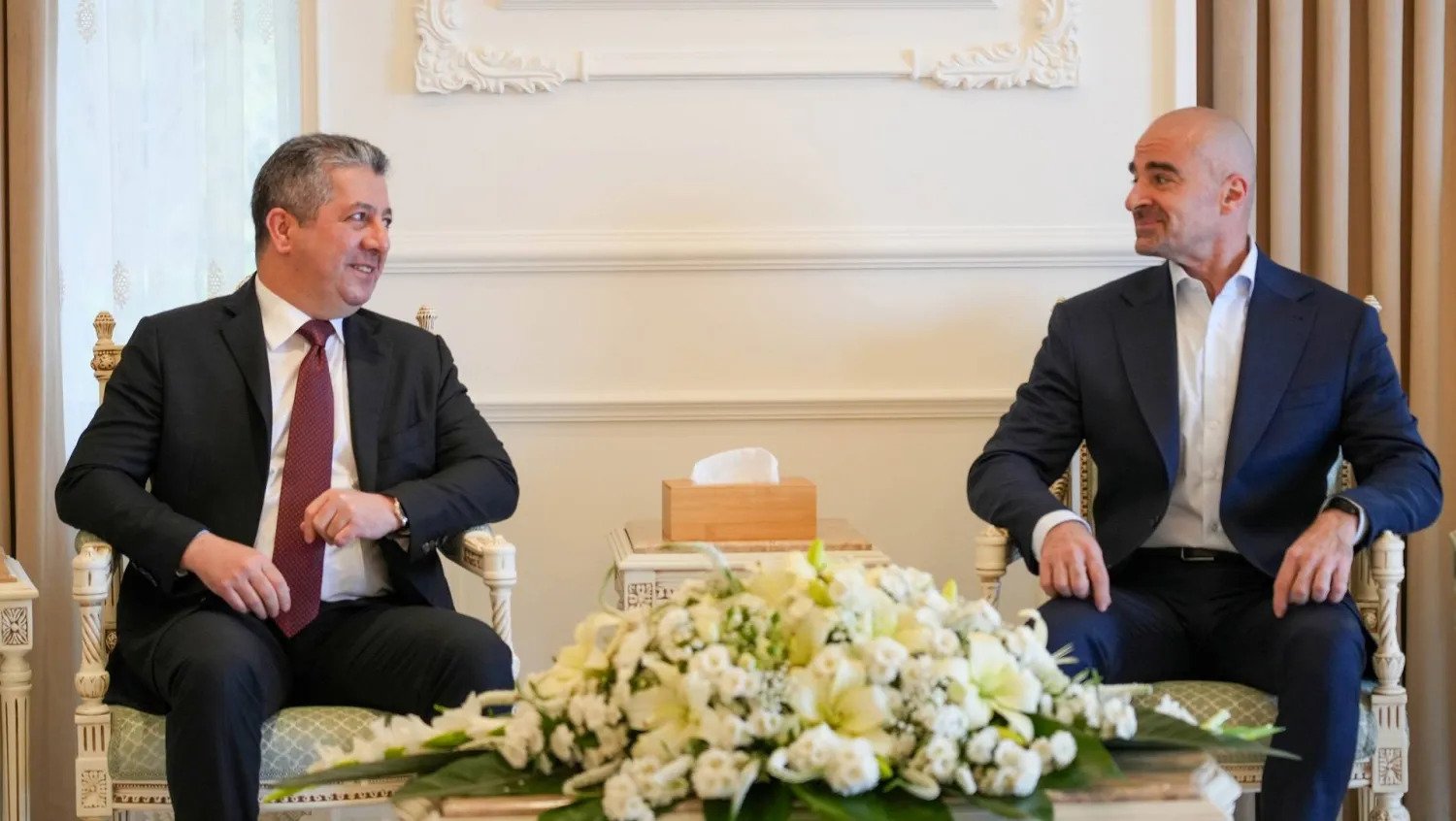
The Kurdistan Democratic Party, led by the Barzani family, currently enjoys greater electoral and political weight, giving it a stronger position in negotiations over government formation. The Patriotic Union of Kurdistan, led by Bafel Talabani, meanwhile, retains significant political, geographical and security influence, particularly in Sulaymaniyah Governorate and its surrounding areas.
The core of the disagreement, therefore, is not simply about the number of parliamentary seats or ministerial portfolios. It concerns the very nature of political partnership within the Region: Is Kurdistan moving towards a model of government based more firmly on parliamentary majority rule, or will power continue to be administered through a consensus-based formula that guarantees the two main parties a share in decision-making?
This dilemma places both sides before a complex political equation. The KDP’s insistence on using its electoral majority to proceed with the formation of institutions may reinforce the principle of parliamentary legitimacy, but it could also deepen the crisis of confidence with the PUK and intensify political divisions. Conversely, the PUK’s adherence to the traditional power-sharing formula could become a means of institutional obstruction if it fails to accommodate changes in the balance of electoral representation.
The crisis thus goes beyond conventional party competition, exposing the difficulty of moving from a system based on the division of influence to an institutional framework governed by stable constitutional rules, in which the Region’s institutions serve as the primary reference for decision-making rather than as extensions of party power centres.
Constitutional Legitimacy versus Political Consensus
The current confrontation has acquired an important legal dimension following the challenge filed by the PUK and its allies before Iraq’s Federal Supreme Court in Baghdad over the legitimacy of the parliamentary session held on 4 November. The challenge has raised questions concerning the quorum, legal procedures and the validity of the decisions adopted during the session.
However, recourse to the federal judiciary cannot be separated from the broader political dispute. Each side is seeking to strengthen its negotiating position by invoking legal and institutional legitimacy to support its vision for managing the next phase.
The central issue is that electoral legitimacy, while an essential basis for exercising power, does not necessarily confer the political capacity to govern the Region independently of other forces, particularly given the complexity of party, geographical and security balances. At the same time, historical understandings between the two parties cannot be regarded as a permanent source of veto power or as grounds for imposing political quotas that lack clear institutional foundations.
Overcoming the crisis therefore requires redefining the relationship between the parliamentary majority and the rights of the political opposition. This would help prevent the largest party from monopolising public institutions while also ensuring that political partnership does not become a permanent veto over the decisions of elected bodies.
The Threat of Division: A Negotiating Tactic or a Political Possibility?
The prospect of establishing two separate administrations within the Region is among the most serious manifestations of the current escalation, particularly amid speculation about the possible separation of Sulaymaniyah and Halabja from the administration based in Erbil. Although several sources and political figures have dismissed the likelihood of such a scenario materialising, its emergence reflects the extent to which mutual trust between the two parties has deteriorated.
Such threats cannot be dismissed as passing media rhetoric. The Region’s historical experience, particularly the confrontations of the 1990s, demonstrated how political disagreements between the two parties could develop into administrative, security and geographical divisions in the absence of unified institutions.
Nevertheless, current circumstances differ from those of that period. The unity of the Region is now linked to broader political, economic and security interests. Any attempt to institutionalise two separate administrations would also face constitutional and legal complications, as well as potential objections from Baghdad and regional and international actors.
More importantly, division would entail far more than a redistribution of positions or administrative powers. It could weaken Kurdistan’s negotiating position in its relations with the federal government and undermine its ability to safeguard its constitutional and economic gains. The threat of division may therefore serve a temporary negotiating purpose, but it carries strategic risks that far outweigh any potential party-level gains.
The US Role and Regional Balances
The US position carries particular significance in this crisis, given Washington’s longstanding relations with Kurdish leaders and its view of stability in the Kurdistan Region as an important component of Iraq’s and the wider region’s stability.
Statements by US envoy Tom Barrack calling for Kurdish unity convey a clear political message: Washington does not view the current disagreements merely as an internal party matter, but as a development that could affect Iraq’s stability and the interests of its allies.
The significance of this position extends beyond the conventional call for reconciliation. Washington recognises that continued divisions between Erbil and Sulaymaniyah could weaken an important political and security partner and create openings that competing regional powers might seek to exploit.
In this context, the parties’ differing external relationships cannot be overlooked. The KDP maintains close ties with Turkey, while the PUK has important relations with Iran. This gives the internal dispute potential regional dimensions, even though its immediate core remains the distribution of power and influence within the Region.
However, reducing the crisis to Turkish-Iranian rivalry would oversimplify its nature. External factors influence the calculations of both parties, but they do not, on their own, explain the roots of the disagreement or the motivations behind the escalation. Regional and international actors concerned with stability in Kurdistan possess varying degrees of leverage, but they cannot impose a sustainable settlement without genuine political will on the part of Kurdish leaders themselves.
Settlement Scenarios and the Future of Kurdish Partnership
In light of the current circumstances, the crisis appears to be open to three main paths.
The first is reaching a new political agreement that redefines the partnership between the KDP and the PUK through a balanced distribution of positions and powers, alongside institutional safeguards to prevent a recurrence of political paralysis. This scenario remains plausible given the high cost that division would impose on both parties.
The second is the continuation of political deadlock, with Parliament and the government remaining caught in a cycle of political disputes and both sides increasingly relying on legal, media and parliamentary tools to exert pressure on one another. This course could weaken the Region’s institutions and reduce its capacity to address unresolved issues with Baghdad.
The third possibility is moving towards early elections or reshaping the political landscape through new electoral understandings. Such a step could alter the balance of party representation, but it would not, by itself, guarantee a resolution of the structural disagreements concerning the nature of governance and the distribution of influence.
In all cases, any settlement will prove unsustainable if it is limited to redistributing positions between the two parties without addressing institutional weaknesses and the independence of political and security decision-making. What is required is not merely an agreement to form a new government, but a clearer framework for governing the Region—one that separates public authority from party interests and ensures that elected institutions operate in accordance with the law.
Kurdistan at a Crossroads: The State and Its Institutions
Ultimately, the current crisis places the political experience of the Kurdistan Region of Iraq at a crossroads. Kurdish leaders must either succeed in turning the present dispute into an opportunity to rebuild their partnership on more stable institutional and constitutional foundations, or allow the existing model of power-sharing to continue producing recurring crises that undermine governance and weaken the Region’s position both domestically and internationally.
Dividing the Region does not appear to be a realistic or sustainable way out of the crisis. Rather, it reflects the depth of the crisis of confidence and the use of political pressure tactics in an ongoing confrontation. US and international involvement may help bring the parties closer together and contain escalation, but it cannot substitute for addressing the internal causes of the crisis.
The real challenge facing Erbil and Sulaymaniyah is not determining which party should receive the larger share of power, but moving from the logic of dividing the Region to that of governing a unified Region through effective constitutional institutions. Kurdistan’s stability cannot remain hostage to personal and party-based understandings, just as its political and constitutional gains cannot be safeguarded amid continued dual decision-making and the erosion of trust between its main political forces.
Most read



Read also