
Naval Attacks off Benghazi: Escalating Security Risks and the Potential Transformation of the Libyan Coastline into an Arena for International Conflic

Introduction
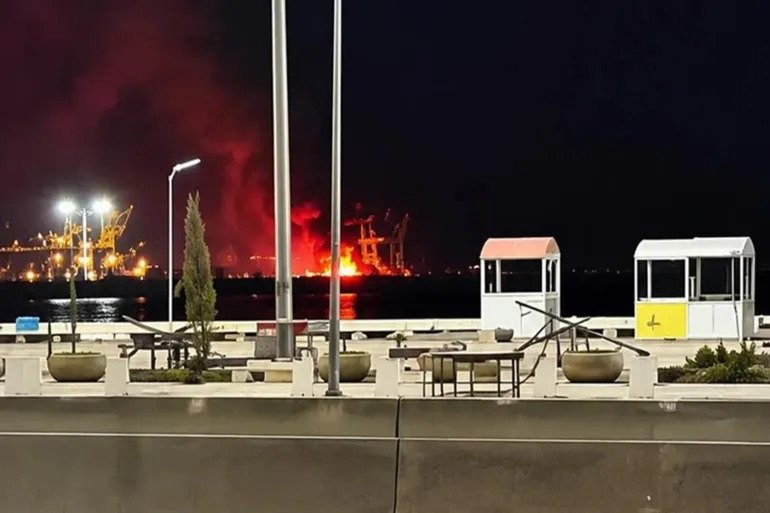
The eastern Libyan city of Benghazi witnessed a series of successive naval attacks on Sunday, targeting a Russian vessel docked inside the city's naval base, followed by attacks involving unmanned naval boats off the coast. According to Libyan and military sources, the subsequent attacks also affected civilian commercial vessels, including a ship flying the Maltese flag. These developments point to an escalation in security threats within Libya's maritime domain and raise the possibility of growing entanglement between the country's internal divisions and international military rivalries, particularly amid the ongoing Russia–Ukraine war.
These incidents are particularly significant given the nature of the targeted vessels, the successive waves of attacks, and the use of unmanned maritime weapons. Preliminary indications have also linked the attack on the Russian vessel to external actors. Nevertheless, the direct responsibility for the operations, the possible connections between the initial attack and the subsequent attacks, and the launch points of the unmanned boats remain unclear.
This report examines the sequence of events, analyzes their security and political implications, and assesses their potential impact on Libya's position within the broader context of the Russia–Ukraine conflict. It also distinguishes between information officially announced by Libyan authorities, accounts reported by media outlets and military sources, and assessments that have not been independently verified.
The Sequence of Attacks and the Expansion of Maritime Targets
The developments began in the early hours of Sunday with an attack on a Russian vessel docked inside Benghazi's naval base. According to Libyan sources cited by media outlets, several unmanned naval boats were used in the attack. Libyan naval forces reportedly intercepted four of them and damaged them.
These sources described the targeted vessel as a frigate carrying between 90 and 100 military personnel. However, information regarding the extent of the damage and the possibility of casualties remained unconfirmed. The sources also reported that recovered debris was believed to belong to Ukrainian-made Magura naval drones equipped with internet-based communications systems through Starlink.
The estimates cited by these sources placed the operational range of the drones between 800 and 1,500 kilometers. They also suggested that the boats may have been launched from one of the military bases in western Libya, which the sources claimed were operated by Ukrainian forces. However, these claims—including the identification of the drones, their technical equipment, and their launch location—have not been independently verified and should therefore not be treated as established facts.
Regarding the attack on the Russian vessel, Barak Ravid, a correspondent for Axios, cited an informed source as saying that Ukraine's Security Service (SBU) had carried out the long-range attack. According to the available information, this attribution relates specifically to the attack on the Russian vessel. It does not independently establish the agency's responsibility for the subsequent attacks on commercial ships off Benghazi.
In a significant subsequent development, another wave of attacks involving unmanned naval boats was reported off the city's coastline during the evening. Sources close to the General Command of the Libyan National Army stated that forces affiliated with the command had intercepted the attacks, while several civilian commercial vessels were reportedly hit.
In this context, Reuters quoted two Libyan military sources as saying that a commercial vessel flying the Maltese flag had been targeted by a maritime drone off Benghazi. They also reported that Libyan naval and air forces had intercepted more than 12 maritime drones during the evening. In a separate account, Russia Today quoted military sources as saying that 21 unmanned boats had participated in the latest attack, of which Libyan forces intercepted 17, while one managed to strike its target.
There is insufficient information to determine whether the figures cited in the two accounts refer to the same wave of attacks or to different stages of the operations. They therefore cannot be combined into a single overall tally. The identities of all the damaged vessels, the nature and extent of the damage, and the possibility of human casualties also remain unclear.
The Official Libyan Position and the Investigation into the Attack
Following the early-morning incident, the government appointed by the House of Representatives, headed by Osama Hammad, issued a statement saying that preliminary investigations indicated an explosion aboard a Russian vessel docked inside Benghazi's naval base. The government suggested that the vessel may have been attacked using unmanned vehicles.
The statement explained that the vessel was returning to Russia and had stopped in Benghazi to replenish its fuel and supplies, within the framework of maritime cooperation and facilitation agreements between the two countries. The government also confirmed that the resulting fire had been brought under control, the site secured, and the port and naval base facilities and storage areas protected. It added that operations at the site were continuing normally.
The statement did not identify the vessel by name or confirm whether it was a military ship. Nor did it disclose the extent of the damage or provide details regarding possible casualties. Separately, Libya's National Safety Authority announced that a fire caused by an ammunition explosion inside the base had been extinguished, urging residents to stay away from the surrounding area.
At the procedural level, the government instructed the relevant security and military authorities to launch a comprehensive investigation and coordinate with Russian authorities to conduct a joint inquiry aimed at establishing the circumstances of the attack, its origin, and the party responsible.
The government described the targeting of the Russian vessel as a "serious assault on national sovereignty," emphasizing that it reserved the right to take legal and diplomatic measures and hold accountable anyone proven to have been involved in planning, carrying out, or supporting the attack.
It also stressed that Libya is not a party to the Russia–Ukraine war and would not allow its territory, ports, or territorial waters to become an arena for settling scores or exporting international conflicts.
This official position reflects an awareness of the incident's sensitivity and its potential implications for Libya's foreign relations. The targeting of a Russian vessel inside a Libyan naval facility is not merely a security matter; it also raises questions about the ability of Libyan authorities to protect military installations and maritime infrastructure and prevent the country's maritime domain from being used for operations connected to external conflicts.
Maritime Drones and the Changing Nature of Threats in Libya's Maritime Domain
The use of unmanned naval boats stands out as one of the most significant dimensions of these developments. Such systems can conduct relatively long-range maritime attacks while reducing the direct risks faced by their operators. They also enable strikes against vessels and maritime installations without requiring the deployment of large conventional naval platforms.
The successive or closely timed attacks highlight new challenges for coastal surveillance and defense systems, particularly in environments characterized by fragmented authority, multiple centers of power, and overlapping security and military jurisdictions.
The threat becomes considerably more serious when attacks extend beyond military targets to commercial and civilian vessels. Targeting a commercial ship, regardless of its identity or ownership, expands the consequences from the military sphere into the economic and commercial domain. It exposes maritime traffic to potential disruption, higher insurance and shipping costs, and increased risks to vessel crews.
From this perspective, the attacks off Benghazi should not be viewed merely as a limited confrontation between unmanned weapons and Libyan naval forces. Rather, they represent a test of the relevant institutions' ability to protect the maritime domain, address unconventional threats, and prevent the repercussions of international conflicts from spreading to Libyan ports and maritime facilities.
Libya and the Implications of the Russia–Ukraine Conflict
The attack on the Russian vessel carries additional geopolitical significance because of the broader context in which it occurred. It comes amid the continuing Russia–Ukraine war, whose repercussions increasingly intersect with military and political influence networks across several regions, including North Africa.
If the account attributing the attack on the Russian vessel to Ukraine's Security Service is confirmed, it would suggest that an aspect of the confrontation between Moscow and Kyiv has extended beyond the war's traditional theaters of operation. This would raise questions about the geographical reach of external military and intelligence operations and their possible connections to military and security networks operating in other regions.
However, this remains a hypothesis requiring official evidence and independent investigation. The information currently available is insufficient to establish all the details of the operation or determine whether the subsequent attacks on commercial vessels were part of the same operation or separate incidents.
Libya's situation is particularly sensitive because the country continues to suffer from institutional and military fragmentation, as well as multiple centers of influence and security capabilities. These conditions may make Libyan territory and maritime space vulnerable to exploitation in regional and international conflicts. Moreover, the existence of maritime cooperation and facilitation arrangements between the authorities in eastern Libya and Russia adds a political dimension to the targeting of the Russian vessel.
Consequently, the incident raises questions that go beyond identifying the party responsible for the attack. It also highlights the ability of Libyan authorities to ensure that ports, military bases, and territorial waters are not turned into platforms or theaters for operations linked to conflicts in which Libya is not directly involved.
Potential Repercussions for Maritime Security and Economic Interests
The targeting of commercial vessels off Benghazi represents a particularly sensitive development, given that maritime safety is connected to economic interests extending beyond the city and eastern Libya.
The potential consequences of these attacks can be examined at several levels:
1. Threats to commercial maritime traffic
Repeated maritime attacks, even if damage remains limited to a small number of vessels, could heighten concerns among shipping companies and vessel operators, potentially affecting decisions regarding transit routes and port calls in Libya.
2. Higher transportation and insurance costs
Security risks may prompt insurance providers and shipping companies to reassess the risks associated with Libyan ports and coastal waters. This could increase the cost of maritime services and commercial transportation.
3. Complications in foreign relations
The targeting of a Russian vessel inside a Libyan naval base places the relevant authorities before a significant diplomatic and security test, particularly given the need to manage relations with Moscow while avoiding direct involvement in the repercussions of the Russia–Ukraine confrontation.
4. Expansion of unconventional threats
The use of unmanned naval boats points to the possible expansion of relatively low-cost offensive capabilities compared with conventional naval systems. This creates a growing need to strengthen surveillance, early-warning, and interception capabilities.
5. Increased pressure on Libyan institutions
These developments impose additional challenges on Libya's security and military institutions, particularly in terms of coordinating efforts among the relevant authorities, exchanging intelligence, and ensuring unified procedures for protecting ports and coastal areas.
These consequences remain analytical possibilities associated with the evolution of the situation on the ground. They should not be interpreted as evidence that specific economic or commercial impacts have already materialized.
Potential Scenarios
In light of the available information, three main scenarios can be envisaged:
Scenario One: Security and Diplomatic Containment
This scenario would materialize if the Libyan investigation, in coordination with the Russian side, succeeds in establishing the circumstances surrounding the attack on the vessel, while the relevant forces manage to prevent further maritime attacks. Such developments could contain the immediate repercussions of the incident and lead to stronger security measures around naval bases and ports, as well as within territorial waters.
Scenario Two: Continued Limited Maritime Attacks
This scenario assumes that unmanned boats continue to be used in sporadic operations targeting vessels or maritime installations without escalating into a broader confrontation. In this case, security risks would persist, potentially affecting commercial maritime traffic and increasing pressure on Libyan authorities to develop their defensive and surveillance capabilities.
Scenario Three: Deeper Entanglement Between International Conflict and the Libyan Arena
This is the most dangerous scenario. If the attacks are conclusively linked to external actors, tensions among the international parties concerned could escalate, or Libyan territory and waters could be used for reciprocal operations connected to the Russia–Ukraine war. Such a development could further aggravate Libya's fragility and make it increasingly difficult for the country to maintain a safe distance from international conflicts.
It is not yet possible to determine which scenario is most likely before the investigation results are released, the parties responsible for the subsequent attacks on commercial vessels are identified, and the extent of any connection between those attacks and the initial incident becomes clearer.
Conclusion
The naval attacks witnessed in Benghazi reveal a worrying evolution in the nature of the security threats facing Libya. This is due not only to the targeting of a Russian vessel inside a naval base, but also to the subsequent extension of attacks to commercial ships off the coast and the use of unmanned naval boats in successive operations.
The significance of these developments goes beyond the immediate security incident. They raise broader questions about Libya's position within the international conflict landscape and the ability of its institutions to protect the country's maritime domain amid continuing political and military fragmentation. The events also underscore how institutional weakness, fragmented authority, and the absence of coordinated security arrangements can create opportunities for Libya's geography to be exploited in conflicts that extend far beyond its national interests.
The central challenge, therefore, is not limited to identifying those responsible for the attacks. It also involves establishing a comprehensive national framework to protect ports and maritime facilities, strengthening oversight of foreign military activities, developing surveillance and counter-drone capabilities, and activating diplomatic coordination to prevent Libya from being drawn into an indirect confrontation with international actors.
Ultimately, the fundamental question raised by the events in Benghazi is whether the Libyan state, through its various institutions, can safeguard its maritime sovereignty and prevent its coastline and ports from becoming geographical extensions of international conflicts whose consequences would serve neither its interests nor its stability.
Most read




Read also