
Jurf al-Sakhar and the Test of Iraqi State Sovereignty: Is Baghdad Moving Closer to Reclaiming Its Monopoly on Force?

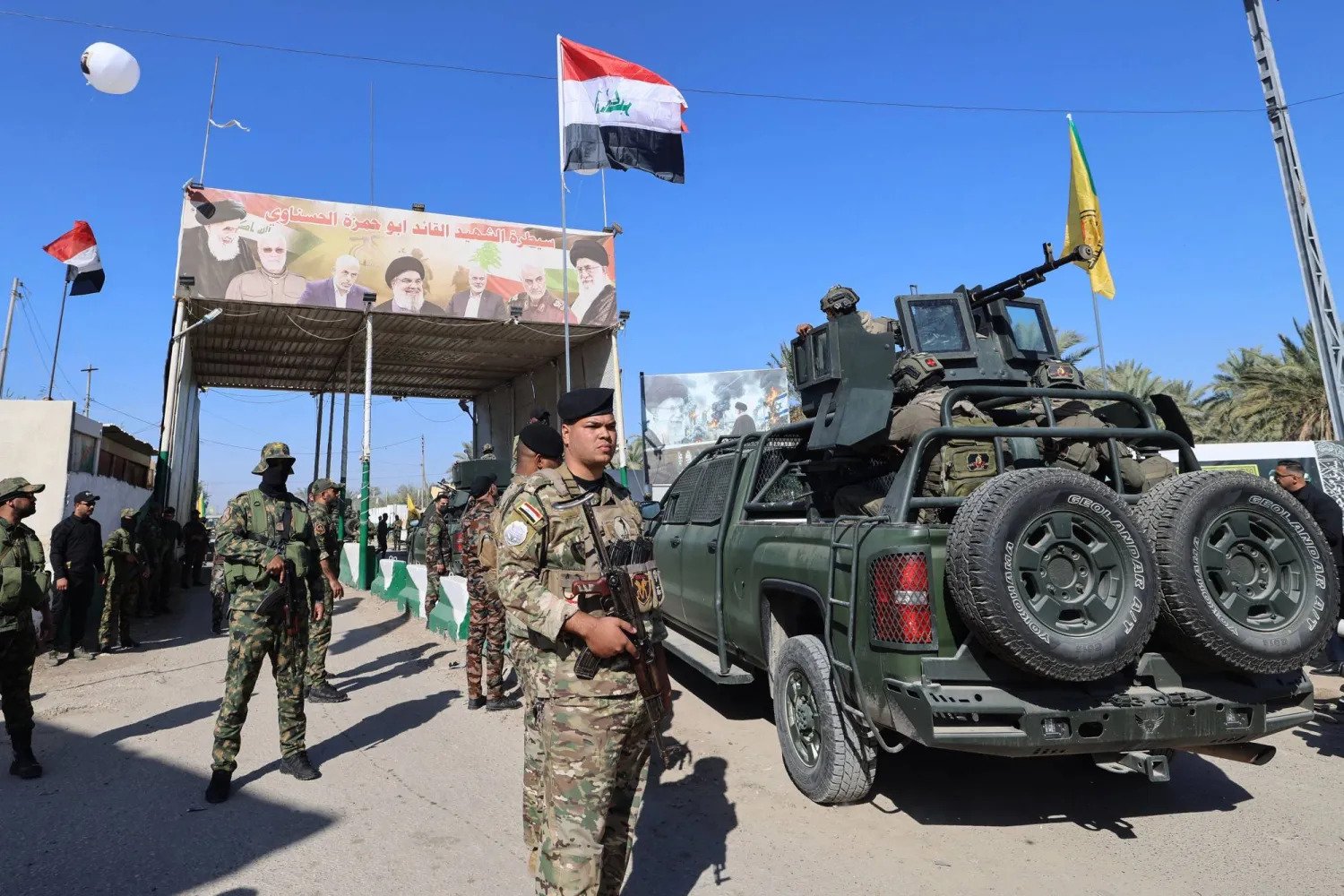
The redeployment of government forces in one of Iraq’s most politically and security-sensitive areas brings the issue of weapons under state control back into focus, placing the credibility of the Iraqi state before a consequential test on the ground.
The recent military and security movements in Jurf al-Sakhar, south of Baghdad, appear to involve far more than a routine rotation of units or a reorganization of security deployments. For years, the area has been associated with the influence of Kataib Hezbollah, one of the most prominent Iran-backed armed factions in Iraq. It has therefore become a telling example of the dilemma facing the Iraqi state as it seeks to reassert its authority across the country and bring an end to the existence of parallel centers of armed power.
The significance of the latest developments lies in their timing. Prime Minister Ali al-Zaidi has reaffirmed his government's commitment to placing all weapons under state authority, while joint government forces have entered the area and a new security command headquarters has been established to oversee military and security deployments there. Yet the central question is not simply whether government forces have entered Jurf al-Sakhar, but whether their presence can be transformed into effective and lasting state authority rather than a limited arrangement that coexists with independent armed centers of influence.
Jurf al-Sakhar: A Microcosm of the Iraqi State's Dilemma
Jurf al-Sakhar, later renamed Jurf al-Nasr, acquired particular strategic and security significance after Iraqi forces and armed factions took control of it in 2014, following battles against the Islamic State (ISIS). However, the area's recapture did not lead to a return to normal life. The return of residents and displaced families remained limited, roads and parts of the area continued to be closed, and its security administration became closely associated with the influence of armed factions, particularly Kataib Hezbollah.
Over time, Jurf al-Sakhar came to exemplify the overlap between formal state institutions and armed formations possessing their own field presence, organizational structures, and military capabilities. The problem, however, is not the existence of the Popular Mobilization Forces (PMF) as part of Iraq's security establishment. Rather, it concerns the degree of autonomy exercised by certain factions and the extent to which their decisions and movements are subject to the authority of the commander-in-chief of the armed forces and the institutions of the state.
Jurf al-Sakhar is therefore more than a strategically significant geographical area. It is a practical test of internal sovereignty: can the government exercise its executive and security authority consistently across all parts of the country, or will effective power remain divided between formal institutions and armed groups pursuing their own calculations?
Al-Zaidi's Message: Restraint Without Abandoning the Principle
In a message addressed to the forces entering the area, the prime minister urged restraint and wisdom, emphasizing that government forces were not engaged in a battle and that those present there were fellow citizens and members of the same national community, not enemies or adversaries.
This language carries two interconnected messages. On the one hand, it reflects an awareness of the sensitivity of any armed confrontation within Iraq's political and security environment, where clashes between government forces and armed factions could trigger a crisis extending well beyond the immediate area and threaten an already fragile political and security balance. On the other hand, it seeks to frame the restoration of state authority not as a campaign against a particular social or political constituency, but as an effort to bring armed power under a single constitutional and institutional framework.
Yet al-Zaidi coupled his call for de-escalation with an unequivocal declaration: "There will be no weapons outside the authority of the state." This is the essence of the challenge. How can the principle of the rule of law and the state's monopoly on force be enforced without triggering a wider internal confrontation? And how can the government move beyond the language of national reconciliation toward security arrangements that ensure all armed formations are subject to state authority?
Restraint may be essential to preventing escalation, but it must not become a pretext for preserving the status quo. Reconciliation does not mean accepting dual authority, and national belonging does not exempt any group from compliance with the law and state institutions.
The New Security Headquarters: Unified Command or the Genuine Restoration of State Authority?
The establishment of the new security headquarters, known as al-Musaytir, represents a significant administrative and security development. It brings together units from the army, Federal Police, Popular Mobilization Forces, and Energy Police. It is affiliated with the Federal Police Command and has been tasked with overseeing security deployments within the area's administrative boundaries, in coordination with security leaderships in Babil, Karbala, Anbar, and Baghdad.
The importance of this arrangement lies in its attempt to centralize operational oversight of the forces deployed in the area, rather than leaving room for multiple command and coordination centers. Bringing different formations under a single headquarters may also provide the government with a transitional framework for redefining the relationship between formal security institutions and forces that maintain an established presence on the ground.
However, the success of this initiative cannot be measured by the number of units represented at the headquarters or the institutional diversity of its composition. It must be assessed by whether the headquarters possesses genuine authority to issue and enforce orders, and whether all forces deployed in the area comply with its directives. The presence of representatives from several institutions within a single command structure does not, in itself, guarantee unified decision-making. That requires a clear chain of command and a final authority whose orders are binding on all parties.
In this sense, al-Musaytir is a test of the government's ability to move beyond coordination among existing forces toward establishing unified command over them—a fundamental requirement for any serious effort to restore the state's monopoly on the use of force.
The Return of Residents and the Reopening of Roads: The Civilian Measure of Success
The significance of developments in Jurf al-Sakhar extends beyond their military dimension. Government directives to reopen closed roads and allow families to return to their homes place the humanitarian and social dimensions at the heart of the operation.
After years of displacement and disrupted civilian life, the restoration of security control cannot be considered complete unless it translates into the safe and voluntary return of residents, the removal of restrictions on movement, the restoration of essential services, the protection of housing and property rights, and the resolution of legal and security issues preventing families from returning.
The return of residents could reconnect the area with its social and economic surroundings, transforming it from a prolonged state of security exceptionalism into a normal space of civilian administration. Achieving this, however, will require clear guarantees, transparent procedures, and cooperation between the federal government and local authorities, without allowing the return process to become an instrument of political competition or narrow security calculations.
The success of the state in reclaiming an area should not be measured solely by its ability to deploy forces there. It should also be judged by whether citizens experience the state's presence as a source of security, rights, and public services—not merely as the replacement of one armed authority by another.
The Crucial Question: Has Kataib Hezbollah Withdrawn?
Despite the importance of the redeployment and the establishment of the new command headquarters, the publicly available information does not yet establish whether the operation has been accompanied by the withdrawal of Kataib Hezbollah from the area, or whether the faction's position on the ground has undergone any substantial change.
This is a crucial point in assessing the significance of the developments. The redeployment of government forces may mark the beginning of a genuine transformation, but it could remain an administrative measure with limited impact if it is not accompanied by a clear redefinition of command and control, and by the subordination of all armed formations to government orders.
This does not mean that military confrontation is the only, or necessarily the best, way to restore state authority. Iraq's experience demonstrates that managing the relationship between formal institutions and armed factions requires a combination of political engagement, legal enforcement, institutional restructuring, and the capacity to implement government decisions. Any settlement that fails to establish a unified security decision-making structure, however, will merely postpone the problem rather than resolve it.
The Monopoly on Arms: A State-Building Challenge, Not Merely a Security Issue
Jurf al-Sakhar illustrates that the issue of weapons outside state institutions is not simply a matter of security. It is closely connected to the nature of Iraq's political system and its capacity to build a state with effective sovereignty. A state does not establish a monopoly on force merely by maintaining an army and police force. It does so when it holds ultimate authority over the use of force, the allocation of security responsibilities, the accountability of those who violate the law, and the prevention of parallel centers of power.
This process is made more difficult by the intersection of domestic and regional considerations, the political and military roles played by certain factions, and the links some of them maintain with networks of influence extending beyond Iraq's national borders. Consequently, bringing weapons under state control requires coherent political will, professional security institutions, a clear legal framework, and a national consensus that prevents the process from turning into a confrontation between components of Iraqi society.
Success in Jurf al-Sakhar could carry implications far beyond the area itself. It may serve as an indicator of the government's ability to address other locations where state authority overlaps with the influence of armed factions. Conversely, a failure to consolidate control, or reliance on a merely symbolic redeployment, could reinforce the perception that the principle of a state monopoly on arms remains more of a political declaration than an institutional reality.
From Reclaiming Territory to Restoring Sovereignty
The developments in Jurf al-Sakhar present Prime Minister Ali al-Zaidi's government with an opportunity to demonstrate that its commitment to placing weapons under state authority can become a practical course of action. Such a process would begin with reorganizing security command, extend to reopening roads and enabling residents to return, and ultimately seek to consolidate the authority of official institutions throughout the area.
The ultimate assessment, however, will depend on what happens next. Will all forces operating in Jurf al-Sakhar come under a unified government command? Will the state be able to dismantle the area's security restrictions and restore civilian life? And will armed factions relinquish independent centers of influence in favor of operating within binding institutional arrangements?
Baghdad's real challenge is not simply to enter Jurf al-Sakhar, but to ensure that the state does not remain merely another actor in the area's balance of power. Sovereignty is not restored by raising the national flag or deploying troops alone. It requires the consolidation of the rule of law, unified decision-making, and the restoration of citizens to normal life. Only then can the developments in Jurf al-Sakhar be regarded as the beginning of a genuine process of state restoration, rather than another round of managing the country's competing centers of armed power.
Most read



Read also