Can Civilian Dialogue Pave the Way Out of the Crisis in Sudan?

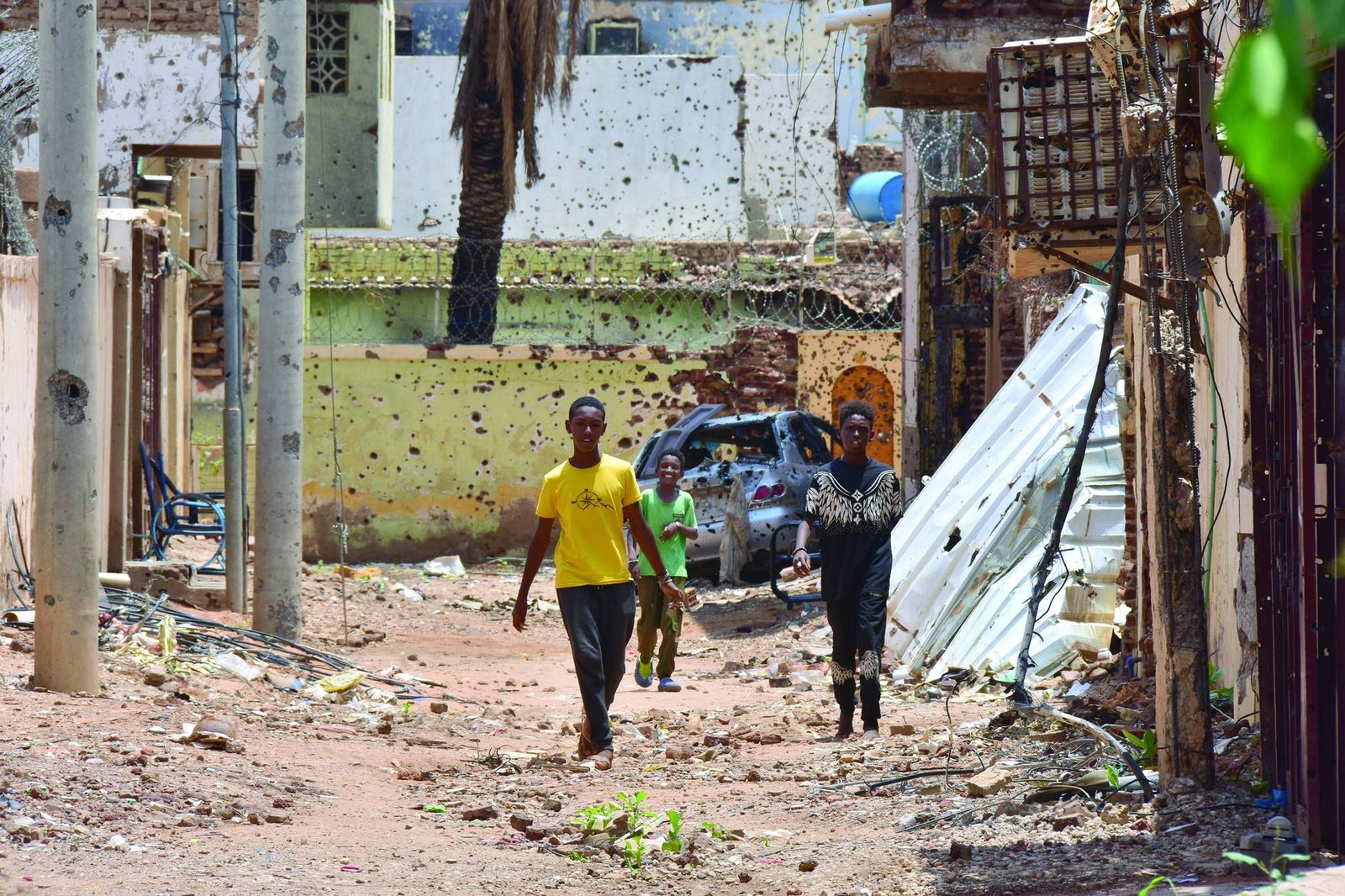
More than three years after the outbreak of war in Sudan, the conflict between the Sudanese Armed Forces and the Rapid Support Forces (RSF) has evolved beyond a military confrontation over power and influence. It has become a complex crisis threatening the unity of the state and its institutions, while placing the future of Sudan’s political and social order before unprecedented challenges. As fighting continues to spread, the humanitarian toll is mounting, essential services are collapsing, and millions of Sudanese are caught between displacement, hunger, and the loss of basic necessities.
Against this backdrop of prolonged attrition, a central paradox has emerged: political efforts to end the war are expanding, yet their ability to influence the calculations of the warring parties remains limited. While regional and international initiatives continue and the Sudanese Dialogue Preparatory Committee seeks to build consensus among civilian and political forces, the conditions for a meaningful settlement remain absent, amid ongoing military operations and widening divisions among the principal actors.
Civilian Dialogue and the Dilemma of Excluding the Military Parties
The Sudanese Dialogue Preparatory Committee's initiative represents an attempt to restore the role of the civilian and political track after military confrontation came to dominate the country's political landscape following the outbreak of war. The committee's activities, which reportedly included approximately 110 meetings with political groups and community representatives, alongside engagement with international actors, reflect an understanding of the importance of establishing a broader political foundation for any future settlement.
However, the fundamental challenge is not simply whether the committee can expand its consultations or bring civilian forces together around the same table. Rather, it concerns the nature of its mandate and the limits of its influence over the course of the war. The proposed dialogue excludes both the Sudanese Armed Forces and the RSF, on the grounds that military issues should be addressed through separate negotiation channels, while the civilian dialogue focuses on the political roots of the crisis and the future of the Sudanese state.
This approach makes sense in terms of distinguishing between the political and military tracks. Nevertheless, it raises a fundamental question: to what extent can a viable political settlement be achieved without the participation of the parties that possess military power and control a decisive part of the conflict's dynamics?
Sudan's problem does not lie solely in the absence of consensus among political forces. It also stems from the imbalance in relations between civilian authority and the military establishment, the proliferation of armed power centres, and the absence of stable rules governing political transition. Consequently, any dialogue that fails to develop a clear vision for addressing these structural imbalances may succeed in producing political understandings, but its impact on realities on the ground will remain limited.
The Dispute Over Priorities: Ending the Fighting or Launching Dialogue First?
The debate surrounding the initiative reveals a deeper division over the sequencing of priorities between securing a ceasefire and launching the political process. One position maintains that establishing a safe environment, beginning with a cessation of hostilities, is an essential prerequisite for meaningful dialogue. Continued military operations, according to this view, undermine trust and restrict the ability of civilian forces to participate freely and independently.
A contrasting position argues that making a ceasefire a precondition for dialogue could effectively suspend the political process indefinitely, particularly given that achieving a comprehensive cessation of hostilities itself requires political and security understandings that are difficult to secure amid the profound mistrust between the warring parties.
A more realistic approach, however, is to recognise that the two tracks should not be viewed in terms of absolute sequencing, but rather as parallel and complementary processes. A ceasefire requires direct negotiations between the military parties, while ending the war sustainably demands a political process that addresses the underlying causes of the conflict and prevents their recurrence. Civilian dialogue, therefore, should not become a substitute for military negotiations, just as a ceasefire should not be used as a pretext for postponing discussions about Sudan's political future.
The Legitimacy Crisis and the Representation of Civilian Forces
The initiative also faces a challenge concerning political representation and its ability to accommodate Sudan's diversity. Engaging a large number of political parties and alliances does not necessarily translate into national consensus. Similarly, involving community groups does not, in itself, guarantee that deep political divisions will be overcome.
This challenge is further complicated by doubts expressed by some parties regarding the committee's independence, with critics viewing it as closer to the positions of the existing authorities. The RSF has also rejected the initiative, accusing the committee of being aligned with Sudan's military leadership.
The crucial question, therefore, is how to prevent dialogue from becoming a mechanism for reproducing political polarisation or legitimising one side at the expense of another. Instead, the process must be based on clear principles of representation and participation that safeguard its independence and prevent any party from monopolising the right to speak on behalf of the state or society.
Moreover, excluding the military parties from civilian dialogue should not mean disregarding their influence over its potential outcomes. Rather, it requires a framework that connects civilian understandings with future security and military arrangements, preventing the political process from becoming detached from the realities of the conflict.
The Regional and International Dimension: Peace Beyond Sudanese Political Will
The difficulties surrounding a Sudanese settlement cannot be understood independently of the regional and international dimensions of the conflict. The war is no longer determined solely by the calculations of its domestic protagonists; it is also shaped by external interests and geopolitical dynamics that influence both the continuation of hostilities and the prospects for ending them.
Accordingly, responsibility for ending the war does not rest exclusively with the Sudanese people, although domestic political will remains an essential condition for any settlement. The international community must move beyond managing the crisis and monitoring its humanitarian consequences towards applying more effective pressure to halt arms flows, support negotiation efforts, facilitate humanitarian access, and establish safe corridors for civilians.
Adopting a balanced approach towards the warring parties does not mean equating their responsibilities or overlooking violations. Rather, it requires recognising that ending the war necessitates engagement with the actual balance of power, while simultaneously ensuring accountability and preventing impunity.
From Ending the War to Rebuilding the State
Ultimately, Sudan's central dilemma is not the absence of initiatives or a shortage of proposed solutions. It is the lack of consensus over the rules governing the state, the relationship between civilian and military institutions, and the future of the country's security apparatus. The success of the Dialogue Preparatory Committee should therefore not be measured by the number of meetings it holds, but by its ability to establish common political ground that can be translated into practical and implementable understandings.
The greatest challenge is to move beyond simply ending the fighting towards eliminating the conditions that produced it. Reaching a truce or ceasefire agreement, important as it may be, will not be sufficient unless it is linked to a political project that rebuilds state institutions on national foundations, establishes a unified and professional military, ends the fragmentation of armed power, and guarantees meaningful civilian participation in managing the transitional period.
The years of war have demonstrated that military victory does not necessarily provide a sustainable way out of the crisis, and that continued reliance on force only increases the risks of state fragmentation and societal exhaustion. Dialogue, on the other hand, will not automatically provide a solution unless it is supported by the necessary conditions of independence, representation, and the ability to influence political realities.
The opportunity before the Sudanese people, therefore, lies not merely in launching another dialogue initiative, but in establishing a national process that redefines the relationship between political authority and armed force, placing the interests of the state and society above the calculations of competing factions.
Sudan needs more than a political settlement that temporarily halts the fighting. It needs a comprehensive political project capable of preventing the war from recurring and restoring the state's capacity to survive and function.
Most read



Read also