
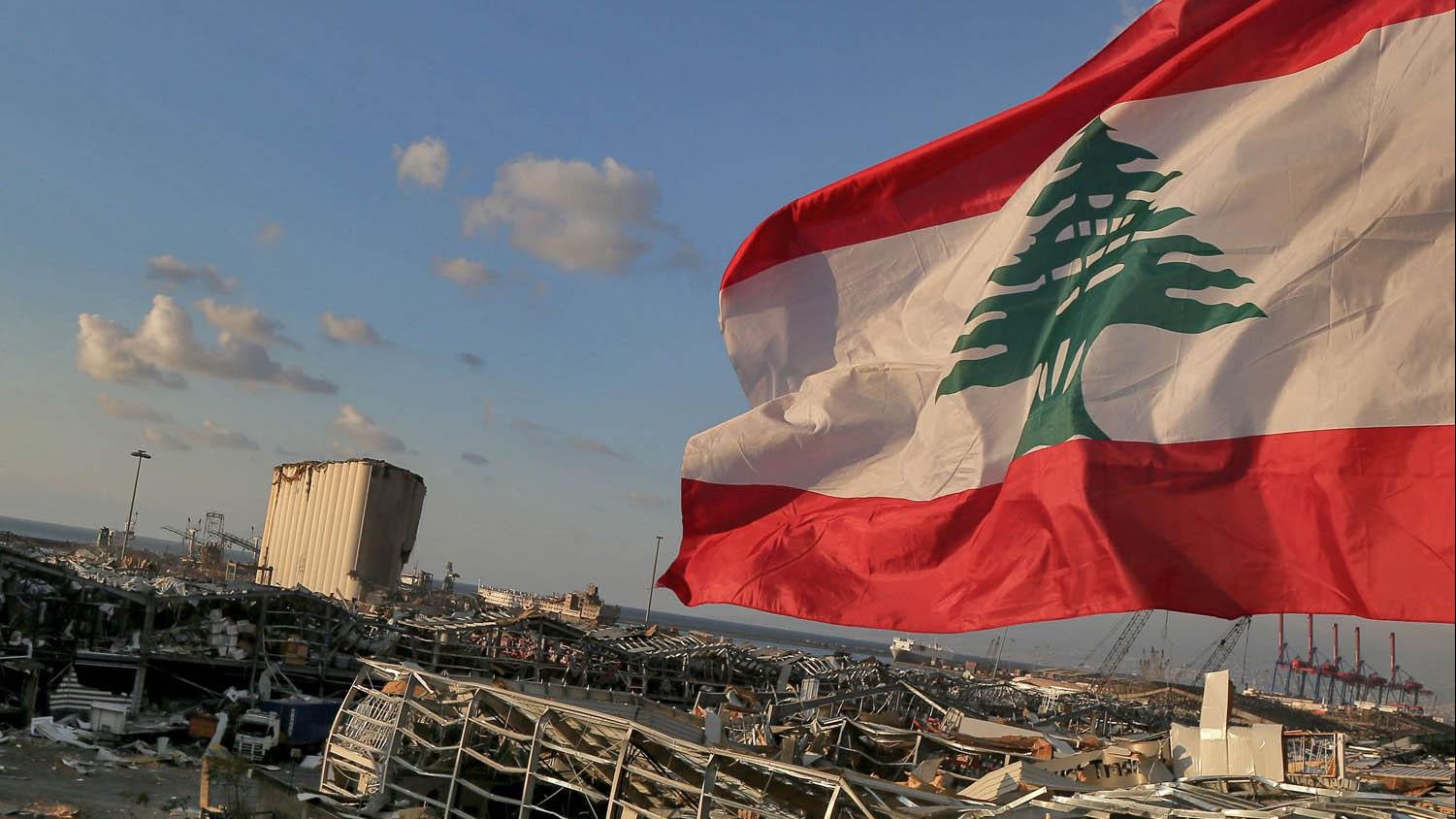
Lebanon is experiencing a pivotal phase that could reshape the political and security balance that has prevailed for decades around an exceptional equation: the existence of Hezbollah as a military and political force that, in some respects, surpasses the capabilities of the state itself. The rapid regional developments since the outbreak of the Gaza war in 2023, followed by the large-scale Israeli-Iranian confrontation in 2026, have placed Hezbollah before unprecedented challenges and raised serious questions about its future role within Lebanon and the broader Middle East.
Regional Transformations Have Weakened Hezbollah’s Support Network
Since its establishment in the 1980s, Hezbollah has relied on a regional support structure provided by Iran and Syria, enabling it to build a vast military arsenal that made it one of the most powerful non-state actors in the Middle East. However, this equation has undergone significant changes in recent years.
The ongoing conflict with Israel has depleted a considerable portion of the organization’s military capabilities, while repeated Israeli strikes have targeted its leadership and military infrastructure. At the same time, Iran’s ability to provide traditional support has declined under mounting military and economic pressure. Moreover, the collapse of the Assad regime in Syria deprived Hezbollah of the strategic land corridor that had connected Lebanon to Iran through Syrian territory.
Taken together, these developments have not led to the party’s collapse, but they have weakened the strategic environment upon which it depended for decades and significantly reduced its regional room for maneuver.
From Resistance Movement to Controversial Regional Actor
Hezbollah’s legitimacy was originally rooted in its role as a resistance movement against the Israeli occupation of southern Lebanon, a mission that earned it broad support both domestically and across the Arab world. However, subsequent years witnessed a gradual transformation in the party’s nature and functions.
Its involvement in the Syrian civil war on behalf of the Assad regime and its participation in regional conflicts aligned with Iran’s broader strategic agenda contributed to the erosion of its traditional image as a national resistance movement. For a growing segment of Lebanese society, Hezbollah increasingly came to be viewed as a participant in regional and sectarian struggles rather than a force dedicated solely to defending Lebanon.
This transformation has been reflected in declining public support outside the Shiite community and growing concerns over the impact of its military capabilities on Lebanon’s internal balance as well as its regional and international relations.
The Rise of the State and the Return of the Sovereignty Narrative
At the domestic level, Lebanon witnessed a significant political development with the election of President Joseph Aoun in early 2025. From the outset, his statements conveyed a clear message: the Lebanese state should exercise an exclusive monopoly over arms and security decision-making.
This position represents a direct challenge to the arrangement that has allowed Hezbollah to retain its military arsenal since the end of the Lebanese Civil War. Although the Taif Agreement and international resolutions—most notably UN Security Council Resolutions 1559 and 1701—called for the disarmament of all militias, Hezbollah remained the sole exception, maintaining its weapons under the banner of “resistance.”
Today, as the justifications for this exception lose credibility among growing segments of the Lebanese population, the discourse of state sovereignty is gaining renewed momentum, particularly amid public demands for rebuilding state institutions and ending the duality of authority.
Why Does Hezbollah Remain Resilient?
Despite the pressures it faces, predictions regarding Hezbollah’s imminent collapse or disappearance appear exaggerated. Hezbollah is not merely an armed organization; it possesses an extensive political, organizational, and social infrastructure deeply embedded within Lebanon’s Shiite community.
Over the past decades, the party has also succeeded in filling major gaps left by the state by providing social, educational, healthcare, and security services to its constituents. In the context of Lebanon’s severe economic crisis and the inability of state institutions to perform basic functions, many Lebanese continue to view Hezbollah as a source of social and political protection that cannot easily be replaced.
Furthermore, security concerns remain deeply rooted within the Shiite community, particularly regarding Israel and the broader regional transformations surrounding Lebanon. These concerns continue to provide Hezbollah with additional justification for maintaining its military capabilities.
The Disarmament Dilemma: Necessity and Risks
The fundamental challenge is not whether Hezbollah can be weakened militarily, but rather how it can be integrated into the Lebanese state without pushing the country toward a new internal conflict.
Lebanon’s historical experience demonstrates that attempts to impose coercive solutions on the country’s delicate sectarian balance often produce counterproductive outcomes. Consequently, any successful effort to place all weapons under state control must be accompanied by genuine political, economic, and security alternatives for the social base upon which Hezbollah depends.
This requires strengthening the state’s presence in marginalized areas, improving public services, and implementing development programs capable of rebuilding trust between citizens and state institutions. It also necessitates providing political and security guarantees that reassure Lebanon’s Shiite community that its interests and security will not be endangered should Hezbollah’s military role diminish.
Conclusion
Hezbollah is currently facing perhaps the most difficult period in its history since its founding, as a result of declining regional support and increasing military, political, and economic pressure. However, the weakening of the organization does not necessarily imply its imminent disappearance, just as forcibly disarming it could open the door to a new cycle of instability.
Ultimately, Lebanon’s future depends not only on Hezbollah’s trajectory but also on the ability of the Lebanese state to reclaim its fundamental functions and convince its citizens that it can provide security, services, and political representation for all communities. Only then can the transition from the equation of “the state and Hezbollah” to “the state alone” become a realistic and sustainable political project rather than merely a political slogan.
Most read