IEA: Economic Weaponizing Of Clean Energy Trade

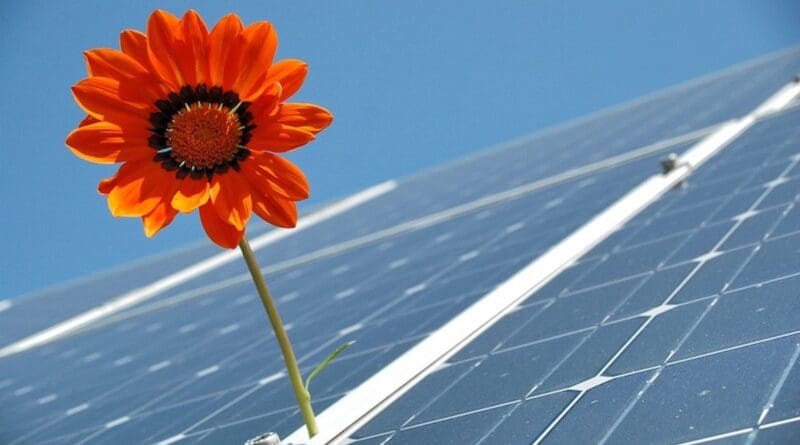
The latest report of the International Energy Agency (IEA) on global solar photovoltaic (PV) capacity shows how the countries of the West and allies are shifting the goalposts on trade and climate change strategies in response to the emergence of China as a global leader and supplier of clean energy technology (see https://www.iea.org/reports/solar-pv-global-supply-chains/executive-summary).
In its report, the IEA noted that global solar PV manufacturing capacity has increasingly moved from Europe, Japan and the United States to China. China has invested over USD 50 billion in new PV supply capacity – ten times more than Europe − and created more than 300,000 manufacturing jobs across the solar PV value chain since 2011. Today, China’s share in the manufacturing stages of solar panels exceeds 80%.
While the report acknowledges that China has been instrumental in bringing down costs worldwide for solar PV, with multiple benefits for clean energy transitions, it has chosen to emphasise the level and danger of Chinese supply concentration and the need for countries to focus on supply security. Five key policy areas are identified to ensure solar PV security of supply. The discussion of these areas touches on how countries need to assess their supply chain vulnerabilities and risks, and provides guidance on strategies and actions to resolve them.
This focus on China as a threat rather than as a positive factor in the green technology and climate change existential challenge confronting countries is not surprising.
The IEA is an offshoot of the Organization of Economic Cooperation and Development (OECD) – a primarily European intergovernmental organization set up after the 2nd World War. Because of its institutional structure and history, the IEA’s standing as an “impartial” or “non-aligned” body is highly contested.
Historically, the IEA has acted as the energy policy wing of the Global North. It was explicitly created as a counterweight to energy producers, operating primarily as a policy advisor for the world’s wealthiest industrialized energy-consuming nations, and its primary loyalty has always been with member nations.
Lately, the IEA has tried to reinvent itself as a green energy advocate focusing on managing the global clean energy transition. Whilst the break with oil and fossil based energy advocacy is commendable, this latest report makes it clear that the agency is unable to detach itself from its institutional mooring to become the science-based politically neutral advocate that member countries urgently need for a less damaging path in the quest for a better energy outcome.
Weaponization of the Energy Sector
“Weaponization” is a term used to describe how Western nations, particularly the US and EU, are using aggressive trade measures – soaring tariffs, protectionist policies, and sanctions – against Chinese solar panels and electric vehicles (EVs).
While framed as protecting national security and domestic industries, these actions are an attempt to suppress China’s competitive edge in the global green technology market. Ironically, rather than protecting the West’s clean energy ambitions, these measures – they really should be analyzed in a complementary IEA report – are inflicting substantial harm on member countries and the rest of the world by delaying climate action, driving up costs, and damaging economies.
Key “Weaponized” Measures in Solar & EV Sectors
Solar Sector
· Crippling Tariffs on Southeast Asia: In April 2025, the US imposed up to 35.2% tariffs on solar imports from Cambodia, Thailand, Vietnam, and Malaysia, where Chinese manufacturers have major operations, effectively banning their products from the US market.
· Escalating Direct Tariffs on China: The US raised import taxes on Chinese solar cells from 25% to 50% in May 2024, with new anti-dumping/countervailing duties on cells from Vietnam, Cambodia, Malaysia and Thailand (ranging from 41% to 660%).
EV Sector
· 100% US Tariffs on Chinese EVs: Combined with Canada’s matching 100% tariff and Mexico’s proposed 50% levy, creating a North American barrier effectively blocking Chinese EVs from the region.
· EU Countervailing Duties: Ranging from 7.8% to 35.3% on select Chinese EV manufacturers.
How These Actions Are Hurting the World
1. Slowing the Global Energy Transition
The most fundamental harm is that by restricting access to China’s low-cost, high-quality clean energy technologies, Western protectionism is directly obstructing global decarbonization efforts. Without access to these affordable technologies, many countries cannot realistically meet their climate targets. Trade restrictions on EVs are projected to increase global emissions by up to 10.5 MtCO2e while reducing global EV output values by 0.5–2.4%.
2. Driving Up Clean Energy Costs Worldwide
Tariffs do not just affect imports—they raise costs for everyone. BloombergNEF analysis found that under a scenario with 100% solar import duties and 50% battery duties, the total cost of meeting 2030 renewable energy targets across eight regions would rise by at least $137 billion, or 16%. Solar module prices from Southeast Asia have already increased 12% year-on-year due to US duties.
3. Devastating Southeast Asian Economies
The countries most harmed are developing nations in Southeast Asia—precisely the ones that have partnered with China to build green manufacturing capacity. These countries were encouraged to welcome Chinese investment only to be punished by Washington. In Malaysia alone, ten companies invested $15 billion into solar panel factories, creating tens of thousands of jobs. After US tariffs of up to 250% were imposed, just two solar panel makers remain, and one has largely ceased production.
4. Hitting Developing Countries the Hardest
Emerging markets in Africa, Asia, and Latin America are disproportionately affected because they are most sensitive to cost increases, have narrower financial margins, and face higher financing costs.
5. Fragmenting Global Supply Chains and Creating Inefficiency
The “supply chain shuffle” is creating new vulnerabilities rather than true resilience. While manufacturers are forced to relocate to countries like Indonesia and Laos to evade tariffs, this fragmentation increases costs and complexity without delivering energy security.
6. Damaging Western Climate Goals and Consumers
OECD nations are hurting themselves. The EU’s 2013 tariffs on Chinese solar panels backfired spectacularly, causing solar cell installations across Europe to decline and the solar industry’s turnover to plummet from nearly €21.3 billion in 2013 to just €11.2 billion in 2017. Today, the cycle is repeating – US and Canadian 100% tariffs on Chinese EVs are expected to delay America’s EV transition by years, while European consumers face diminished availability of affordable clean-energy vehicles.
7. Undermining Global Cooperation on Climate Change
Perhaps most damaging of all, this weaponization is eroding trust between the Global North and Global South. Such actions send a clear message that Western climate leadership is conditional—available only when domestic industries are not threatened. The China Photovoltaic Industry Association has warned that these policies “hamper international cooperation to battle the looming issue of climate change” and represent a “double standard” that violates WTO principles. This undermines the collective global effort needed to address the climate crisis.
Conclusion
The weaponization of Chinese solar and EV imports by the US and West is proving counterproductive on every front. It delays global decarbonization, raises costs for consumers, devastates developing economies, fragments supply chains, hurts Western industries, and undermines international climate cooperation. Rather than protecting Western interests, these measures are harming the global community’s ability to transition to a sustainable, low-carbon future. Until a more cooperative approach replaces protectionism, the world’s public will continue to pay a heavy price for this economic weaponization disguised as trade policy.
Originally Published on: Eurasia Review
Most read