
The struggle to form a new government exposes the fragility of Israel’s political alliances, places Arab and ultra-Orthodox parties at the center of the balance of power, and raises questions about a possible shift in the Trump administration’s calculations toward Netanyahu.
Israeli President Isaac Herzog’s decision to formally task opposition leader Gadi Eisenkot with forming the next government was more than a constitutional procedure following an inconclusive parliamentary election. It marked a significant development in Israel’s political landscape, opening the door to a new phase of power struggles in which party calculations, ideological divisions, security considerations, and the influence of the United States are increasingly intertwined.
With Eisenkot’s bloc securing 48 seats against 53 for Benjamin Netanyahu’s camp, the October 27 elections failed to give either side the majority needed to form a government. Nevertheless, Eisenkot’s backing by 67 lawmakers gave him a clear political advantage, although their recommendations do not necessarily mean that all of them are willing to join a coalition under his leadership.
The significance of this political equation lies in a fundamental paradox within Israel’s parliamentary system: the struggle is no longer simply about securing a parliamentary majority, but about building alliances across ideological divisions and establishing a minimum level of consensus that would allow a government to survive.
1. The Possible End of the Netanyahu Era or the Reproduction of Political Deadlock?
Eisenkot’s nomination represents a direct challenge to Netanyahu’s longstanding dominance of Israeli politics. Having served as prime minister for approximately 19 years, with only brief interruptions, Netanyahu has become closely associated with a particular model of political leadership and a network of right-wing and religious alliances.
The current contest, therefore, is not merely about replacing a prime minister. It is also a test of whether Israel’s political system can move beyond a governing model that has revolved largely around Netanyahu’s personality, political influence, and coalition-building strategy.
Eisenkot has sought to present himself as a candidate capable of restoring political stability, warning that Israel cannot afford another round of elections or prolonged political paralysis. Against this backdrop, he invited Netanyahu’s Likud Party to join a government under his leadership, arguing that calls for national unity should be translated into concrete political commitments.
Yet this proposal faces an obvious obstacle: removing Netanyahu does not necessarily mean that Likud is prepared to abandon him or accept a government led by the opposition. Any shift by right-wing factions toward Eisenkot remains dependent on complicated electoral, personal, and ideological considerations.
Netanyahu, meanwhile, understands that losing the premiership could trigger a redistribution of power within his own party and significantly weaken his political standing. His current struggle is therefore increasingly a battle for political survival rather than simply a dispute over the allocation of ministerial portfolios.
Arab and Ultra-Orthodox Parties: Kingmakers in the Government Formation Equation
The election results demonstrate that Arab parties have become one of the most influential components of Israel’s political balance. Having collectively secured 19 seats, they are now capable of shaping the government formation process, either through direct participation in a coalition or by providing parliamentary support from outside it.
Nevertheless, Eisenkot faces a dilemma regarding his relationship with these parties. An alliance with them could facilitate the formation of a government, but it could also alienate part of his Zionist electoral base and complicate his relationship with Avigdor Lieberman’s Yisrael Beiteinu, which secured seven seats.
Netanyahu has sought to exploit this issue politically by portraying any government supported by Arab parties as lacking national legitimacy. He has gone further, warning that a government dependent on Arab parties, particularly Islamist factions, would lead to Israel’s internal disintegration.
Such rhetoric reflects the continued use of national and ideological divisions as instruments of political competition, turning the political representation of Arab citizens into a central point of contention between rival political camps.
The paradox, however, is that Eisenkot may not need to include Arab parties in his government if he succeeds in attracting ultra-Orthodox factions, particularly United Torah Judaism (Yahadut HaTorah), which could prove decisive in securing an alternative parliamentary majority.
This highlights the importance of Eisenkot’s negotiations with ultra-Orthodox religious leaders, particularly amid growing tensions between these factions and Netanyahu over the exemption of ultra-Orthodox yeshiva students from compulsory military service.
The issue has evolved beyond a legal or administrative dispute into one of the most significant debates concerning the nature of the Israeli state and the relationship between its military establishment and ultra-Orthodox religious movements.
If Eisenkot succeeds in bringing these factions into his coalition, he could establish a majority government without relying directly on Arab parties, a scenario favored by Lieberman. However, if negotiations fail, Arab parliamentary support may become essential to ensuring the government's survival, even if Arab parties do not formally join the governing coalition.
3. Washington and Netanyahu: A Shift in the Calculations of Israel’s Closest Ally?
One of the most significant developments surrounding Eisenkot’s nomination has been Israeli media reports suggesting that US officials and presidential envoys intervened to encourage political leaders to form a new government under his leadership rather than allow Netanyahu to remain in office.
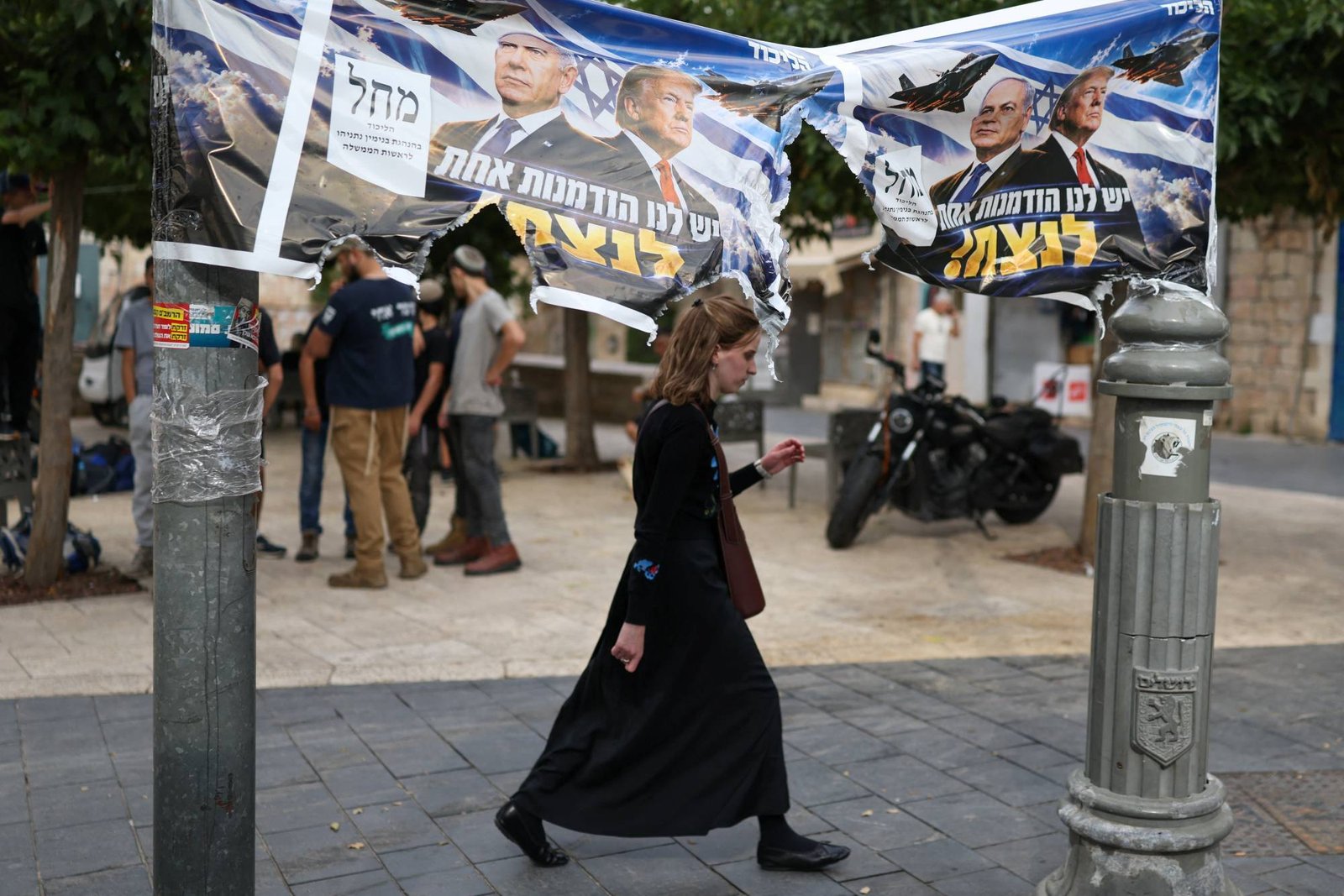
These reports are particularly significant given the relationship between US President Donald Trump and Netanyahu, as well as the political support Trump had previously extended to him during the election campaign.
If reports of US intervention in support of a transfer of power to Eisenkot prove accurate, they could indicate a shift in Washington’s assessment of the political and strategic value of Netanyahu remaining at the helm of the Israeli government.
According to Israeli political analysis, this potential shift is linked to growing frustration within the Trump administration over Netanyahu, particularly regarding disagreements over the management of regional affairs and the war with Iran, as well as allegations that Netanyahu bears part of the responsibility for its political and strategic consequences.
The reported US position should also be understood in the context of Washington’s desire to work with an Israeli leadership more closely aligned with its regional priorities, particularly the implementation of Trump's Gaza plan, regional security arrangements, relations with Syria and Lebanon, and the future of the Abraham Accords.
In this context, Israeli media reports suggest that Eisenkot’s representatives have sought to persuade the Trump administration that he could form a stable government capable of working more closely with Washington and pursuing a more coordinated approach to regional political and security issues.
This does not necessarily mean that the United States has definitively turned against Netanyahu or fully endorsed Eisenkot’s political agenda. However, it suggests that Washington’s position has become an influential factor in the government formation process, with American calculations increasingly focused on the ability of Israel’s next leadership to manage the coming regional phase.
A Minority Government: A Constitutional Way Out or a Temporary Political Arrangement?
With the prospect of securing a parliamentary majority remaining uncertain, the formation of a minority government has emerged as one possible way out of the political deadlock.
Israel’s parliamentary system allows a government to be formed without an absolute majority of Knesset seats, provided that no alternative parliamentary majority is capable of voting to bring it down.
Against this backdrop, Eisenkot may seek to establish an initial government based on his bloc’s 48 seats, while ensuring that no opposing parliamentary majority can assemble to remove it. Negotiations with other parties could then continue at a later stage.
According to the political calculations outlined in the reports, this option appears to form part of a two-stage strategy. The first stage would involve ending Netanyahu’s tenure and establishing a government as quickly as possible. The second would focus on expanding its parliamentary support, either by attracting ultra-Orthodox parties or reaching an understanding with Arab political forces.
However, even if a minority government succeeds in overcoming the initial parliamentary hurdles, it would remain vulnerable to continuous political pressure, particularly given disagreements over security, military, economic, and social policies.
Its ability to remain in office would not necessarily translate into an ability to implement a comprehensive governing program.
Eisenkot’s real challenge, therefore, is not simply to become prime minister, but to establish a governing arrangement capable of overcoming the contradictions that emerged from the election.
Netanyahu’s Final Options: Political and Legal Confrontation
Netanyahu, meanwhile, appears unwilling to accept the prospect of losing power without exhausting his available political and legal options.
He has intensified his contacts with ultra-Orthodox parties in an effort to persuade them to withdraw their support for Eisenkot, offering concessions on their key demands, particularly legislation concerning exemptions from compulsory military service for yeshiva students.
This proposal represents an attempt to revive the traditional alliance between Likud and religious parties and rebuild the parliamentary bloc that could prevent the opposition from taking power.
At the same time, figures within Likud have raised the possibility of approaching the Supreme Court to challenge the legitimacy of the election results, citing allegations of irregularities or electoral fraud in Arab communities. These statements have been accompanied by calls for right-wing supporters to take to the streets in protest against what they describe as an attempt to establish a government that does not reflect the electorate’s genuine will.
Such moves suggest that the crisis may not end with Eisenkot’s nomination. Instead, it could evolve into a more complicated confrontation involving legal challenges, street protests, and attempts to reshape parliamentary alliances.
Netanyahu’s use of the military service exemption issue at this critical moment also illustrates the nature of political bargaining within Israel, where social and religious questions become decisive negotiating tools in the struggle to form governments.
Political Realignment or a Deferred Crisis?
The current developments place Israel before a political test that extends far beyond the possible transfer of the premiership from Netanyahu to Eisenkot. The crisis exposes the fragility of party alliances, the deepening divisions within Israeli society, and the difficulty of producing a stable political majority amid competing national, religious, and ideological interests.
The emergence of Arab and ultra-Orthodox parties as decisive actors in the government formation process also reflects a shift in the distribution of parliamentary power. Major political parties can no longer monopolize decision-making; instead, they must negotiate with forces that have often been treated as marginal or fundamentally incompatible with their political agendas.
Externally, reports of American intervention in support of a government led by Eisenkot raise important questions about the future of US-Israeli relations and the extent to which the Trump administration can influence the configuration of Israel’s political leadership, particularly at a time of mounting regional pressures involving Gaza, Iran, Syria, and Lebanon.
Nevertheless, Eisenkot’s success in removing Netanyahu from office would not necessarily mark the end of Israel’s political crisis. The division could simply shift from a struggle over forming a government to a struggle over its survival and governing capacity.
The central question, therefore, is no longer simply whether Eisenkot can form the next government, but whether he can establish a new political formula capable of moving beyond Netanyahu’s legacy—or whether Israel is heading toward another cycle of political instability, this time under an even more fragile coalition.
Most read


Read also