Iran Between Escalation in the Strait of Hormuz and Domestic Pressures: Can Tehran Manage Both Fronts?

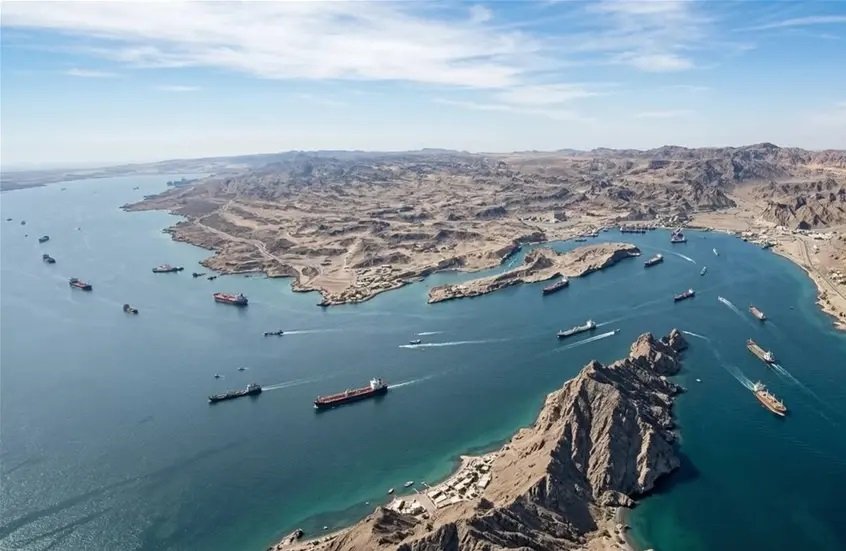
The escalating tensions around the Strait of Hormuz appear to be more than just another episode in the ongoing confrontation between Iran and the United States. They reflect a gradual shift in Iran’s security discourse, moving away from an emphasis on deterrence and the right to retaliate towards a broader debate about the possibility of taking the initiative before the country comes under direct attack. Yet this strategic shift is unfolding alongside mounting domestic pressures, placing Iran’s capacity to withstand confrontation under a test that extends beyond military calculations to encompass the economy, society, and the cohesion of its decision-making institutions.
From Deterrence to the Prospect of Taking the Initiative
Developments around the Strait of Hormuz on November 21 and 22, 2026, reveal a noticeable escalation in the intensity of Iran’s rhetoric. The Islamic Revolutionary Guard Corps (IRGC) announced that it had targeted two American Patriot radar systems in Bahrain using missiles and drones, describing the operation as retaliation for the incursion of American aircraft into Iranian airspace. However, in the absence of independent confirmation of the incident or reliable information about the extent of the damage, these claims should be treated primarily as part of Iran’s security narrative rather than as fully verified events.
In a related development, Iranian media circulated a report claiming that an American F-35 fighter jet had altered its course near the Strait of Hormuz and headed towards the UAE after activating an emergency code. No official American statement has confirmed the incident or clarified its circumstances. The significance of such reports lies largely in how they are used to reinforce the Iranian narrative that pressure from Tehran is no longer confined to Iranian territory but is also affecting, according to its official account, the movements and operations of American forces in the region.
A more revealing indication of this shift appeared in an editorial published by the hard-line newspaper Kayhan. It raised a question that goes beyond the traditional logic of retaliation: why should Iran wait for the first strike if war is considered inevitable? The editorial went further, discussing the possibility of targeting military bases, vessels, and infrastructure belonging to countries aligned with the United States.
Although this position does not constitute an operational decision or an official directive, it signals an expansion of the boundaries of debate within Iran’s hard-line camp, with some voices moving from advocating deterrence towards justifying pre-emptive escalation.
The danger of this shift lies in its potential to widen the circle of confrontation, drawing additional regional actors into the conflict and increasing the likelihood that a limited confrontation between Washington and Tehran could develop into a broader regional crisis whose military and economic consequences would be difficult to contain.
Hormuz: A Strategic Lever and a Bargaining Tool
Alongside this escalatory rhetoric, Iranian diplomacy continues to preserve room for manoeuvre. Foreign Minister Abbas Araghchi has reiterated Tehran’s willingness to reopen the Strait of Hormuz under phased arrangements, provided that the United States first fulfils its commitments and takes confidence-building measures. At the same time, Deputy Foreign Minister Kazem Gharibabadi stated that no active negotiations are currently under way and reaffirmed Iran’s refusal to transfer its enriched uranium abroad. He also confirmed that a Qatari delegation had visited Tehran.
These positions reveal a strategy built around combining threats with conditional diplomacy, while keeping channels for mediation open without making prior concessions. For Iran, the Strait of Hormuz is not merely a strategic maritime passage; it is also a source of leverage in a broader equation involving energy security, international trade, and the calculations of major powers.
However, the use of this leverage carries risks for all sides. Escalation in the strait could strengthen Tehran’s ability to influence its adversaries’ calculations, but it could also deepen Iran’s isolation, provoke broader military and economic responses, and inflict further damage on the Iranian economy, which depends on a relatively stable regional environment to mitigate the effects of sanctions and economic constraints.
Disagreement Within the Establishment over the Definition of National Interest
At the domestic political level, differences within Iran extend beyond attitudes towards the United States and Israel. They increasingly concern a more fundamental question: who defines the national interest, and how far should ideology shape the conduct of the state?
This debate became apparent in remarks by Ali-Mohammad Tahernajad, a member of the Executives of Construction Party, who criticised factions within the establishment for promoting ideological positions that fail to give priority to the national interest. He warned that such positions undermine national unity and impose additional costs on the country at an exceptionally sensitive moment.
The significance of these remarks lies in the fact that they came from a figure operating within Iran’s authorised political system, rather than from the opposition outside it. His criticism does not reject the need to confront American and Israeli pressure. Instead, it questions how that confrontation is being managed and which actors have the authority to define the requirements of resilience and the sacrifices it entails.
The controversy surrounding proposed amendments to the Intelligence Ministry law reflects another dimension of these internal rivalries. Media reports indicate that hard-line figures have been campaigning against the proposed changes, in what appears to be a struggle among factions within the state apparatus. Although the full text of the amendment has not been published, making it difficult to assess its precise implications, the continuation of this dispute demonstrates that external tensions have not eliminated internal competition. Rather, they have given it a new vocabulary centred on loyalty, unity, and national security.
Tehran, therefore, is not confronting an external challenge alone. It is also facing an internal debate over how that challenge should be managed and how to balance ideological considerations with political pragmatism.
Socioeconomic Pressures: The Most Vulnerable Front
Perhaps the most striking contradiction in Iran’s current situation is that its security discourse emphasises expanding the scope of confrontation and the ability to influence American calculations, while economic and social indicators reveal growing vulnerabilities affecting significant sections of society.
Parvaneh Rezaei, Deputy Labour Minister for Labour Relations, stated that approximately 95 per cent of Iranian workers are employed under temporary contracts, some lasting only one, three, or six months. Such arrangements make it relatively easy for employers to terminate employment when contracts expire.
She also noted that some industrial workers, despite working shifts of up to 12 hours, earn no more than approximately 30 million tomans per month. By contrast, her estimates suggest that wages sufficient to meet the inflation-adjusted needs of a four-person household would range between 85 million and 100 million tomans.
These figures, according to the government official, reveal a substantial gap between wages and the cost of living. They also highlight a double economic dilemma: workers earn incomes that are insufficient to meet their basic needs, while businesses face financial difficulties that make substantial wage increases extremely challenging.
Against this background, a parliamentary initiative to amend Article 41 of the Labour Law and link the minimum wage to inflation figures published by the Central Bank has gained attention. Although the Social Welfare Committee has approved the proposal in principle, its details have yet to be finalised.
Nevertheless, changing the wage-setting formula, however important, will not be enough to address the crisis if businesses continue to struggle with weak production, temporary employment remains widespread, and the economy's capacity to generate stable jobs continues to decline.
The difficulties surrounding the registration of contract workers in the public sector reveal another administrative weakness. Of an estimated workforce of 700,000, only between 260,000 and 270,000 workers have registered in the relevant system. This discrepancy is not simply an administrative matter; it raises questions about the state’s ability to maintain accurate records of the workforce it finances and to ensure the regular payment of wages and the protection of workers’ rights.
Social Protection Amid the Erosion of Purchasing Power
The government, meanwhile, is attempting to expand the social protection system through measures that include improving supplementary insurance for pensioners, increasing insurance coverage, providing credit facilities and shopping vouchers, and organising the direct payment of wages to contracted workers.
These measures may offer some relief, but they remain partial interventions unless they are incorporated into a broader economic policy addressing declining purchasing power, employment insecurity, and rising housing, food, and service costs.
Health insurance, for example, can help people cope with medical expenses, but it cannot resolve the problem of monthly incomes failing to cover basic household needs.
The challenge, therefore, extends beyond individual support programmes to the state’s ability to establish a stable social safety net under conditions of limited resources and mounting economic pressures.
The Energy Crisis: When Geopolitical Calculations Reach the Household
The contradiction between Iran’s geopolitical ambitions and its domestic realities becomes even more apparent in the energy sector.
While the Strait of Hormuz represents a significant Iranian lever in global energy markets, the state-owned electricity company Tavanir announced the return of scheduled power outages beginning on November 22, citing constraints on fuel supplies to power plants. It also called on citizens to reduce their consumption of gas and electricity.
Here, the external front intersects directly with the everyday lives of Iranian citizens. While Tehran regards its geographical position and its ability to influence energy flows as sources of strategic power, domestic power plants are struggling with fuel shortages that affect households and industrial facilities alike.
The consequences of these outages extend beyond everyday inconvenience. They can reduce industrial output, result in lost working hours, and increase operating costs. These burdens fall on a business sector already weakened by financial constraints and struggling to respond to demands for higher wages.
Energy thus represents a central paradox in Iran’s current situation: it is an instrument of geopolitical influence abroad, yet a source of domestic pressure and economic disruption at home.
The Resilience Equation: Who Bears the Cost of Confrontation?
Taken together, these developments reveal two competing understandings of resilience within Iran.
The first, promoted by security institutions and hard-line political discourse, defines resilience as the ability to withstand pressure and force the adversary to reconsider its calculations. It also seeks to expand the instruments of retaliation and strategic pressure, including the use of Iran’s geographical position around the Strait of Hormuz.
The second understanding, increasingly visible in political, social, and economic debates within the country’s authorised public sphere, measures resilience by the state’s ability to protect workers, guarantee employment stability, improve wages, maintain electricity supplies, and manage public institutions efficiently.
This alternative perspective does not necessarily reject confrontation with external pressure. Rather, it calls for a reassessment of priorities and raises questions about the limits of the sacrifices society can reasonably be expected to endure.
The real challenge facing Iran’s leadership, therefore, is not simply whether it possesses the military instruments or strategic capabilities to disrupt its adversaries’ calculations. It is whether the state can prevent external confrontation from further weakening its economic and social foundations.
Military strength, however considerable, cannot by itself compensate for structural weaknesses in the labour market, resolve the energy crisis, or reverse the decline in purchasing power.
Can Tehran Buy Time Abroad Without Exhausting Its Domestic Front?
Iran is entering a phase in which military and diplomatic calculations are increasingly intertwined with economic and social crises. Escalation in the Strait of Hormuz may provide Tehran with additional leverage, while its insistence on conditional negotiations may strengthen its bargaining position. Yet the continuation of the crisis is simultaneously increasing the domestic costs of confrontation and making the question of resilience more dependent on the state’s ability to meet the basic needs of its population.
The dilemma facing Tehran is not simply whether to choose confrontation or negotiation. It is whether it can pursue both without widening the conflict beyond the limits of its capacity to endure. The longer the confrontation continues, the harder it becomes to separate the external front from domestic living conditions, and the more urgent the question of national interest becomes.
Ultimately, Iran may be able to use its geographical position and military capabilities to buy time and improve its negotiating terms. But its most difficult test remains at home: how long can society bear the cost of a strategy built around waiting and endurance?
While some decision-making circles are asking whether Iran should launch the first strike, the country’s social and economic realities raise an equally important question: how much longer can Iranian workers wait amid eroding wages, insecure employment, and recurring energy shortages?
Most read



Read also