From Crisis Management to Shaping the Future: Can the Arab World Regain Its Capacity for Initiative?

The Arab region is facing a period of profound regional complexity, in which armed conflicts intersect with shifting balances of power, international institutions are increasingly struggling to enforce stable rules for managing disputes, and competition over resources, strategic waterways, energy supplies, and food security continues to intensify. Amid these transformations, a fundamental question arises—one that goes beyond the nature of any particular crisis or the parties involved: Will the Arab role remain confined to reacting to events and managing their consequences, or can Arab states move towards a more influential position in shaping the region’s political and security arrangements and determining its future?
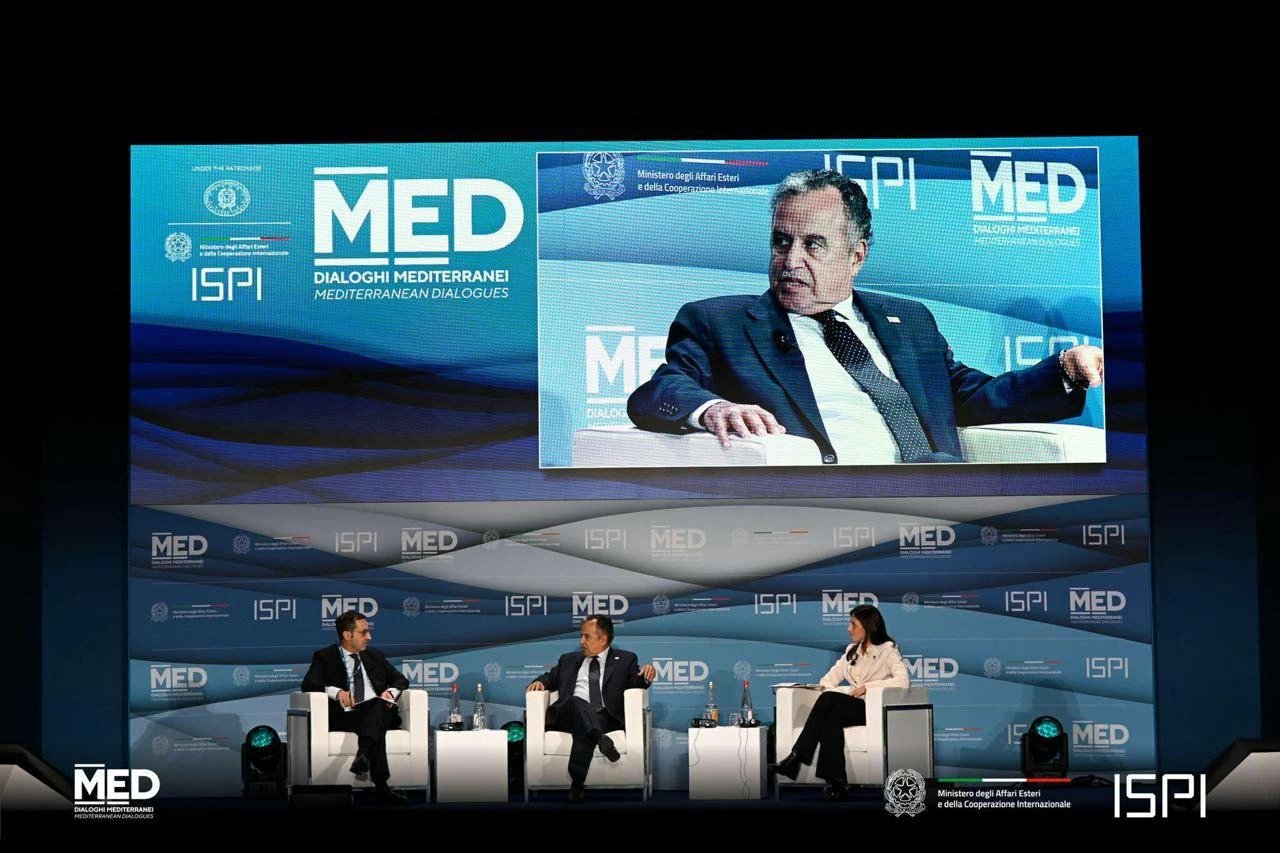
This question lies at the heart of the vision advanced by Nabil Fahmy, Secretary-General of the League of Arab States, during his participation in the Mediterranean Dialogues Forum in Naples. His call is for a redefinition of the Arab role—not as a reactive force seeking to contain crises after they erupt, but as an active regional actor capable of anticipating developments, shaping alternatives, and exercising influence. The significance of this vision lies in its identification of one of the Arab regional order’s most persistent dilemmas: the gap between the resources and capabilities Arab states possess and their ability to translate them into collective political and strategic power.
The Arab Power Dilemma: Substantial Resources, Limited Influence
Arab states do not lack the fundamental attributes of power. They possess vast energy resources, strategic geographical locations overlooking vital maritime and commercial routes, extensive markets, considerable financial and investment capabilities, and a broad network of international relationships. Yet possessing these assets does not automatically translate into the ability to deploy them within a coherent strategic framework.
The problem lies not merely in disparities among Arab states’ capabilities or differences in their national priorities. It also reflects the absence of effective mechanisms for turning overlapping interests into common policies and pooling available resources in ways that enable Arab countries to influence decisions and arrangements affecting their security and interests. This reveals a fundamental paradox: a region endowed with significant economic, geographical, and political assets often finds itself reacting to regional and international developments rather than acting as a principal stakeholder in shaping their course.
From this perspective, the call for greater Arab initiative does not necessarily imply the pursuit of a unified position on every issue—a goal that may be difficult to achieve given the diversity of national calculations. Rather, it calls for strengthening the ability to identify shared interests, build a minimum level of consensus around them, and develop practical instruments to defend them. Influence does not require complete uniformity in policy; it does, however, require institutions capable of managing differences and preventing them from turning into collective paralysis.
The Renewed Arab Agenda: Confrontation, Development, and Progress
The proposed vision rests on three interconnected pillars: confronting threats, developing institutional and national capabilities, and advancing development. The importance of linking these priorities lies in moving beyond the conventional separation of security and development, as though they were distinct or competing domains. Sovereignty cannot be protected through military and diplomatic instruments alone. It also requires more resilient economies, stronger education and research systems, advanced technological capabilities, and secure supplies of water, food, and energy.
Regional developments have demonstrated that economic, technological, and social vulnerabilities can become direct threats to national security. Excessive dependence on external sources for essential needs also leaves states more exposed to market volatility, political instability, and armed conflict. Strengthening national capabilities and deepening Arab integration in critical sectors are therefore no longer merely development options; they have become integral to a comprehensive understanding of national security.
The real challenge, however, lies in translating these priorities into implementation. Development cannot be achieved simply by listing education, technology, food and water security, and energy among political priorities. It requires measurable plans, sustainable financing, institutional coordination, and clear mechanisms for monitoring implementation and evaluating outcomes.
The League of Arab States: From a Platform for Consensus to an Instrument of Influence
Against this backdrop, the reform of the League of Arab States assumes particular importance. As the broadest institutional framework for joint Arab action, the League faces a test of whether it can move beyond its traditional role of articulating and coordinating political positions towards a more effective role in anticipating developments, formulating alternatives, building consensus, and overseeing the implementation of decisions.
Reforming the League is not simply a matter of restructuring its institutions or expanding its formal mandate. It depends more fundamentally on its ability to perform practical functions: producing shared strategic assessments, activating preventive diplomacy, coordinating responses to crises, linking political decisions to implementation programmes, and holding relevant bodies accountable for their commitments.
A persistent weakness in Arab collective action has not always been the absence of decisions or political declarations, but rather the gap between announcing common positions and translating them into tangible outcomes. The League’s effectiveness should therefore not be measured by the number of meetings it convenes or resolutions it adopts, but by the degree of practical coordination it achieves, the tools it provides for early diplomatic intervention, and the concrete progress it delivers on shared priorities.
At the same time, strengthening Arab relations with neighbouring countries and international partners requires a more balanced approach, grounded in respect for sovereignty, non-interference, and mutual interests. International relations are not managed through declarations of principle alone. They require political, economic, and negotiating instruments that make respect for those principles part of the calculations of other parties.
Food Security: The Strategic Dimension of Arab National Security
Food security offers a clear illustration of the challenges that demand a shift from crisis management to crisis anticipation. It is no longer simply a matter of agricultural output or the availability of commodities in markets. It is increasingly linked to social stability and to states’ ability to safeguard the independence of their political and economic decision-making.
Food security challenges in the Arab region extend well beyond domestic production levels. They are shaped by armed conflicts, displacement, water scarcity, disruptions to supply chains, rising transportation and fertilizer costs, and declining purchasing power. Addressing these challenges cannot therefore be limited to increasing imports or providing food assistance, important as both may be in emergencies. It must extend to protecting the entire system of production and distribution.
Humanitarian assistance is essential to saving lives, but it cannot, by itself, establish sustainable food security. Long-term security requires protecting agricultural land, irrigation networks, markets, and transport routes; restoring domestic production; providing financing for farmers; and preserving livelihoods in communities affected by conflict. Food security is thus inseparable from peace, stability, and reconstruction. It cannot be treated as a narrowly defined sectoral issue left solely to ministries of agriculture or trade.
This reality is particularly stark in the Gaza Strip, where the crisis extends far beyond food shortages to the collapse of the basic conditions necessary for life, production, and the provision of essential services. Ensuring safe, sustained, and unhindered humanitarian access is therefore an urgent necessity. Continued relief operations and early recovery also require adequate funding, and humanitarian needs must not be treated as temporary concerns that can be postponed or subordinated to political calculations.
Arab-Mediterranean Cooperation: From Information-Sharing to Joint Action
Arab food security cannot be achieved in isolation from the wider regional and international environment, particularly given the interconnected nature of markets, supply chains, and maritime trade. This makes Arab-Mediterranean cooperation increasingly important in monitoring risks to food, fertilizer, and shipping supplies; exchanging information; coordinating responses; and diversifying sources of essential imports.
The real value of such cooperation, however, does not lie merely in establishing additional channels for exchanging data. It lies in translating information into practical measures. Early warning has little strategic value if it is not connected to financing, logistics, and production decisions that enable action before a crisis escalates. This requires coordination mechanisms capable of accelerating decision-making, assigning clear responsibilities, and mobilizing the resources needed for intervention.
In this sense, Mediterranean cooperation could help expand the options available to Arab states, strengthen their negotiating position with international partners, and develop more flexible arrangements for securing essential commodities. It cannot, however, substitute for building domestic capabilities. Rather, it should complement those efforts and be guided by a clear understanding of Arab interests and priorities.
Palestine and the Test of the Regional Order’s Credibility
The Palestinian cause remains a central test of the Arab regional order’s ability to translate declared principles into effective policies and positions. The call for ending the occupation and establishing an independent Palestinian state on the borders of 4 June 1967, with East Jerusalem as its capital, is not merely a conventional political position. It reflects the connection between regional security and stability, on the one hand, and justice, respect for international law, and peoples’ right to self-determination, on the other.
The demand for the consistent and non-selective application of international law also raises a challenge that extends beyond Palestine. It concerns the credibility of the international order itself and the ability of states and regional institutions to defend rules that are supposed to apply equally to all. Respecting state sovereignty, preserving territorial integrity, and supporting national institutions remain essential conditions for resolving crises, preventing the fragmentation of societies, and rebuilding states.
Yet principled positions, however important, require political, diplomatic, and economic instruments to prevent them from remaining confined to rhetoric. The Palestinian cause needs more than renewed declarations of its centrality. It requires coordinated Arab action that connects political positions to international engagement, strengthens the ability to influence the course of diplomatic efforts, and provides the necessary support to the Palestinian people and their national institutions.
From Possessing Resources to Building Political Will
The proposed vision reflects a growing recognition that the region’s future will not be determined solely by the policies of international powers or the trajectory of local conflicts. It will also depend on the ability of Arab states to shape their own choices and coordinate their interests. Yet the transition from managing crises to shaping the future cannot be achieved through a new political discourse alone. It requires a change in the way regional affairs are understood and managed, beginning with the recognition that Arab security is interconnected, and that crises which appear local or national may have regional consequences requiring collective responses.
The central question, therefore, is whether Arab states are prepared to translate this vision into practical commitments and move beyond the episodic coordination imposed by emergencies towards sustained institutional cooperation in food and water security, energy, technology, education, and scientific research. This also requires restoring the League of Arab States to its intended role as an instrument for coordinating interests and generating initiatives, rather than merely a forum for issuing declarations.
The real Arab challenge is not a shortage of resources or international relationships. It is the ability to transform these assets into shared political will and effective instruments of influence. The Arab world does not merely need to be present in discussions about the region’s future; it needs the capacity to help shape that future. The distance between these two positions marks the dividing line between a regional order that simply adapts to change and one that possesses the vision, coordination, and capabilities necessary to become a genuine partner in shaping what comes next.
Most read




Read also