Massad Boulos’s Plan to Reunify State Institutions, Power-Sharing Arrangements, and Prospects for a Political Settlement in Libya

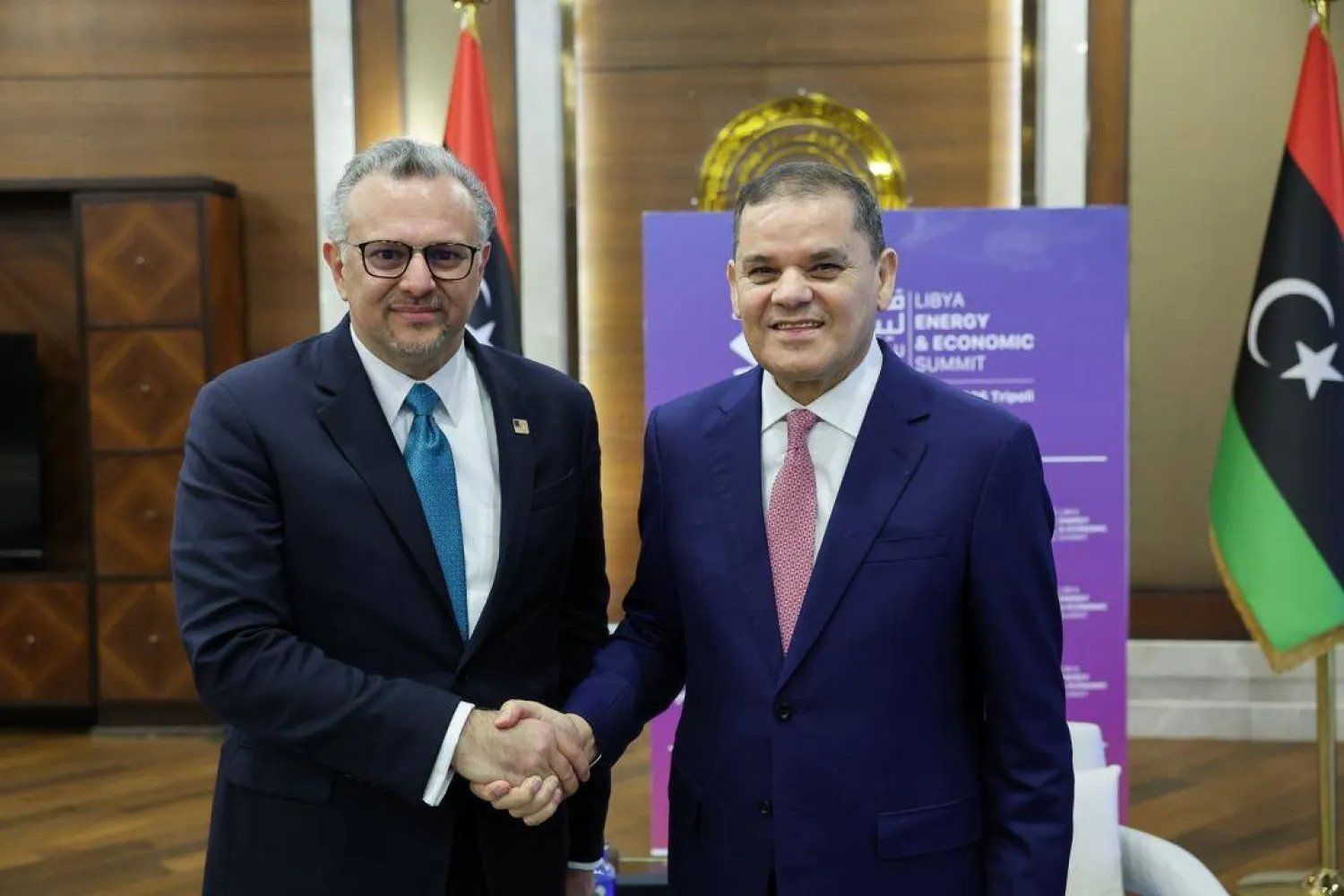
Recent US diplomatic efforts concerning the Libyan crisis come within the broader context of attempts to reinvigorate the political process and bring an end to the institutional and executive fragmentation that has persisted in the country for years. In this context, Massad Boulos, the US envoy responsible for the Libyan file, is leading a diplomatic initiative aimed at developing a negotiated settlement between the main centres of power in eastern and western Libya. The proposed approach is based on unifying political, military, and economic institutions, restructuring the executive authority, and creating the conditions necessary for holding presidential and parliamentary elections.
The US approach is distinguished by its attempt to link the political, security, and economic tracks. Accordingly, the proposed settlement is not limited to resolving disagreements over government formation or the distribution of official positions; rather, it extends to unifying sovereign institutions, regulating the management of oil and financial resources, and establishing joint security arrangements, thereby facilitating the transition to a new political phase.
According to available statements, published information, and media leaks, the initiative comprises six main tracks: unifying the executive authority; unifying the military and security institutions; establishing a unified national budget and economic institutions; expanding investment in the energy sector; unifying judicial and electoral institutions; and ultimately holding nationwide elections.
Nevertheless, the initiative continues to face several challenges relating to the nature of power-sharing arrangements, the degree of representation afforded to different political actors, and the future of military arrangements. There are also concerns that the proposed settlement could evolve into a mechanism for redistributing influence among existing elites rather than serving as a pathway to ending the transitional period and rebuilding the state on the basis of electoral legitimacy.
The Political Framework of the US Initiative
The initiative is based on the premise that Libya's continuing division is no longer attributable solely to disagreements over political legitimacy. Rather, it has become the product of multiple centres of authority and influence, the overlapping of governmental, military, and economic institutions, and the close relationship between sovereign resources and the balance of power among competing actors.
Accordingly, Washington is pursuing an approach based on negotiations with the actual centres of power in eastern and western Libya, with the aim of reaching simultaneous understandings on the reunification of state institutions. This diplomatic effort builds on a series of contacts that began in 2025 and involved Libyan officials as well as regional and international partners.
In statements published on 29 June 2026, Boulos explained that the US initiative seeks to support Libyan efforts to unify the country, achieve sustainable peace, and create the conditions necessary for elections. He also described the initiative as complementary to the medium- and long-term roadmap being pursued by the United Nations Support Mission in Libya (UNSMIL), headed by Hanna Tetteh. He further stressed that the details of any institutional unification agreement remain the responsibility of the Libyans themselves.
This approach reveals an American effort to combine two parallel tracks:
-
Short-term track: Reaching practical understandings among the main centres of power concerning institutional unification, the executive authority, the national budget, and security arrangements.
-
Medium- and long-term track: Completing the political process under UN auspices, addressing constitutional and electoral requirements, and ultimately holding national elections.
The Main Pillars of the Initiative
1. Unifying the Executive Authority and Restructuring Centres of Influence
Unifying the executive authority constitutes the core of the proposed political settlement, given the continued existence of two competing authorities: the Government of National Unity in Tripoli, headed by Abdul Hamid Dbeibeh, and the parallel executive authority in eastern Libya, associated with the House of Representatives and the military forces led by Khalifa Haftar.
The American approach seeks to overcome this division by reaching a consensual formula for establishing a unified executive authority acceptable to the principal parties and capable of managing the transitional period, overseeing institutional unification, and preparing for elections.
In this context, reports published by the Financial Times in June 2026 revealed a US proposal involving potential power-sharing arrangements. These reportedly include appointing Saddam Haftar as head of a presidential executive council, while retaining Abdul Hamid Dbeibeh as prime minister and assigning a national security role to a figure from Dbeibeh's inner circle.
These leaks reflect an emerging direction towards incorporating the principal power centres in eastern and western Libya into a shared governing arrangement. However, they do not constitute a formally announced final agreement, and no publicly available official document confirms the adoption of these arrangements in the form currently being circulated.
2. Unifying the Military and Security Institutions
The unification of the military institution represents one of the initiative's fundamental components, given the relationship between political fragmentation, the proliferation of armed formations, and the division of command and control structures across the country.
The proposed efforts include:
-
Strengthening military coordination between eastern and western Libyan commanders.
-
Developing joint mechanisms for military cooperation and operations.
-
Establishing joint national coordination structures.
-
Creating the conditions necessary for building unified military and security institutions.
-
Supporting joint arrangements to protect borders and critical infrastructure.
This track has witnessed several practical developments, including the participation of Libyan forces from different regions in the Flintlock 2026 military exercises, hosted in the city of Sirte under the leadership of US Africa Command (AFRICOM). Announcements have also been made regarding the establishment of a joint operations centre and commitments relating to the formation of an integrated air command.
On 1 November 2026, Boulos stressed that unifying military and security institutions was essential to strengthening national sovereignty and consolidating stability. He also linked this track to the need for parallel progress in unifying political, economic, and judicial institutions.
3. Unifying the National Budget and Economic Institutions
The economic track occupies particular importance within the US initiative, as it represents one of the practical entry points for addressing institutional fragmentation and limiting the use of public resources as instruments in political competition.
Its principal components include:
-
Adopting a unified national budget.
-
Unifying public expenditure and financial oversight mechanisms.
-
Safeguarding the independence of the Central Bank and sovereign economic institutions.
-
Enhancing transparency in the management of public revenues.
-
Establishing mechanisms to ensure a more balanced distribution of development expenditure among Libya's regions.
Meaningful progress has reportedly been achieved in this area through an agreement on a unified budget, which Washington has regarded as an important step towards addressing financial imbalances and strengthening economic stability.
On 4 November 2026, during a telephone conversation with the head of the Government of National Unity, Boulos stressed the need to implement the unified budget agreement and safeguard the institutional and technical independence of Libyan economic institutions. He also expressed Washington's concern regarding developments involving the Central Bank.
4. The Energy Sector and US Investment
The initiative is closely linked to US economic and strategic interests in Libya, particularly in the oil and gas sector, which represents the country's principal source of public revenue.
The American approach seeks to connect institutional unification and political stability with expanding investment opportunities in the energy sector.
The proposed priorities include:
-
Increasing oil and gas production capacity.
-
Encouraging US companies to invest in the sector.
-
Developing oil infrastructure.
-
Attracting investment in energy and related services.
-
Strengthening the capacity of Libyan institutions to manage revenues and direct them towards development projects.
In this regard, Financial Times reports have highlighted American interest in expanding the presence of US energy companies in Libya, linking the proposed political arrangements to the creation of a more stable investment environment.
Consequently, the economic dimension is not merely a supporting component of the proposed settlement; it also constitutes one of the driving forces behind the US initiative, given Libya's importance in energy markets and its production and investment potential.
5. Unifying Judicial and Electoral Institutions
The institutional unification process also extends to judicial and electoral institutions, as essential components in establishing a unified institutional framework for governing the country and conducting elections.
This track aims to reduce institutional fragmentation, strengthen coordination among the bodies responsible for the electoral process, and provide the legal and institutional guarantees necessary for implementing national electoral commitments.
On 14 November 2026, Boulos announced significant progress in unifying military, financial, judicial, and electoral institutions. He stated that Libyan parties had reached a comprehensive and clear framework for institutional unification, enjoying broad domestic and international support, and called for moving from the stage of understandings to actual implementation.
6. Holding National Elections and Ending the Transitional Period
Presidential and parliamentary elections represent the initiative's ultimate political objective. They are intended to move Libya away from institutional fragmentation and competing claims to legitimacy towards institutions deriving their authority from popular electoral mandates.
However, the American approach places considerable emphasis on preliminary arrangements, particularly unifying the executive authority and military and economic institutions, in order to create the necessary environment for holding elections.
This highlights the intersection between the US initiative and the UN roadmap. Boulos has emphasised that the American effort complements, rather than replaces, UN-led initiatives, and that the details of the final settlement should be determined by the Libyans themselves.
Implementation Mechanism: The 4+4 Group and the UN Process
The 4+4 Group represents one of the mechanisms associated with Libyan understandings aimed at unifying state institutions. The American effort to support the implementation of its outcomes is being pursued in coordination with the United Nations Support Mission in Libya.
It is important to distinguish between the 4+4 Group and the US initiative itself. The process referred to in UN documents as the "Smaller Convening" is a separate track facilitated by the UN mission, involving representatives of the Libyan parties.
On 30 August 2026, participants in this process reached an agreement on restructuring the Board of the High National Elections Commission and introducing amendments to the electoral framework in preparation for presidential and parliamentary elections within two years.
The UN Security Council welcomed this agreement in its statement issued on 8 September 2026, emphasising the need for all Libyan parties to support and implement it.
On 4 November 2026, Boulos reaffirmed Washington's support for implementing the 4+4 Group agreement, describing it as a pathway towards establishing a unified executive authority and holding national elections. He also linked this process to the implementation of the unified budget agreement and the protection of the independence of economic institutions.
On 14 November, Boulos adopted a firmer tone regarding the need to move towards implementation, warning that the United States and its partners were prepared to take appropriate measures against parties obstructing institutional unification, in accordance with relevant UN Security Council resolutions, including Resolution 2835 of 2026.
Resolution 2835 is particularly significant, as it extended UNSMIL's mandate until 31 October 2027 and reaffirmed the need to establish a unified executive authority, unify military, security, and judicial institutions, and hold free, fair, and inclusive presidential and parliamentary elections. It also referred to the need to hold elections within 24 months under the agreement reached by the Smaller Convening.
The Challenge of the 4+4 Group's Legitimacy
Despite American and UN support for this process, the outcomes of the 4+4 Group have not received the consensus of all Libyan institutions.
On 4 November 2026, the High Council of State renewed its rejection of the committee's outcomes, calling for adherence to the UN roadmap and the legal and constitutional frameworks governing the political process. It also warned against establishing parallel tracks that could further complicate the crisis.
This opposition highlights a fundamental problem concerning the extent of institutional consensus on the proposed arrangements and the ability to transform understandings reached by representatives of the parties into decisions that are accepted and implemented by the relevant Libyan institutions.
Libyan Positions and Reservations Regarding the Initiative
The initiative faces several challenges relating to the nature of the proposed settlement and the extent to which it may be accepted by the various Libyan parties.
Concerns About Reproducing the Existing Political and Military Elite
One of the main points of contention is that arrangements based on understandings among the principal centres of power could lead to a redistribution of authority among the dominant political and military elites, rather than opening the way for restructuring the political system through elections.
This issue has become particularly sensitive in light of reports suggesting that senior positions could be assigned to figures from the inner circles surrounding Dbeibeh and Haftar.
Consequently, while the settlement could achieve an understanding among the most influential parties, it would not necessarily guarantee the establishment of institutions independent of these power centres.
The Risk of Prolonging the Transitional Period
Prioritising institutional unification and the formation of an executive authority before holding elections raises questions about the timeframe required to implement these arrangements.
Without clear and binding deadlines, as well as effective monitoring and accountability mechanisms, temporary arrangements could evolve into another transitional phase in which disagreements over the distribution of positions and powers are repeatedly reproduced.
The Institutional Consensus Crisis
The High Council of State's position regarding the outcomes of the 4+4 Group represents one of the most significant challenges facing the initiative, as it reveals disagreements over the legitimacy of certain arrangements and the mechanisms through which they are adopted.
This disagreement demonstrates that the initiative's success depends not only on reaching an understanding among the most influential parties, but also on securing a broader institutional and legal basis of acceptance.
The Dilemma of Military Unification
Despite progress in military coordination and the organisation of joint exercises, unifying the military institution involves far more than operational cooperation. It raises several complex issues, including:
-
Defining the structure of the general command.
-
Distributing military powers and responsibilities.
-
Determining the future of armed formations.
-
Establishing mechanisms for integrating and restructuring forces.
-
Ensuring that the military institution is subject to civilian authority.
-
Preventing the use of military and security institutions in political competition.
Therefore, joint military exercises represent an indicator of confidence-building and coordination, but they do not signify the achievement of full military and institutional integration.
Concerns About the Concentration of Political Decision-Making
The proposed understanding among the principal power centres raises questions about the extent to which political parties, civil society groups, municipalities, and other components of Libyan society are involved in determining the future of the settlement.
Expanding the basis of political participation remains an essential condition for preventing the political process from being reduced to understandings among military and executive leaders.
US Objectives and the Strategic Dimensions of the Initiative
The American initiative cannot be understood separately from Washington's economic, security, and geopolitical interests in Libya, North Africa, and the Mediterranean.
These interests can be analysed through four principal dimensions:
Economic Interests and the Energy Sector
Libya occupies an important position in global oil and gas markets, while its reserves and production potential represent significant opportunities for international investment.
Washington seeks to establish a stable environment that allows US companies to expand their participation in the energy sector and increases investment opportunities in oil and gas infrastructure.
Accordingly, unifying financial and economic institutions represents an important condition for protecting investments and ensuring stability in revenue management.
Strengthening the US Presence in North Africa
Stability in Libya is an influential factor in the geopolitical balance of North Africa and the Mediterranean, particularly amid international and regional competition over influence, resources, and energy routes.
From this perspective, the initiative can be viewed as part of a broader American effort to strengthen Washington's political, economic, and security presence in Libya and limit the power vacuums that could enable competing international actors to expand their influence.
Security and Regional Considerations
The Libyan crisis is linked to security challenges extending beyond the country's borders, encompassing the Sahel and Sahara region and the Mediterranean, as well as irregular migration, smuggling, the proliferation of weapons, and armed groups.
Washington therefore views the unification of Libyan institutions as a contributing factor to regional stability and the reduction of cross-border security threats.
Revitalising the American Role in Managing the Settlement
Through the diplomatic initiative led by Boulos, the United States seeks to play a direct role in bringing Libyan parties closer together while maintaining coordination with the United Nations and regional and international partners.
Boulos's statements indicate an approach that combines several instruments, including political mediation, economic incentives, military cooperation, diplomatic pressure, and the possibility of taking measures against parties obstructing the settlement in accordance with UN Security Council resolutions.
Regional and International Positions on the Initiative
The American initiative is unfolding within a regional and international environment characterised by overlapping interests among several actors concerned with Libya's future. Its prospects therefore depend, in part, on its ability to secure a minimum level of consensus among these parties.
The Egyptian Position
Cairo approaches the American initiative within the framework of supporting efforts to unify Libyan institutions and end political fragmentation, while emphasising the importance of preserving Libya's unity and sovereignty.
Egyptian-American coordination was evident during the meeting between Massad Boulos and Egyptian Foreign Minister Badr Abdelatty on 3 November 2026, when discussions addressed developments in efforts to unify Libyan institutions and hold national elections.
Cairo has also witnessed diplomatic and security contacts with various Libyan parties. On 4 November, Egyptian General Intelligence Chief Hassan Rashad received Abdul Salam Al-Zoubi, Undersecretary at the Ministry of Defence of the Government of National Unity, to discuss security and military developments and ways to strengthen cooperation. On 13 November, Rashad held talks with Saddam Haftar, Deputy Commander-in-Chief of the Libyan National Army, on ways to advance the political process, unify the executive authority, and prepare for elections.
These contacts reflect Cairo's determination to maintain an influential role in the arrangements for a political settlement and to sustain communication with different Libyan parties in a manner that safeguards its security and strategic interests.
Nevertheless, as of 16 November 2026, no official Egyptian statements have confirmed Cairo's approval of the reported details concerning the distribution of executive positions between the circles surrounding Dbeibeh and Haftar.
The Turkish Position
Turkey is one of the influential regional actors in the Libyan landscape, given its political and military relations with the Tripoli-based government and its economic and strategic interests in western Libya.
The participation of Turkish Foreign Minister Hakan Fidan in international efforts supporting stability in Libya, in coordination with Boulos, the UN mission, and regional partners, indicates the existence of scope for cooperation on institutional unification and the transition towards elections.
Nevertheless, the future of military and political arrangements remains one of the key issues requiring understandings between Ankara and other regional actors concerned with Libya.
The United Nations Position
The United Nations emphasises that the political process must remain Libyan-led and Libyan-owned and should proceed within an inclusive and consensual framework that ensures the participation of the various parties.
UN Security Council Resolution 2835 of 2026 has established an international framework supporting institutional unification, the formation of a unified government, and the holding of elections, while reaffirming the central role of UNSMIL in facilitating the political process.
Accordingly, the American approach seeks to support the UN process and accelerate certain aspects of its implementation. However, successful coordination between the two tracks requires avoiding overlapping initiatives and ensuring that the relevant Libyan institutions are not bypassed.
Political and Strategic Assessment of the Initiative
The American initiative reflects a shift in the approach to the Libyan crisis. Rather than focusing exclusively on constitutional and electoral disagreements, Washington is seeking to address the crisis by reorganising centres of authority and influence and linking the political settlement to the unification of military, economic, and security institutions.
This approach is based on the assumption that holding elections amid continuing institutional and military fragmentation may not be sufficient to resolve the crisis. A sustainable settlement, therefore, requires first establishing a minimum level of consensus among the forces that possess the actual instruments of influence in the Libyan political landscape.
Nevertheless, this approach entails several strategic dilemmas:
First: Reconciling Stability with Democratic Legitimacy
An understanding among the principal centres of power could help reduce political fragmentation. However, it could also consolidate the influence of existing political and military elites if it is not linked to a clear timetable for transitioning to elections.
Second: The Gap Between Institutional Unification and Power-Sharing
There is a fundamental difference between building independent national institutions and incorporating existing centres of influence into a shared governing arrangement. The former seeks to establish a state with sustainable institutions, whereas the latter could produce a temporary balance among competing forces without addressing the underlying causes of fragmentation.
Third: Challenges Related to National Sovereignty
Although Boulos has emphasised that the initiative is Libyan-led, the direct American role in negotiations and the linkage of certain arrangements to economic and security interests raise questions about the limits of external influence over the future configuration of Libya's political system.
Fourth: The Difficulty of Achieving Military Unification
The unification of the military institution represents a fundamental test of the initiative's seriousness. Coordination among military commanders does not necessarily imply acceptance of a unified command structure or a willingness to relinquish existing centres of control and influence.
Fifth: The Challenge of Institutional Consensus
The High Council of State's rejection of the 4+4 Group's outcomes demonstrates that agreements reached by certain parties do not necessarily guarantee acceptance by other political institutions. This could reproduce disagreements over the legitimacy of decisions and the mechanisms for their implementation.
Conclusion
Massad Boulos's initiative represents an American attempt to reshape the trajectory of the political settlement in Libya by combining the unification of the executive authority with the unification of military, economic, and judicial institutions, while linking these efforts to the creation of conditions conducive to presidential and parliamentary elections.
The initiative derives its significance from its treatment of the Libyan crisis as a multidimensional problem in which political legitimacy, military control, and the management of economic resources are closely interconnected. It therefore seeks to address these dimensions simultaneously.
However, its success will depend not simply on Washington's approval or on an understanding among the principal power centres in eastern and western Libya. Rather, it will depend on the settlement's ability to secure broader national and institutional legitimacy, address constitutional and electoral disagreements, and establish institutions independent of existing political and military centres of influence.
The initiative's central dilemma lies in reconciling the pursuit of stability through accommodation with existing power centres and the establishment of a new political system based on electoral legitimacy and the peaceful transfer of power.
Ultimately, the real test of the initiative will not be whether it succeeds in bringing Libyan parties together around a power-sharing formula, but whether it can transform that consensus into a pathway towards ending the transitional period and building a unified state with stable national institutions.
Most read



Read also