Europe Confronts Major Transformations: From Social Protest to a Crisis of the Political and Democratic Model

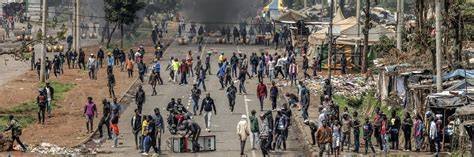
The protests sweeping across European capitals and cities can no longer be regarded as temporary expressions of public discontent over economic conditions or opposition to specific government decisions. Rather, they have become indicators of deeper social and political transformations affecting the very fabric of European societies and raising fundamental questions about the future of the welfare state, the limits of representative democracy, the crisis of identity and belonging, and the relationship between citizens and governing institutions. What is unfolding in France, Spain, Italy, Belgium, Portugal, Greece, Serbia, and other European countries, despite differences in its immediate causes and national contexts, reflects a growing sense of social discontent with the trajectory of economic and political change, alongside an increasingly widespread perception that the burdens of these transformations are no longer being distributed fairly across society.
From this perspective, Europe appears to be approaching a pivotal moment, one that concerns not merely its ability to contain protests, but also its capacity to redefine the social contract underpinning its modern states. For decades, that contract rested on a balance between economic growth, social protection, and political stability. Today, however, this balance is under simultaneous pressure from technological transformations, international economic competition, the repercussions of the war in Ukraine, rising defence spending, demographic shifts, migration, declining purchasing power, and widening social inequalities.
The Crisis of the Social Contract and the Erosion of Institutional Trust
European protests reveal a fundamental paradox: the continent that developed one of the world's most advanced welfare systems is now facing increasing difficulties in maintaining a balance between the demands of economic competitiveness and the state's social obligations. Structural reforms, cuts to certain areas of public expenditure, labour market restructuring, and mounting pressure on healthcare and education services have all become sources of political and social conflict.
The problem does not necessarily lie in European societies' rejection of reform or change as such, but rather in how the costs and benefits of these processes are distributed. When workers, employees, farmers, and young people feel that economic decisions impose additional burdens on them, while the gains from transformation remain concentrated in specific economic sectors or among groups better equipped to adapt, reform loses its social legitimacy. Instead of serving as a means of addressing structural imbalances, it becomes another source of public discontent.
This issue is particularly significant as the middle class finds it increasingly difficult to maintain its previous living standards. Historically, this class has served as a cornerstone of political and social stability in Europe. Today, however, it faces mounting pressures from rising housing, energy, and living costs, declining purchasing power, and deteriorating public services. As its economic position weakens, so does its traditional role as a moderating force capable of balancing competing social interests.
The crisis, therefore, is not simply about declining incomes or rising living costs. It reflects a broader breakdown in the relationship between the state and society. Increasingly, significant segments of the population feel that the state is no longer able to provide the protection, opportunities, and fairness that once formed the foundation of its social legitimacy.
From a Crisis of Democratic Representation to the Search for Political Alternatives
One of the most prominent dimensions of Europe's current transformations is the crisis of confidence in traditional political parties and institutions. This decline in trust is no longer confined to a particular government or political movement. It increasingly reflects a broader perception among social groups that decision-making has become detached from citizens' demands and that elected institutions are no longer adequately representing their priorities.
This raises a fundamental challenge for representative democracy. European citizens are no longer satisfied with simply participating in elections and choosing their representatives. They increasingly demand a more meaningful role in shaping policies that directly affect their daily lives. When the gap between electoral participation and the actual ability to influence decisions widens, streets, protests, and strikes become alternative channels through which citizens seek to reclaim their political and social voice.
The student movement in Serbia, as described in the report, offers a particularly striking example. Students moved beyond conventional forms of protest and sought to build broader societal mobilisation around combating corruption, upholding the rule of law, and holding officials accountable. They also expanded their outreach to rural communities and social groups that do not typically participate in political activism. The significance of this experience lies in demonstrating how protest movements can move beyond opposition to those in power and attempt to construct an alternative political and social platform outside traditional party structures.
This development raises an important question about the future of political participation in Europe: Are societies moving towards new forms of organisation and representation that transcend traditional political parties, or will these movements remain temporary waves of protest without the capacity to evolve into stable political forces?
Either way, declining institutional trust places European democracies before a genuine test, particularly as the widening gap between society and political elites may create opportunities for movements that present themselves as the only alternative to the existing system, even when their programmes rely on oversimplifying complex problems and advancing populist solutions.
The Rise of Populism and the Crisis of European Identity
Europe's political transformations cannot be understood without examining the growing influence of populist and nationalist movements, on both the right and the left. These movements derive their strength not only from their political programmes but also from economic and social uncertainty and from the growing perception among segments of the population that traditional elites are no longer capable of protecting their interests or addressing their concerns.
On the right, nationalist and hardline parties have found fertile ground for political mobilisation in debates surrounding migration, identity, security, and national sovereignty. Immigration, weakened national borders, and multiculturalism are increasingly portrayed as challenges to the identity and cohesion of European societies. These parties capitalise on concerns related to demographic and cultural change, linking them to pressure on public services, labour markets, and social security.
On the left, meanwhile, more radical political forces draw support from opposition to austerity measures, widening class inequalities, declining social protection, and the growing influence of major economic interests. European politics is therefore not simply witnessing the rise of the right at the expense of the left. Rather, it is experiencing a broader process of political realignment and renewed polarisation, in which centrist movements are increasingly losing their ability to dominate the political landscape.
The figures cited in the report regarding the political preferences of young voters in France illustrate this division. Segments of the younger electorate are increasingly split between radical left-wing alternatives and nationalist right-wing movements. This suggests that the younger generation is not moving towards a unified political position, but is instead experiencing sharp divisions over how to interpret the crisis, identify those responsible for it, and determine the appropriate solutions.
More importantly, the rise of populism represents more than a shift in party politics. It points to a deeper crisis concerning the definition of Europe's political and social identity. What holds European societies together amid the resurgence of national and local identities? How can cultural pluralism be reconciled with social cohesion? And is the European project still capable of producing a shared political identity that transcends national borders?
Younger Generations and the Future of Social Cohesion
Young people occupy a central position in Europe's ongoing social and political transformations, not only because of their participation in protests, but also because they are among those most exposed to the consequences of economic, technological, and social change.
Young Europeans face interconnected challenges, beginning with difficulties in securing affordable housing and stable employment, and extending to declining opportunities for social mobility and growing anxiety about future career prospects amid the rapid expansion of artificial intelligence and automation. Added to this is the perception among some younger people that older generations enjoy better economic and social opportunities, while decisions affecting their future are being made without their meaningful participation.
A significant paradox emerges here: European countries seeking to strengthen their competitiveness in the digital economy and advanced industries may simultaneously face a crisis in integrating younger generations into this transformation. Technological progress does not automatically guarantee social justice. In the absence of appropriate education, training, and social protection policies, it may instead deepen the divide between those with the skills and resources to benefit from new opportunities and those most vulnerable to exclusion.
Furthermore, the shift from traditional trade unions and established organisations towards more flexible digital spaces and social networks reflects a transformation in the nature of political participation. Social media enables younger generations to bypass conventional channels of mobilisation and organisation, rapidly expanding the reach of protests. At the same time, however, these platforms create an environment in which misinformation, extremist narratives, and polarisation can spread.
Consequently, Europe's challenge is not simply to provide employment opportunities for young people, but to rebuild their sense of belonging to a political and social project capable of restoring their confidence in the future.
Migration and Anxiety over Demographic and Cultural Change
Migration is one of the issues at the intersection of Europe's social and political crises. It has evolved from a matter of border management, asylum, and labour market regulation into a central issue in debates over national identity, social cohesion, and the future of the European state.
The report highlights the relationship between migration and political tensions in certain countries, particularly Spain, where tensions surrounding migrant arrivals coincided with an increasingly polarised political climate. However, reducing Europe's broader crisis to migration alone would be an incomplete interpretation. The pressures facing European societies are also rooted in structural problems involving housing, employment, public services, and the distribution of wealth.
The fundamental problem is that populist parties can transform social and economic anxiety into political narratives that hold migrants responsible for structural imbalances far beyond their capacity to explain. In the absence of balanced policies that combine migration management, social integration, and the protection of rights, migration becomes fertile ground for political opportunism and cultural polarisation.
The future of pluralism in Europe will therefore depend on the ability of governments to develop an integration model that reconciles respect for cultural and religious diversity with adherence to citizenship principles and the rule of law, while strengthening the economic and social participation of all residents.
Europe Between Security Imperatives and Social Justice
Europe's domestic crises cannot be separated from the wider geopolitical transformations taking place internationally. The war in Ukraine, growing uncertainty over the nature of the American security commitment to the continent, and intensifying strategic competition with the United States and China are compelling European countries to reconsider their economic, military, and technological priorities.
Europe faces an increasingly complex equation. It must strengthen its defence capabilities and strategic autonomy while continuing to invest in education, healthcare, infrastructure, innovation, and social protection. These priorities are not necessarily incompatible, but they become so when security and technological transformations are financed at the expense of social sectors, or when lower-income groups are consistently required to bear a disproportionate share of their costs.
The report points to mounting pressure on European public finances, driven by public expenditure, fiscal deficits, defence commitments, and international economic competition. This places policymakers before a question that extends beyond financial management: How can Europe strengthen its position in the international system without undermining the foundations of its domestic stability?
International power is measured not only by military and technological capabilities, but also by the degree of social cohesion, institutional effectiveness, and the state's ability to guarantee a minimum level of fairness and opportunity. Any European project aimed at achieving strategic autonomy will prove unsustainable unless it rests on a social foundation whose members feel they are partners in bearing its costs and sharing its benefits.
Is Europe Moving Towards a Restructuring of Its Political Order?
These transformations point towards three possible trajectories. The first involves European governments succeeding in containing protests through social concessions and gradual economic reforms, thereby restoring some degree of public confidence in institutions. However, this would not necessarily resolve the structural imbalances that produced the crisis in the first place.
The second trajectory involves the continuation of social and political tensions, with protests spreading across different sectors and social groups, accompanied by increasing strikes and confrontations. Governments would consequently find themselves managing recurring crises rather than addressing their underlying causes.
The third scenario involves the transformation of social discontent into an electoral force capable of reshaping Europe's political landscape by strengthening the position of right-wing populist and radical left-wing parties while weakening traditional parties and centrist political forces. Such a development could fundamentally alter public policy priorities, particularly in relation to migration, the economy, social protection, and foreign relations.
These trajectories, however, are not mutually exclusive. Some countries may experience temporary social relief, while others move towards deeper political polarisation. In certain cases, protest movements may evolve into organised political forces capable of influencing institutions and decision-making.
Europe's Crisis Lies Not in the Protests, but in Their Underlying Causes
The current protests and social and political transformations demonstrate that Europe is facing a crisis that extends beyond disagreements over public budgets or government policies. It reaches the very foundations of the political and social model that has shaped the continent over recent decades. The problem is not that students, farmers, workers, and young people are taking to the streets. Rather, it lies in the circumstances that have led them to feel that institutions are no longer responsive to their demands and that the costs of major transformations are being distributed unequally across society.
From this perspective, the rise of populism and nationalism, declining confidence in traditional political parties, and growing polarisation over migration and identity are not isolated phenomena. They represent different manifestations of a broader social and political crisis concerning the future of Europe's social contract.
Perhaps Europe's greatest challenge in the coming period will be its ability to reconcile three seemingly competing objectives: preserving the welfare state, strengthening its competitiveness in the global economy, and building strategic and security autonomy in an increasingly unstable international environment. If European governments fail to develop a fair framework for reconciling these objectives, protests may evolve from fragmented movements of discontent into a permanent force reshaping the continent's political life.
Europe is therefore facing more than an economic crisis or a wave of rising right-wing populism. It is confronting a much deeper question: Can the European model still reconcile political freedom, social justice, cultural pluralism, and economic security? Or are domestic and international transformations pushing it towards a new model whose contours have yet to emerge?
The answer to this question will determine not only the future of the European Union, but also the nature of European societies and their political and social identity in the decades ahead.
Most read



Read also