
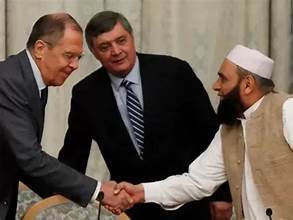
At a time when most international actors continue to approach the Taliban government with caution, Moscow appears to have made a strategic decision to move beyond pragmatic engagement toward building a gradual political, security, and economic partnership with the movement. Russia’s formal recognition of the Taliban in July 2025 was not merely an exceptional diplomatic gesture; rather, it reflected a broader transformation in Moscow’s approach to Afghanistan and a redefinition of regional stability in the post-American era of Eurasia.
From the Kremlin’s perspective, the issue is not about legitimizing a movement that was classified as a terrorist organization until recently. Instead, it is about managing a new geopolitical reality that emerged after the Taliban’s return to power in 2021. Russia increasingly views the Taliban not as an insurgent force controlling a fragile state, but as a governing authority that cannot be excluded from any future security or economic arrangements in the heart of Asia.
The American Vacuum and the Rise of Russian Realism
The U.S. withdrawal from Afghanistan fundamentally altered the regional balance of power. After two decades of Western security dominance, regional actors suddenly found themselves confronting a strategic vacuum and the urgent need to establish new security mechanisms capable of preventing instability from spreading across the broader region.
Within this context, Moscow adopted an approach rooted in what can be described as “security realism”—engaging with the authority that effectively controls the territory regardless of ideological considerations. Russian policymakers recognize that isolating or ignoring the Taliban is unlikely to weaken the movement. Instead, such a policy could transform Afghanistan into an ungoverned space where transnational militant organizations thrive, a scenario that Moscow considers one of the most serious threats to its national security.
These concerns are particularly significant given the geographic and political importance of Central Asia, which constitutes Russia’s strategic southern flank. The presence of groups such as the Islamic State Khorasan Province (ISKP) and other transnational extremist networks raises the possibility that Afghanistan could become a launchpad for operations targeting former Soviet republics and eventually the Russian homeland itself.
Consequently, Russia’s recognition of the Taliban was not simply the culmination of diplomatic engagement. It was also a mechanism for integrating the movement into a broader regional security architecture and encouraging it to assume responsibility for controlling Afghan territory and preventing security threats from spilling across borders.
The Taliban as a Security Partner, Not an Ideological Ally
Despite Russian rhetoric occasionally describing the Taliban as an “ally” in counterterrorism efforts, the relationship is not based on ideological affinity. Rather, it is driven by converging interests and strategic necessity.
Moscow remains fully aware that Afghanistan continues to host a complex militant landscape and that the Taliban’s ability to establish complete security control remains uncertain. Moreover, the movement itself contains diverse factions and local commanders with differing views on critical issues, including relations with regional jihadist organizations and the Tehrik-i-Taliban Pakistan (TTP).
As a result, Russia’s policy is not founded on unconditional trust in the Taliban. Instead, it reflects a calculation that the movement represents the least costly option compared to the alternatives of state collapse, prolonged instability, or the resurgence of transnational extremist groups.
This logic became even more apparent following the expansion of ISKP’s activities in recent years. Attacks targeting both Moscow and Kabul demonstrated the group’s growing ability to operate across borders and project violence beyond Afghanistan. These developments reinforced Russia’s perception of the Taliban as the first line of defense against the spread of jihadist threats into Central Asia.
The Afghanistan–Pakistan Crisis and the Reshaping of Regional Threats
One of the most significant variables influencing Russian strategic calculations is the growing tension between Kabul and Islamabad. The recurring military clashes between the two sides are not merely a border dispute; they reflect deeper fractures within the broader militant ecosystem that has historically operated across the region.
Moscow fears that a prolonged confrontation between the Taliban and Pakistan could produce contradictory outcomes. On one hand, it might disrupt cross-border militant networks. On the other, it could generate new fractures within the Taliban itself, encouraging defections and driving certain factions toward ISKP, thereby creating an even more complex security environment.
This reality explains why Russia views the Afghanistan–Pakistan crisis through a broader regional lens rather than as a bilateral issue. The conflict has direct implications for the future security architecture of Eurasia.
For this reason, Moscow continues to advocate de-escalation between the two neighbors—not merely in pursuit of political stability, but also to protect the connectivity and infrastructure projects that underpin Russia’s wider Eurasian strategy.
The Economic Dimension: Afghanistan as a Gateway Rather Than a Battlefield
If security concerns provide the immediate rationale for Russia’s engagement with the Taliban, economic considerations represent the longer-term strategic horizon.
Russia increasingly views Afghanistan as a critical geographic crossroads linking Central Asia to the Indian Ocean. This location grants the country exceptional significance within emerging transportation, energy, and trade networks spanning Eurasia.
Accordingly, Moscow’s objective extends beyond preventing Afghanistan’s collapse. It seeks to integrate the country into Eurasian supply chains and connectivity corridors that could serve as alternatives to traditional trade routes shaped by Western influence.
This strategic outlook explains Russia’s interest in railway projects traversing Afghanistan, transportation corridors connecting Central Asian states to Pakistani ports, and investment opportunities in mining, energy, and agriculture.
The policy also aligns with Russia’s broader effort to redirect trade and economic partnerships toward eastern and southern markets amid mounting Western sanctions. In this context, Afghan stability becomes an integral component of Russia’s economic security calculations.
International Legitimacy as a Survival Strategy for the Taliban
For the Taliban, the value of Russia extends far beyond economic cooperation. Since returning to power, the movement has faced a persistent crisis of international legitimacy, with most Western governments continuing to withhold formal recognition.
Against this backdrop, Russian recognition represents a major political achievement. Its importance lies not only in the fact that it comes from a major global power, but also because it may encourage other states to reconsider their own positions.
The Taliban seeks to leverage this development to demonstrate that it is no longer an isolated insurgent movement but a governing authority capable of maintaining normal relations with major regional actors. This ambition helps explain its strong emphasis on infrastructure projects, regional trade, and economic diplomacy.
Toward a New Regional Order?
Russia’s evolving policy toward the Taliban reflects a transformation that extends well beyond the normalization of relations with Afghanistan’s current rulers. Moscow is effectively promoting a regional model based on integrating de facto authorities into security and economic frameworks, regardless of ideological considerations or Western preferences.
This approach reflects a growing recognition among regional powers that Afghanistan’s stability is no longer merely a domestic concern. It has become a central factor shaping the future of Eurasian security as a whole.
At the same time, it illustrates the gradual transfer of influence over the Afghan file from Western powers to regional actors, particularly Russia, China, Iran, and the Central Asian states.
Although the Russia–Taliban partnership continues to face significant challenges—including persistent militant activity, tensions with Pakistan, and Afghanistan’s fragile economy—the overall trajectory suggests a relationship that is becoming increasingly institutionalized and strategically important.
Ultimately, Russia is not betting on the Taliban because it views the movement as a political model worth emulating. Rather, Moscow sees it as a necessary instrument for managing a complex transitional phase in the heart of Asia. Whether this gamble succeeds will depend largely on the Taliban’s ability to evolve from a de facto authority into a genuine provider of stability. That, in turn, will shape not only Afghanistan’s future but also its place within the emerging Eurasian order.
Most read