Iran War: Yes, We Can Cut And Run

President Donald Trump’s renewed escalation of the war on Iran is dangerous and needs to be immediately reversed. Investors in the stock market are often advised to admit they bought an investment lemon and cut their losses by selling, thus avoiding further disaster by riding the stock to the bottom and vainly hoping it will rebound. Given human nature, many investors struggle with the first part: admitting they made a mistake. Politicians involved in losing wars often exhibit similar behavior.
And President Trump, never wanting to be labeled a “loser,” is particularly prone to such psychological denial. He is far from the only American president to experience this affliction, however. In the mid-1960s, Lyndon B. Johnson, knowing full well that the conflict in Vietnam could likely become an American quagmire, escalated the war. Richard Nixon, who took over as president, promised to end the Vietnam War but actually increased the fighting by bombing North Vietnam in hopes of forcing them to negotiate. This situation is somewhat similar to what Trump is currently doing in trying to pressure Iran.
Astutely, they eventually came to the table, but only to allow Richard Nixon a face-saving way to withdraw U.S. forces, with both sides knowing that the North Vietnamese would eventually conquer all of Vietnam, a “decent interval” after an American withdrawal.
And American presidents, including Trump, have had trouble withdrawing from quagmires in Afghanistan and Iraq. Osama bin Laden attacked America on 9/11, hoping to and succeeding in weakening the United States by luring it into a retaliatory bog in Afghanistan, a nation called “the graveyard of empires” for a reason. Since the late 1800s, Britain had fought multiple, less-than-resounding wars there, which sapped the strength of the British Empire. The Soviet Empire also had to withdraw in defeat in the 1980s after failing there; some analysts say this was a factor in the Soviet Union’s dissolution soon after.
Despite these previous foreign failures and Afghanistan’s well-earned moniker, belief in “American exceptionalism” carried George W. Bush into not only a quest to capture or kill Osama bin Laden but to launch nation-building wars there and in Iraq and a global war on terror, which gave bin Laden a win bigger than he ever expected by overstretching the U.S. superpower.
And subsequent U.S. presidents, including Trump, found it difficult to get out of Afghanistan and Iraq, as both wars dragged on. In 2011, Obama initially fulfilled Bush’s congressionally coerced timetable for withdrawal from Iraq but then sent U.S. forces back into battle against ISIS, a turbocharged Sunni insurgency that originated in opposition to the needless U.S. invasion of that country. Trump continued this fight and has maintained some U.S. forces in Iraq to this day.
The conflict in Afghanistan, the longest war in U.S. history, saw Bush, Obama, and Trump during their first term all try to avoid the term “loser” by keeping U.S. forces in a war lost long ago, thus letting more Americans, allies, and Afghans die needlessly in that country. And illustrating why presidents have difficulty getting out of wars already lost, Joe Biden, who courageously finally pulled the plug on the Afghan quagmire, was harshly criticized for the limited number of American casualties and chaos that resulted from the withdrawal instead of being praised for saving future American and Afghan lives.
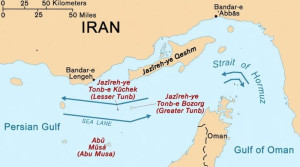
Therefore, Trump, especially Trump, psychologically has a hard time cutting his losses and moving on from an aggressive, unpopular war with Iran that he needlessly started. But if he does so now, while Iran still threatens to block passage through the Strait of Hormuz, he will be seen as a loser. So he is escalating the killing in a war that is already lost, but that is unlikely ever to open the strait for free international maritime passage (the status quo ante). And divisions among Iranian factions may even make any sort of face-saving deal with Trump impossible.
Trump needs to end the bombing, say he won the war, de-escalate in the Persian Gulf theater, and accept somewhat higher oil prices with added Iranian tolls through the strait. For 11 years, Trump’s remarkable political talent has been bending the truth and reality to fit his imagined world, and convincing his political base and others to believe it. He especially needs to use that talent in ending the war with Iran. Former Congressman Joe Scarborough, a television commentator and conservative foreign policy hawk, recently said: “We can’t just cut and run in Iran (7/20 Morning Joe show on MSNOW).” With the talented, reality-bending Donald Trump as president, sure, we can.
Most read