Who Is Pushing Egypt Toward the Brink of Conflict?

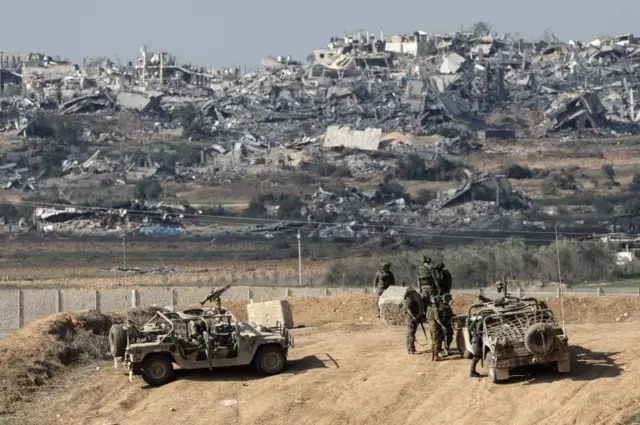
Amid the escalating conflict in the Middle East, wars are no longer fought solely with artillery, aircraft, missiles, and bombs. The battlefield has expanded to include politics, media, and economics, where another, more intricate struggle is unfolding—one aimed at drawing new regional powers into the confrontation. At the forefront of these powers stands Egypt, a country whose role is indispensable in any equation concerning the region's security or future.
Egypt is not merely a populous nation; it is a major regional power with one of the strongest armed forces in the Middle East. It also oversees the Suez Canal, one of the world's most vital maritime chokepoints and a lifeline for international trade. Coupled with its longstanding role in Arab affairs—particularly the Palestinian issue—Egypt's strategic weight means that any shift in its position could significantly alter the regional balance of power and tip the scales in favor of one side over another.
It is therefore unsurprising that Cairo has faced sustained pressure and provocation, particularly since the outbreak of the war in Gaza. Among the most serious of these have been attempts to impose a new reality by promoting plans to relocate Gaza's population into Egypt's Sinai Peninsula and by seeking to hold Egypt responsible for the humanitarian crisis resulting from Israeli military operations. Yet the roots of that crisis lie in the continuation of the war itself and the extensive destruction it has inflicted upon civilians and critical infrastructure.
Tensions intensified further following the Israeli military's takeover of the Philadelphi Corridor, in addition to a number of regrettable security incidents. Any of these developments could have ignited a broader military confrontation had Cairo chosen emotion over restraint.
Instead, Egypt adopted a different course. It exercised strategic patience and responded as a state that understands that safeguarding national security requires careful calculation rather than impulsive action. Balancing deterrence with responsibility, Egypt simultaneously continued its diplomatic efforts to contain the crisis, promote de-escalation, and bridge differences among the parties involved. This approach reflects its conviction that prolonging the war will not produce genuine security for any side but will only deepen regional instability.
Despite this approach, the region remains full of surprises. Some actors believe that expanding the scope of the conflict could serve their political or military interests, and they seek to redraw the map of influence in the Middle East—even if the price is dragging additional countries into the flames of war. In this context, Egypt remains vulnerable to attempts at entanglement, whether through direct pressure or through security incidents that raise numerous questions. The recent reports that an American vessel and another foreign ship sustained damage while docked at Damietta Port have prompted considerable speculation. Was the objective to send a message to certain international powers? Or was it intended to shift the theater of tension to the Mediterranean, thereby threatening international shipping and increasing pressure on Egypt? No one can answer these questions with certainty. The regional landscape is highly complex, and the facts are still being examined and verified. What is certain, however, is that such incidents demand the highest degree of caution, free from emotional reactions or hasty judgments.
Although various parties may be pointed to as potential culprits, prudence requires waiting for the results of the official investigations rather than being swept along by narratives circulating on social media platforms, which have increasingly become arenas for spreading rumors, fueling polarization, and shaping public opinion before the facts are established.
The greatest danger during times of crisis is allowing emotion to replace reason and permitting impulsive reactions to dictate the policies of states. Wars are easy to ignite, but extinguishing them may take many years. Their cost cannot be measured solely by military expenditures, but also by the lives they claim, the economies they devastate, and the social and political scars they leave behind—consequences that may endure for generations.
For this reason, safeguarding Egypt's national security is not merely a matter of possessing military strength. It also requires the wisdom to know when to employ that strength and the ability to distinguish between a battle imposed in defense of the homeland and one into which the nation is deliberately drawn to serve the calculations of others.
Not everything that rises to the surface reflects the whole truth, and no event exists in isolation from its broader context. In a world where interests overlap and realities become increasingly intertwined, a prudent state is one that reads the strategic landscape carefully and recognizes that the greatest victories are not always won on the battlefield, but often by avoiding war when doing so is the surest path to protecting the nation and preserving its resources.
Originally published in Al-Masry Al-Youm (Egypt).
Most read