

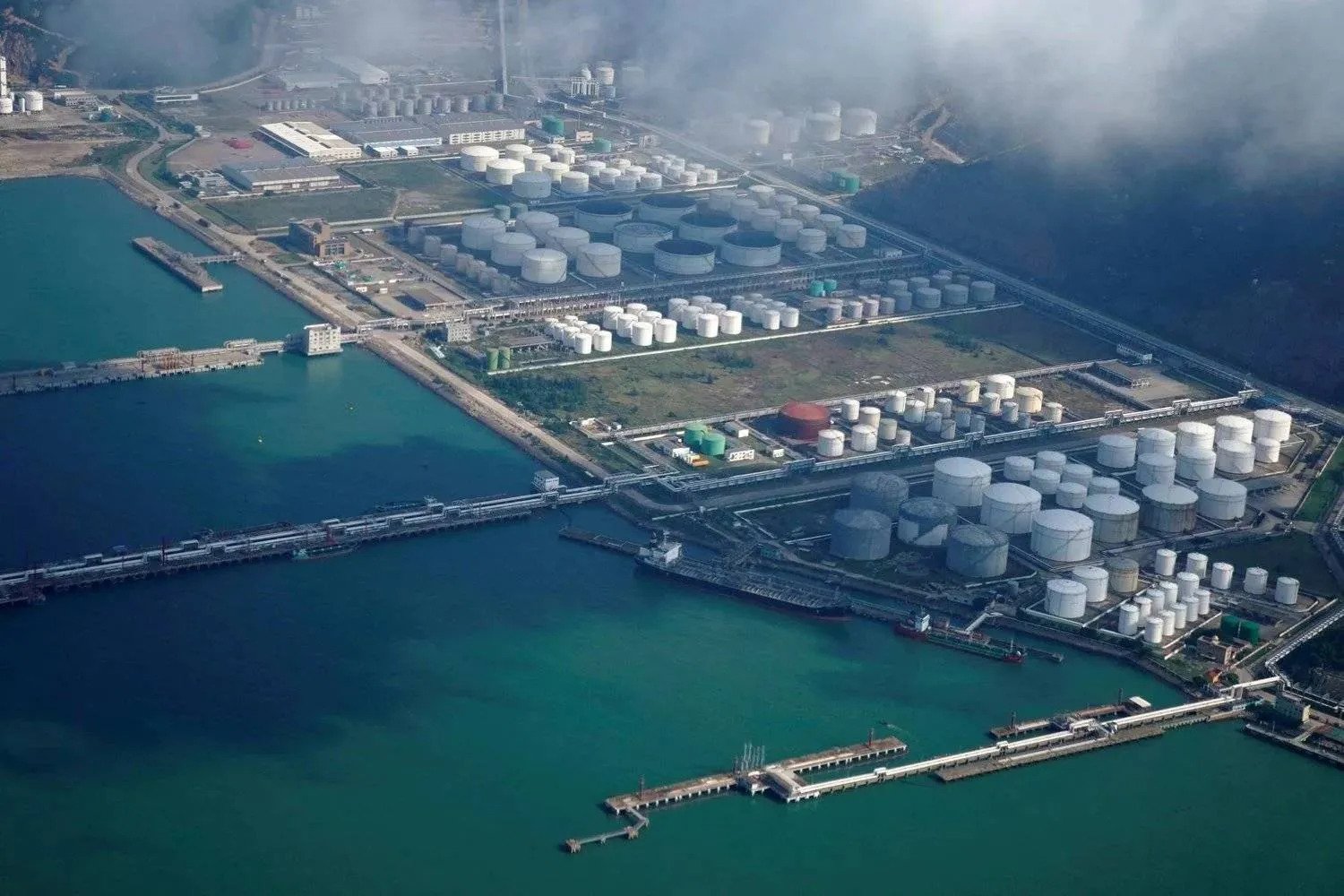
Attention is turning to China’s purchases of Iranian oil as the United States prepares to announce new economic sanctions against Tehran—a move that could test Beijing’s and China’s independent refineries’ ability to continue importing Iranian crude despite mounting U.S. pressure.
China has been Iran’s largest oil buyer for years, with its purchases averaging around 1.4 million barrels per day last year, according to data from Kpler, a company specializing in vessel-tracking and commodity-flow analysis.
How Much Iranian Oil Does China Buy?
Flows declined sharply after the United States renewed its restrictions on Iranian vessels and ports on July 13, in an effort to cut Iran’s oil revenues following the breakdown of a ceasefire agreement.
Kpler data showed that Iranian oil shipments to China fell to 785,000 barrels per day in June, their lowest level since February 2023, before likely rising to around 823,000 barrels per day in July, according to Reuters.
Flows declined again in August, however, reaching approximately 534,000 barrels per day so far, according to preliminary data.
Kpler data show no clear passage of oil tankers through the Strait of Hormuz since July, although a large number of vessels have been switching off their tracking systems, making them more difficult to monitor.
Who Buys Iranian Oil?
China’s independent refineries, often known as “teapots,” account for the bulk of Iranian oil purchases, taking advantage of the substantial discounts offered on Iranian crude compared with competing grades.
By contrast, China’s major state-owned refining companies have avoided purchasing Iranian oil since 2019, when the United States reimposed sanctions on Tehran.
Official Chinese customs data show no purchases of Iranian crude. Iranian oil arriving in China has long been relabeled as Malaysian crude, and more recently as Indonesian crude as well, while transactions are settled in yuan through a complex network of intermediaries that is difficult to trace.
Have Previous Sanctions Worked?
Washington has intensified efforts to curb China’s purchases of Iranian oil since President Donald Trump returned to the White House early last year, imposing sanctions on a number of small Chinese refineries and entities involved in the Iranian oil supply chain.
The U.S. Treasury Department has also warned two major Chinese banks that they could face secondary sanctions if their systems were found to have been used to transfer Iranian funds, although neither bank has actually been placed on the sanctions list.
In April, Washington imposed sanctions on Hengli Petrochemical’s refinery in Dalian, along with around 40 shipping companies and vessels, accusing the refinery of purchasing billions of dollars’ worth of Iranian oil. Hengli denied purchasing Iranian crude.
Despite these measures, the sanctions have so far failed to halt the flow of Iranian oil to China. Chinese imports of Iranian crude reached 1.24 million barrels per day in January and 1.58 million barrels per day in February, according to Kpler data.
What Is Beijing Saying?
China rejects the unilateral sanctions imposed by the United States and calls for disputes to be resolved through diplomatic and political means.
As Washington approaches the announcement of new measures, attention will focus on how willing Beijing is to continue importing Iranian oil, as well as on the ability of independent refineries and intermediary networks to maintain supplies in the face of U.S. sanctions that could this time target a broader range of buyers, financial entities, and tankers.
This is where the significance of the next U.S. move lies: targeting Iranian oil buyers in China could have a greater impact on Tehran’s revenues than sanctions imposed in recent months on smaller players in the supply chain.
Most read