The Red Sea: When Geography Alone Is Not Enough

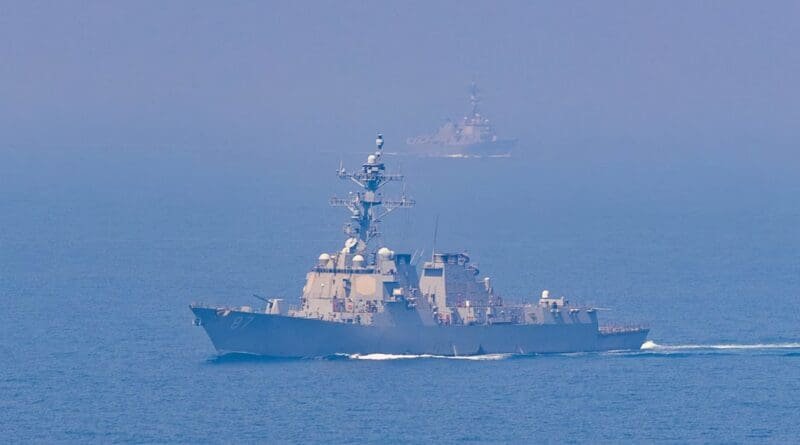
The Red Sea is one of the world's most strategically important waterways. Through the Bab el-Mandeb Strait and the Suez Canal passes a significant share of global trade, along with a substantial portion of the energy supplies flowing from the Gulf to Europe and Asia. At the same time, it serves as a geographical crossroads linking three continents and has been an arena for great-power competition ever since the opening of the Suez Canal more than a century and a half ago.
Its strategic importance is beyond dispute.
Six Arab states border the Red Sea directly, while the number rises to seven when Somalia—a full member of the League of Arab States overlooking the Gulf of Aden, which forms a single strategic continuum with the Red Sea and Bab el-Mandeb—is included.
Whenever Arab or foreign analysts discuss this vital region, one word frequently recurs: "vacuum." Yet, according to the author, this description is misleading. The Arab presence in the Red Sea is not absent; geographically, it is unmistakably substantial. What is truly lacking is not presence, but collective political will.
The Red Sea's central problem, therefore, is not a gap on the map—it is a gap in strategic resolve.
This paradox deserves closer examination.
The six Arab littoral states do not view the Red Sea through the same strategic lens. Egypt approaches it primarily from the perspective of maritime security and the protection of the Suez Canal. Saudi Arabia views it through the prism of energy security and the regional balance of power vis-à-vis Iran.
Meanwhile, Sudan and Yemen remain preoccupied with internal conflicts that consume their political and institutional capacity for long-term strategic planning.
Jordan, despite its direct geographic access to the Red Sea, remains a relatively limited actor—not because of geography itself, but because it lacks the maritime and economic capabilities needed to transform proximity into meaningful influence.
Djibouti, for its part, has evolved into a location where foreign military powers lease territory for multiple international bases. As a result, it functions more as a neutral host than as a participant in any collective Arab strategic vision.
These divergent priorities have never been translated into an effective collective security mechanism, despite numerous theoretical proposals discussed in policy papers and strategic studies.
When Arab governments—led by Saudi Arabia—attempted to establish such a framework through the Council of Arab and African States Bordering the Red Sea and Gulf of Aden, launched in Riyadh in 2020, the initiative remained closer to a declaration of intent than to a functioning regional security arrangement.
This, the author argues, demonstrates that the problem lies not in the absence of initiatives but in the inability to transform them into binding political commitments.
Another dimension receives far less attention: economics.
Several Red Sea states—particularly Sudan and Yemen—remain financially dependent on external sources of assistance. Such dependence inevitably constrains their freedom to formulate independent maritime policies.
A country whose economic stability depends heavily on foreign financing cannot easily become an autonomous participant in shaping collective regional security arrangements, even if the political will exists. Financial dependence therefore deepens the deficit in collective strategic resolve.
By contrast, the author argues that two Arab countries possess the necessary capabilities to provide effective leadership in the Red Sea: Egypt and Saudi Arabia.
Although each country's priorities differ in emphasis—Cairo focuses primarily on maritime security and the Suez Canal, while Riyadh prioritizes energy security and regional strategic balance—these interests are fundamentally complementary rather than contradictory.
Secure shipping routes protect energy exports, while stable energy markets reinforce the overall stability of the Red Sea.
Their methods have not always been identical. Saudi Arabia chose years of direct military confrontation with the Houthis, viewing them as an immediate threat to its borders. Egypt, despite bearing considerable economic costs from disruptions to maritime navigation, generally adopted a more restrained approach rooted in its longstanding engagement with the Yemeni file.
Yet these tactical differences do not negate the underlying convergence of strategic objectives. Rather, they reflect an implicit division of responsibilities between two countries that recognize the Red Sea's stability as a shared national interest.
Whenever coordination weakens, however, the resulting vacuum is quickly filled by external powers.
The United States maintains a permanent military presence to safeguard international shipping.
China established its first overseas military base in Djibouti while simultaneously investing heavily in regional ports under the Belt and Road Initiative.
Russia has for years pursued negotiations—though not yet conclusively finalized—to secure a naval facility in Sudan.
Turkey has built its largest overseas military base in Mogadishu and signed defense and maritime agreements with Somalia covering naval training and the protection of Somali territorial waters, thereby expanding its influence throughout the Horn of Africa at the entrance to the Red Sea.
Iran exercises influence through its support for the Houthis in Yemen, giving Tehran leverage over one of the world's most critical maritime chokepoints.
Israel, although it officially maintains no declared military base in the Red Sea or the Horn of Africa, has repeatedly been linked in intelligence and defense reporting to expanding regional activity—from growing diplomatic ties with Somaliland and reported access arrangements involving the Port of Berbera to longstanding allegations of intelligence facilities in Eritrea monitoring maritime traffic through Bab el-Mandeb.
Meanwhile, Ethiopia, having lost direct access to the Red Sea following Eritrea's independence, continues seeking maritime access through Somaliland. As the source of the Blue Nile, Ethiopia simultaneously occupies a pivotal position in Egypt's water security, making it a strategic actor whose maritime and hydrological dimensions intersect directly with Egyptian national security.
All of these developments unfold while the Arab states best positioned to shape events remain largely observers.
Perhaps no example illustrates this strategic gap more clearly than the international response to Houthi attacks on commercial shipping.
Efforts to contain these threats are consistently presented as measures to protect freedom of navigation. Yet in practice, they have become embedded within the broader strategic confrontation between the United States and Israel on one side and Iran on the other.
The Arab states, despite being those most directly affected by disruptions to Red Sea navigation, continue to bear the economic and security costs—from attacks on shipping to the prolonged conflict in Yemen—without exercising meaningful influence over either the direction or the outcome of these developments.
For Egypt in particular, the stakes are higher than for any other Arab country.
The Suez Canal represents an irreplaceable economic lifeline, and any disruption to Red Sea shipping immediately affects both canal revenues and Egypt's standing as a global maritime hub.
Moreover, Egypt's maritime security is inseparable from its water security in the Horn of Africa. The country's concerns over the Red Sea and the Nile converge into a single strategic equation.
Because of its unique geographical position linking the Nile to the Red Sea, Egypt is not merely another stakeholder in this issue. It is the country that bears the greatest cost when collective Arab political will remains absent.
The problem, therefore, is not geography.
Arab states occupy the Red Sea with undeniable geographic weight.
The real challenge is that this geographic presence has never been transformed into effective collective political action. Each state continues to manage its relationship with the Red Sea largely in isolation, leaving regional and global powers to occupy the strategic space that Arab coordination has left vacant.
Unless this numerical presence is converted into unified political will—supported by effective institutions and binding collective decision-making rather than forums or declarations of intent—the Red Sea will continue to be shaped by outside powers while its natural stakeholders remain spectators.
Geography provides opportunity, but it does not create influence. Maps alone do not determine politics; influence belongs to the states that know how to make strategic use of their geography.
Originally published in Al-Masry Al-Youm (Egypt).
Most read