Arab–Chinese Relations: From Economic Partnership to Reshaping the Dynamics of Influence in the Middle East

Arab–Chinese relations are no longer merely an economic relationship built around oil, trade, and investment. Nor is Beijing simply an Asian commercial partner for Arab capitals seeking to diversify their sources of financing and technology. Over the past several years, the relationship has gradually moved beyond its traditional framework to become one of the important channels through which the international order in the Middle East is being reshaped.
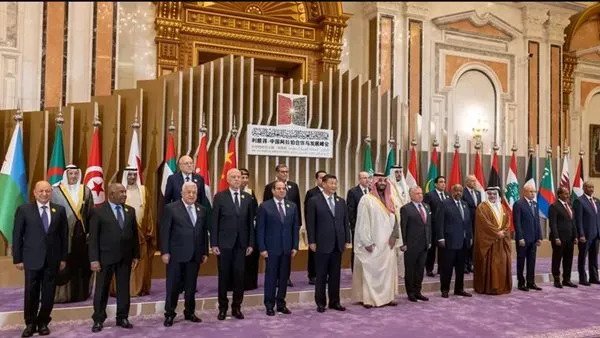
Seventy years after the establishment of diplomatic relations between China and a number of Arab states, and as preparations continue for the second China–Arab States Summit, expected to be held in Beijing during the second half of this year, the relationship appears to be entering a new phase characterized by greater breadth and multiple layers of engagement. Cooperation is no longer confined to economics and energy; it has expanded into politics, security, technology, finance, and culture, alongside growing coordination within multilateral frameworks in which China plays a leading or influential role.
The political significance of this transformation, however, lies not simply in the growing number of areas of cooperation, but in the changing function of the partnership itself. Arab–Chinese relations have increasingly become part of a broader process through which Arab states are recalibrating their strategic options amid a more competitive and multipolar international system, as well as an increasingly volatile Middle East in which traditional arrangements have struggled to contain successive crises.
Against this backdrop, the forthcoming China–Arab States Summit should not be viewed merely as a ceremonial occasion for renewing existing commitments. Rather, it should be understood as a test of the two sides' ability to translate the considerable accumulation of bilateral and multilateral ties into deeper, more sustainable, and more operational arrangements.
A Partnership That Goes Beyond Economics
One of the most significant transformations in Arab–Chinese relations has been the shift from sector-specific cooperation toward the construction of an institutionalized and strategic partnership. The first China–Arab States Summit, held in Riyadh in December 2022, established a more structured framework for managing relations, while the China–GCC Strategic Dialogue provided an additional platform for consultations on political, economic, and security issues.
This development reflects a mutual recognition that the scale of accumulated interests between the two sides can no longer be managed solely through separate bilateral contacts. As interests expand, the need grows for institutions and mechanisms capable of coordinating priorities, managing differences, and translating political understandings into concrete programs.
The historical evolution of the China–Arab States Cooperation Forum clearly illustrates this progression. From the strategic cooperation framework adopted in 2010, to the establishment of a comprehensive strategic partnership in 2018, followed by the introduction in 2020 of the concept of building a China–Arab community with a shared future in the new era, and ultimately the Beijing Declaration in 2024, the relationship has moved from confidence-building toward the construction of a broader political framework.
The dynamic has been reinforced by the expansion of China's strategic partnerships with Arab states and by the growing participation of Arab countries in multilateral frameworks such as BRICS and the Shanghai Cooperation Organisation. This reflects a broader Arab tendency to expand its strategic options and avoid confining external relations to a single axis.
The political significance of this trend is therefore clear: Arab states are not necessarily seeking to replace one international partner with another; rather, they are attempting to expand their strategic room for maneuver through diversified partnerships. For China, meanwhile, this approach creates an opportunity to consolidate its presence in a region of major economic and geopolitical importance without having to adopt the model of direct domination associated with some other major powers.
From Bilateralism to "Open Regionalism"
Another important transformation is the movement of Arab–Chinese relations beyond bilateral and closed regional frameworks toward what may be described as "open regionalism"—a pattern in which networks of cooperation connect Arab and Chinese interests with broader arrangements extending across Asia, Africa, and the institutions of the Global South.
The Belt and Road Initiative has been one of the principal instruments facilitating this transition. Rather than linking China to Arab states individually, it places the region within a broader network of trade routes, infrastructure, energy projects, investment flows, and global supply chains.
The Arab region is therefore no longer viewed by Beijing merely as a market or source of energy. It is increasingly becoming part of a wider geopolitical space in which trade, logistics, energy, investment, and technology converge.
For Arab states, this network provides an opportunity to strengthen their engagement with Asian economies and expand their access to investment, financing, and technology. Accordingly, growing Arab participation in frameworks such as BRICS and the Shanghai Cooperation Organisation should not necessarily be interpreted simply as alignment with China. It is better understood as part of a broader strategy of diversifying international partnerships and taking advantage of the gradual transformation of the global balance of power.
The Global South as a Space for Political Convergence
The Arab–Chinese convergence acquires an increasingly explicit political dimension when it comes to the future of global governance. The two sides share a degree of convergence in their calls for reform of existing international institutions, greater representation for developing countries, stronger multilateralism, and respect for sovereignty and non-interference.
More importantly, this discourse is increasingly connected to a growing network of new political and economic arrangements. Greater Arab participation in organizations and groupings that include China provides both sides with broader space for coordination and opens the possibility of developing economic and financial arrangements that are less dependent on the traditional institutions that have historically dominated the international system.
From this perspective, Arab–Chinese rapprochement can be seen as part of a broader contest over the future shape of the international order: will it remain a system in which power is concentrated around a limited number of centers, or will it evolve toward a more complex multipolar structure in which influence is distributed among a wider range of actors?
This does not mean that China and the Arab world share identical positions on every issue of international politics. Rather, their interests converge around the broader objective of expanding the strategic space available to countries of the Global South and avoiding a situation in which their options are constrained within a single international framework.
Security Moves to the Center of the Partnership
If economics was the historical entry point of the relationship, security has gradually become one of its increasingly important components.
This transformation is closely linked to changes in the strategic environment of the Middle East. Protracted conflicts, Gulf tensions, regional wars, disruptions to trade and energy routes, and growing instability have made it increasingly difficult for any major economic power to protect its interests in the region without becoming involved—albeit selectively—in questions of security and stability.
China has consequently been moving gradually from the model of an "economic partner with limited political involvement" toward a more complex model based on selective political engagement. This engagement remains cautious, but it reflects Beijing's growing recognition that regional stability has become essential to protecting its economic and strategic interests.
China's mediation between Saudi Arabia and Iran in March 2023 provides a clear example of this shift. It demonstrated Beijing's willingness to assume political roles when conflict resolution intersects with its interests in regional stability, while maintaining its emphasis on sovereignty, non-interference, and political solutions.
This model differs fundamentally from direct military intervention. China does not appear eager to assume the burdens historically borne by traditional powers in the Middle East. Instead, it is attempting to build political influence at a relatively lower strategic cost, drawing on its relationships with competing regional actors.
Defense Cooperation: From Arms Sales to Capacity Building
The security dimension has gained further importance as defense cooperation has expanded beyond conventional arms purchases into more sophisticated areas, including technology transfer, joint production, and the localization of certain defense capabilities.
Here, Chinese interests intersect with a clear Arab desire to diversify sources of military equipment and reduce dependence on any single supplier. China offers some Arab states a relatively flexible alternative, particularly in areas involving defense technologies, unmanned systems, missile capabilities, and other emerging military technologies.
Joint military exercises and defense cooperation agreements between China and several Arab states indicate that the security relationship is no longer as marginal as it once was. Yet it remains far from constituting a conventional China–Arab military alliance.
This distinction is crucial. China appears more interested in building a flexible network of security relationships than in establishing binding defense commitments. For Arab states, this provides additional room for strategic diversification without necessarily requiring them to abandon their traditional security partnerships.
Energy: From Oil Trade to Rebuilding the Value Chain
Oil has long been the cornerstone of Arab–Chinese economic relations. Yet the continuation of this model alone can no longer explain the current trajectory of cooperation.
The relationship is increasingly moving toward integration across the energy value chain, from exploration and production to refining, petrochemicals, transportation, and storage, alongside growing efforts to use local currencies in selected energy transactions.
This trend reflects what may be described as "oil and gas plus"—a shift from simply trading energy resources toward broader partnerships involving nuclear power, renewable energy, green technologies, and sustainable finance.
For China, such diversification contributes to securing its long-term energy requirements. For Arab states, it provides opportunities to benefit from Chinese technology and investment during the transition away from excessive dependence on hydrocarbons.
Energy, therefore, is no longer merely a commercial issue. It has become a strategic space where economic security, industrial transformation, investment, and technology converge.
The New Economy Is Redefining the Relationship
Perhaps the most profound transformation in Arab–Chinese relations is the gradual shift in their economic center of gravity from traditional infrastructure toward the new economy.
Digital economies, artificial intelligence, 5G networks, financial technology, e-commerce, data security, and space technology are creating a different form of interdependence between the two sides.
This is precisely where initiatives such as the Digital Silk Road acquire strategic significance. Control over digital infrastructure is not simply a matter of trade and investment; it increasingly affects the future of economic competitiveness, security, communications, and data governance.
These Chinese priorities increasingly intersect with Arab digital transformation strategies, including Saudi Vision 2030, the UAE's development agenda, and Egypt Vision 2030. The next phase of the relationship may therefore depend less on the sheer number of large infrastructure projects and more on the two sides' ability to build joint technological and productive ecosystems.
From Mega-Projects to "Small and Beautiful"
The shift in economic cooperation does not mean abandoning major infrastructure projects. Rather, it reflects a growing recognition of the challenges surrounding the financial and political sustainability of such projects.
This has encouraged greater attention to what are described as "Small and Beautiful" projects—initiatives that are less costly, more flexible, faster to implement, and easier to adapt to local conditions, particularly in green energy, smart grids, and technology.
This approach carries both economic and political significance. Smaller and faster projects can generate more immediate local benefits, reduce financial and implementation risks, and provide governments with tangible outcomes that can be presented to the public as concrete dividends of the partnership.
China thus appears to be moving from presence through mega-projects toward a more dispersed form of engagement within local economies and communities.
Culture as a Long-Term Investment in Influence
The cultural and civilizational dimension is equally important. The expansion of Arabic and Chinese language education, the spread of Confucius Institutes and classrooms, and the creation of joint academic and intellectual platforms all indicate that China does not view the relationship solely through the lens of economic interests.
Building cultural and academic ties represents a long-term investment in the human capital of the relationship. Economic and political partnerships can fluctuate with changing circumstances, but cultivating generations of researchers, students, entrepreneurs, diplomats, and professionals familiar with the language and culture of the other side creates a more sustainable foundation.
Initiatives aimed at civilizational dialogue, along with the establishment of research centers and academic and intellectual networks, suggest an effort to institutionalize this process so that cultural engagement becomes part of the permanent architecture of the relationship rather than a parallel activity.
What Does China Want—and What Do Arab States Want?
The future of the partnership cannot be fully understood without examining the interests of both sides.
For China, the Arab region represents a strategic location for securing energy supplies, connecting Asia with Europe and Africa, expanding markets, strengthening supply chains, and creating opportunities for technology and investment. At the same time, Beijing needs a stable regional environment to protect these interests.
Arab states, meanwhile, are pursuing a different but complementary set of objectives: diversifying international partnerships, accessing technology and investment, developing infrastructure, localizing selected industries, and strengthening the autonomy of their economic and strategic decision-making.
The relationship therefore rests on a convergence of interests rather than complete strategic alignment.
This distinction is essential. The success of the partnership does not require Arab states to adopt China's worldview, nor does it require China to abandon its independent foreign-policy approach. What is required is the construction of a broad area of shared interests that allows cooperation to deepen while differences remain manageable.
The Limits of the Partnership and the Test of the Future
Despite its growing momentum, transforming the Arab–Chinese relationship into a fully integrated strategic framework will not happen automatically. Challenges include differences among Arab states in terms of priorities, variations in the depth of their relations with China, and the continued influence of traditional international powers in the region.
The expansion of security cooperation also raises more complicated questions regarding the limits of China's commitments, the nature of the security guarantees Beijing might provide, and the extent to which it would be willing to bear greater political and security costs if its interests in the region were directly threatened.
For Arab states, meanwhile, expanding economic and technological dependence on China requires careful management to ensure that access to Chinese investment and technology does not generate new forms of strategic dependency.
The central challenge, therefore, is not simply to expand the relationship, but to deepen the partnership while preserving strategic autonomy.
The Next Summit: Testing the Shift from Accumulation to Implementation
Against this backdrop, the second China–Arab States Summit carries significance that extends beyond political symbolism. The relationship has already accumulated substantial political and institutional structures and developed a broad range of areas for cooperation.
The next stage, however, requires a transition from declarations of principle to clearly defined implementation priorities.
The objective should be to translate the partnership into measurable programs and projects in renewable energy, the digital economy, artificial intelligence, food security, logistics, manufacturing, finance, education, and scientific research, while simultaneously developing more systematic mechanisms for political and security dialogue.
The regional environment also makes it necessary for the summit to address ways of protecting shared economic interests from the consequences of security crises, particularly as energy security, maritime routes, and global supply chains have become inseparable from broader economic security.
A New Partnership in a Changing Middle East
Ultimately, the transformation of Arab–Chinese relations reflects broader changes in the regional and international environment. The world is moving toward a more complex form of multipolarity; Arab states are expanding their external options; and China is seeking to convert its economic weight into greater political and strategic influence without reproducing the model of traditional military dominance.
The question, therefore, is no longer whether China will become more deeply involved in the Middle East. That process is already underway. The more consequential question is what kind of presence Beijing will build, and what kind of partnership Arab states want to construct with China.
The emerging pattern points toward a multilayered partnership: economics at its foundation, technology as its rising pillar, politics and security as expanding dimensions, and culture and civilizational dialogue as the basis for its long-term sustainability.
Yet the true strategic value of this relationship will ultimately depend on its ability to move beyond a collection of individual deals toward the construction of durable and mutually beneficial interests. It will also depend on whether the two sides can transform political convergence into institutions, mechanisms, and projects capable of withstanding the fluctuations of the international system.
In this sense, Arab–Chinese relations reflect not only China's growing presence in the Middle East, but also the Arab search for a more autonomous and flexible position within an international order undergoing profound transformation.
The coming years are therefore likely to determine whether this rapprochement remains a broad network of parallel interests or evolves into a genuinely strategic partnership capable of influencing regional and international balances of power.
Most read