China and Iran Under the U.S. Siege

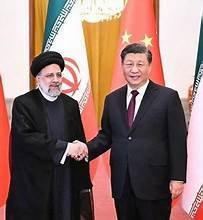
U.S. pressure on Iran has failed to sever its oil lifeline completely, but it has succeeded in reducing its scale and reshaping its routes. While China’s purchases of Iranian crude fell sharply in July and August, Beijing did not move toward a break with Tehran. Instead, it maintained a level of trade sufficient to keep Iranian oil flowing, albeit in smaller volumes and at higher costs and risks.
This dynamic reveals a fundamental paradox in the U.S. strategy of economic siege: Washington can raise the cost of Iranian trade and reduce its volume, but it faces greater difficulty eliminating that trade altogether as long as China remains willing to absorb some of the associated economic and political risks.
A Sharp Decline in Iranian Oil Flows to China
Tanker-tracking data show that China’s purchases of Iranian crude averaged around 530,000 barrels per day in July and August, with August alone registering approximately 534,000 barrels per day. This represents a decline of about 48% from prewar levels and roughly 72% from the peak recorded in October 2024, when flows approached 1.9 million barrels per day.
This decline should not necessarily be interpreted as a Chinese political shift against Iran. Rather, it reflects growing material constraints on Tehran’s ability to export oil, particularly after Washington tightened its measures targeting Iranian shipments in mid-July.
The significance of these figures becomes even clearer when considering that China absorbed between 80% and 90% of Iran’s seaborne crude exports during 2025—equivalent to roughly 1.38 to 1.4 million barrels per day. Any reduction in Iran’s ability to reach the Chinese market therefore translates directly into pressure on its financial resources.
China, however, is not simply another buyer of Iranian oil. It is the world’s largest crude importer, bringing in between 11.6 million and 12.4 million barrels per day. Roughly half of these supplies come from the Middle East, with the bulk passing through the Strait of Hormuz, making stability in the Gulf a direct strategic interest for Beijing.
This is where the geopolitical paradox emerges: the blockade aimed at Iran also puts pressure on one of the most important energy lifelines on which China depends.
The Network That Circumvents the Sanctions
China’s major state-owned oil companies, such as Sinopec, PetroChina, and CNOOC, are no longer the primary face of the oil trade with Iran as U.S. sanctions have become increasingly stringent.
Instead, much of the activity has shifted to independent refineries in Shandong province, commonly known as “teapot refineries.”
These refineries give Beijing a dual advantage. On the one hand, they can obtain Iranian oil at discounted prices; on the other, the risks to China’s financial system and major energy companies are reduced. These smaller refiners have fewer ties to Western financial markets and are less exposed to the losses that could result from secondary U.S. sanctions.
In this way, the sanctions have not eliminated the trade. Rather, they have redistributed it within the Chinese economy—from institutions more vulnerable to sanctions toward entities better equipped to withstand them.
Yet this space is not entirely protected. The U.S. Treasury Department has already targeted companies and facilities in Shandong linked to Iran’s oil network, demonstrating that Washington is attempting to strike at intermediary layers rather than directly confronting China’s largest financial and oil institutions.
The Yuan Instead of the Dollar: Reducing the U.S. Financial Footprint
The resilience of China-Iran trade does not depend solely on the buyers. It also extends to the way transactions are settled. A significant portion of trade is conducted in yuan through regional banks and China’s Cross-Border Interbank Payment System, known as CIPS, while banking networks historically associated with Iranian trade, including Bank Kunlun, continue to play a role.
The importance of this mechanism lies in reducing reliance on the dollar and the U.S. banking system. The less dependent trade becomes on a financial system that Washington can monitor or disrupt, the more complicated the enforcement of sanctions becomes. The objective is not to eliminate U.S. sanctions altogether, but to reduce Washington’s ability to control the entire chain of a commercial transaction.
Networks associated with Iranian trade also make use of shell companies in Hong Kong, insurance arrangements, barter transactions, and various contractual mechanisms, making the movement of funds less transparent to U.S. authorities.
At sea, meanwhile, the trade relies on an Iranian “shadow fleet” of tankers that sometimes disable their automatic identification systems, along with ship-to-ship transfers in Asian and Gulf waters, before the origin of shipments is reclassified in ways that make them more difficult to track.
This helps explain what appears to be a contradiction: Chinese customs records show extremely limited official imports from Iran, while tanker-tracking data reveal that Iranian oil continues to flow into Chinese ports.
Hormuz: The Real Chokepoint
If financial sanctions can push trade into alternative channels, geography is far more difficult to circumvent. The pressure that contributed to the decline in Iranian exports during the summer was closely linked to restrictions on tanker movements and the risks associated with passage through the Strait of Hormuz.
Since late July, the two Chinese shipping companies COSCO Shipping Energy Transportation and China Merchants Energy Shipping have kept more than 100 large oil tankers outside the Strait of Hormuz and the Bab el-Mandeb, according to Reuters, citing industry sources.
This was not necessarily an expression of Chinese alignment with Washington against Tehran, but rather an exercise in risk management. China wants Iranian oil, but it does not want to pay the price of a direct confrontation with the United States or risk having its tankers targeted by Iran’s Islamic Revolutionary Guard Corps.
China’s policy therefore appears to follow a simple rule: buy the oil when possible, but avoid the risk when shipping costs and security threats outweigh the returns.
China’s commercial and strategic stockpiles, estimated at between 1.1 billion and 1.4 billion barrels during 2025–2026, together with relatively weak domestic demand, have also helped Beijing absorb part of the shock without returning to its previous levels of Iranian imports.
Pakistan Opens an Alternative Route—but With Limited Capacity
As restrictions on maritime routes intensified, the overland route through Pakistan gained additional importance.
On April 25, Islamabad issued a decision allowing third-country goods to transit from Pakistani ports to Iran through the Gabd and Taftan border crossings. Container traffic bound for Iran soon increased, reflecting an effort to establish an alternative trade corridor amid growing disruption to maritime routes.
But the importance of this route should not be overstated.
The overland corridor can support trade in goods, equipment, and certain supplies, but it cannot replace the hundreds of thousands of barrels of oil that previously moved by sea every day.
The value of the Pakistani route therefore lies not in its ability to replace maritime oil shipments, but in its role as a logistical safety net that helps Iran and China preserve some channels of trade when shipping lanes become more dangerous.
Reports that Chinese-made portable air-defense systems might be transferred to Iran through Pakistan have been denied by both Beijing and Islamabad, and no link has been established between such claims and Pakistan’s decision to facilitate commercial transit.
China Between Tehran and Washington
China’s position in late August clearly reveals the nature of the balance Beijing is attempting to maintain. On the one hand, the Chinese leadership reiterated its opposition to the continuation of conflict in the Middle East and called for a political and diplomatic settlement that respects the sovereignty of the region’s states. On the other hand, it stressed that cooperation with Iran takes place within the framework of international law and that China would take the necessary measures to protect its interests.
This is not the language of a military alliance with Tehran. At the same time, however, it is not the language of acceptance of the U.S. blockade. Beijing appears determined to keep the “gray zone” open: maintaining economic relations with Iran and rejecting unilateral U.S. pressure while avoiding a direct military commitment that could turn the Iranian crisis into an open confrontation between China and the United States.
This balancing act is even more significant amid the strategic rivalry between Beijing and Washington across the Indo-Pacific. A prolonged crisis in the Gulf could tie up some of the United States’ military and political resources in the Middle East—something that does not necessarily run counter to China’s broader interests.
From this perspective, the Hormuz crisis is not merely an oil-supply problem for Beijing. It also intersects with broader calculations concerning the global distribution of U.S. power and resources.
Why Is Washington Not Targeting China’s Major Banks?
Perhaps one of the most important aspects of the current situation lies here. Rather than targeting China’s largest banks and cutting their access to the dollar-clearing system, Washington has focused on smaller actors within the network, including companies in Shandong and financial fronts in Hong Kong.
The reason is straightforward: expanding sanctions to include major Chinese financial institutions could transform the Iranian oil issue from a sanctions campaign against Tehran into a direct crisis in U.S.-China economic relations.
At a time when Washington and Beijing are attempting to manage a fragile trade truce, targeting China’s major financial institutions could carry strategic costs far greater than the gains that might be achieved by further reducing Iranian oil exports.
Washington therefore appears to be pursuing a strategy of “strangling the periphery rather than detonating the center”: applying pressure to shipping companies, independent refineries, intermediaries, and financial networks while avoiding moves that could trigger a comprehensive financial confrontation with Beijing.
Iran Pays the Price—but Does Not Collapse
For Iran, the decline in oil exports carries a direct domestic cost.
Lower revenues put pressure on the government’s ability to finance the economy, secure fuel supplies, and pay for imports, at a time when Iranian officials have pointed to shortages in gasoline production and difficulties securing imports.
Notably, Iran’s own rhetoric is no longer categorically denying the impact of sanctions. President Masoud Pezeshkian has acknowledged that claiming sanctions have no effect does not correspond to reality.
This admission is significant because it suggests that the U.S. blockade is achieving part of its economic objective, even if it has not achieved its full political objective. Iran remains capable of exporting oil, but it is doing so in a far more complicated environment, at lower prices, with greater risks and longer routes. As a result, part of the value of its oil resources is eroded before the revenues reach the Iranian treasury.
Conclusion: The Blockade Has Reduced Trade—but Has Not Ended It
The experience of Iranian oil exports to China reveals the limits of U.S. economic power in a world where centers of power are becoming increasingly dispersed.
Washington has succeeded in reducing Iranian oil flows, increasing transportation and financing costs, and complicating insurance, payment, and shipping operations. But it has not been able to shut down the network completely.
China, meanwhile, has demonstrated that it does not need to enter into a direct confrontation with the United States to preserve its interests in Iran. It can rely on a combination of independent refineries, yuan-based settlements, intermediary banks, shipping networks, and strategic stockpiles, while maintaining a diplomatic position somewhere between Tehran and Washington.
The current confrontation, therefore, is not simply a battle of “oil versus sanctions.” It is a broader test of the extent to which the United States can use the dominance of the global financial system and the dollar to impose its will on an increasingly multipolar global economy equipped with alternative channels.
Iran has lost a substantial portion of its previous oil flows, but it has not lost the Chinese market altogether.
And therein lies the central paradox: the U.S. blockade has made Iranian oil more expensive and reduced its volume, but it has not made it worthless. China continues to buy the barrels that Tehran manages to deliver, while Washington continues to tighten the noose without, so far, managing to close it.
Most read



Read also