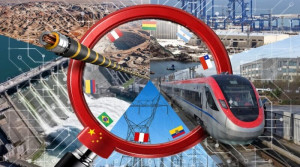
The New Geometry of Innovation: China’s Transformation from the World’s Factory to the Technological Core of Global Change

The global economic order is undergoing one of the most profound transformations since the Industrial Revolution. The center of gravity is gradually shifting away from traditional Western decision-making hubs toward dynamic and rapidly evolving Asian ecosystems. At the heart of this transformation stands China, a country that for more than four decades was primarily perceived as the “world’s factory” — a center for low-cost manufacturing, mass exports, and large-scale industrial production. Today, however, China is steadily transitioning toward an economic model driven by knowledge, research and development, and technological innovation.
This transformation is not simply the result of a natural stage in economic development. Rather, it is the product of a deliberate and long-term state strategy implemented systematically and supported by growing confidence from multinational corporations, academic institutions, and geopolitical partners across multiple continents. Statements by executives of leading global technology firms, strategic analysts, and researchers increasingly suggest that the narrative of China as merely an assembly platform belongs to the past. In its place has emerged a new reality in which cities such as Beijing, Shanghai, Suzhou, and Shenzhen are becoming laboratories of the future, developing technologies and solutions that are subsequently exported to markets across Europe, North America, Africa, and the Middle East.
The implications of this shift extend far beyond the technology sector itself. They affect business models, supply-chain architecture, regulatory frameworks, and long-term competitiveness strategies.
China as a Global Innovation Hub: Philips and Bosch Redefining the Future of Technology and Industry
The Dutch multinational Philips, which has maintained a presence in China for more than a century, offers a compelling example of this strategic transformation. The company’s CEO, Roy Jakobs, recently emphasized that China is no longer merely a major market for Philips products; it has become one of the company’s key global innovation centers.
This statement reflects far more than a marketing message. It embodies a fundamental shift in the company’s operational strategy, encapsulated in the slogan: “In China, for China, for the world.” Philips has successfully established a comprehensive value chain within China that encompasses research and development, manufacturing, marketing, services, and strategic partnerships in the healthcare sector.
Last year, the company launched its China Research and Innovation Headquarters in Beijing, serving as a coordinating hub for regional R&D networks and as an accelerator for the localization of medical technologies. Meanwhile, its Suzhou facility integrates research, manufacturing, and global export functions, while the Shenyang center has evolved into a global innovation hub specializing in computed tomography technologies.
This geographical and functional distribution of expertise reflects China’s evolution from a peripheral manufacturing base into a technological core that generates value across Philips’ operations in more than one hundred countries worldwide.
According to Jakobs, China’s vast market and advanced digital infrastructure provide an unparalleled environment for rapidly scaling innovation—an especially critical factor in healthcare technology, where the speed and accessibility of new solutions can directly affect patient outcomes.
China’s healthcare sector is currently undergoing a profound transition from a model centered on reactive treatment toward one focused on proactive health management, continuous diagnostics, and personalized medicine. Artificial intelligence plays a pivotal role in this transformation by enabling the analysis of massive medical datasets, improving hospital management systems, and expanding telemedicine services.
By combining the global capabilities of multinational corporations with China’s remarkable adaptability and scalability, Philips aims to deepen its engagement in digital health, AI-driven solutions, medical imaging, and sustainable healthcare technologies.
The Automotive Industry: From Technology Consumer to Technology Co-Creator
A similar transformation is underway in the automotive sector. For the German industrial giant Bosch, China is no longer merely the world’s largest automotive market—it has become one of the most important sources of technological innovation.
During the 2026 Beijing International Motor Show, Markus Heyn, Member of the Board of Management of Bosch and Chairman of Bosch Mobility, stressed the company’s confidence in China’s domestic demand and expanding research capabilities. This confidence is reflected in the growing allocation of resources and strategic attention devoted to the Chinese market.
A particularly symbolic example is the development of a low-voltage power system in partnership with a Chinese manufacturer. Designed to meet the rapidly increasing computational requirements of modern vehicles, which are becoming ever more dependent on software and advanced electronics, the system illustrates a new model of technological cooperation.
Rather than adapting existing global products to local requirements, Chinese and international firms are increasingly co-designing technologies from the earliest stages of development.
In 2025, Bosch Mobility generated revenues of 122.3 billion yuan (approximately US$17.8 billion) in China, representing annual growth of 4.9 percent. More importantly, roughly 70 percent of these revenues originated from Chinese domestic brands, highlighting the growing role of local manufacturers as engines of innovation rather than mere consumers of technology.
Bosch has also supported nearly 300 Chinese vehicle models entering international markets, reflecting a historic reversal in the traditional flow of technological knowledge. Increasingly, innovations are moving from China to the rest of the world rather than the other way around.
The China–Saudi Arabia Strategic Partnership and the Rise of a Multipolar Innovation Economy
Economic and technological cooperation between China and Saudi Arabia represents another pillar of the emerging global value-chain architecture, one built on knowledge transfer, long-term partnerships, and shared development visions.
According to Rayan Al Amoudi, Executive Director of Strategy and Business Development at Nesma Infrastructure & Technology and Chair of the China–Saudi Arabia Technological Innovation Center, bilateral relations have long evolved beyond conventional trade and engineering contracts. They now encompass technology transfer, industrial localization, joint investment, digital transformation, and artificial intelligence development.
Cooperation between the two countries is concentrated in areas such as smart cities, critical infrastructure, energy, and digital transformation—sectors that align closely with the objectives of Saudi Vision 2030.
Saudi Arabia is no longer interested merely in importing finished products. Instead, it seeks to develop local capabilities, facilitate knowledge transfer, and achieve greater technological independence. In this context, Chinese technology companies, particularly Huawei, have established a strong presence due to their ability to provide integrated, high-quality, and cost-effective solutions.
Looking ahead, Riyadh and Beijing are expected to expand cooperation in green infrastructure, water treatment technologies, artificial intelligence data centers, and broader digital transformation initiatives. Saudi Arabia’s geographic location, energy resources, and political stability provide significant advantages for becoming a regional hub for AI technologies, supported by Chinese expertise and innovation.
The strong alignment between Saudi Vision 2030 and China’s Belt and Road Initiative further creates substantial opportunities for long-term cooperation based on mutual interests and sustainable development.
Toward a New Global Innovation Order
The global economy is increasingly moving away from the traditional model in which technology and capital flowed primarily from the West to the rest of the world. Instead, it is evolving toward a networked and multipolar innovation system based on collaboration, co-creation, and shared technological development.
Within this emerging framework, China is transforming from a final-stage producer into a strategic partner involved in shaping international standards, financing research, and scaling technological solutions worldwide.
These developments acquire even greater significance amid intensifying trade tensions and technological competition among the United States, the European Union, and China. While Washington continues to impose trade restrictions, tariffs, and technology controls aimed at reducing dependence on Chinese supply chains in strategic sectors, Europe faces the difficult challenge of balancing industrial protection with continued access to critical technologies and markets.
Yet major European corporations show no sign of disengaging from China. On the contrary, they are deepening their local presence, participating in product development, and scaling innovations within China’s ecosystem before exporting them globally.
Although tariffs and trade restrictions may increase costs, lengthen supply chains, and require the restructuring of business models in the short term, they also encourage greater resilience, diversification, and localization of critical capabilities across multiple regions.
European investments in China, together with expanding partnerships in the Middle East, suggest that the future of the global economy will not be defined by isolationism or economic protectionism. Rather, it will be shaped by a model of “managed interdependence,” in which tariffs, regulations, and technological standards serve as tools of negotiation and quality assurance rather than absolute barriers.
For corporations, this means building more resilient and multipolar value chains. For the European Union, it means balancing strategic autonomy with economic openness. For China, it means continuing its transition toward a knowledge-based, innovation-driven, and sustainable economy—one that is poised to become a central pillar of the twenty-first-century global economic architecture.
Most read




Read also