Can the Visegrad Group Return? Reassessing the Future of Central Europe’s Most Contested Regional Alliance

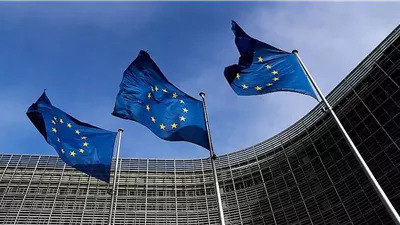
For more than three decades, the Visegrad Group has represented one of the most significant regional experiments in post-Cold War Europe. Established in 1991, at a moment of profound historical transformation, the alliance brought together Poland, Hungary, and Czechoslovakia—states emerging from the Soviet sphere and seeking a path toward Western political, economic, and security structures. Since then, the grouping, which today consists of Poland, Hungary, the Czech Republic, and Slovakia, has evolved into a platform for political coordination within both NATO and the European Union, aiming to strengthen Central Europe’s influence in a continent traditionally dominated by the major powers of Western Europe.
Yet the alliance that once successfully coordinated common positions on migration, European policies, and budgetary negotiations has in recent years faced the most severe crisis in its history. Russia’s invasion of Ukraine exposed deep divisions among its members and raised fundamental questions about the resilience of regional alliances when national security interests begin to diverge.
Today, with relations between Poland and Hungary showing signs of improvement following political change in Budapest, speculation has grown about a possible revival of the Visegrad Group. However, the central question is not whether meetings and consultations can resume, but whether the alliance can recover the strategic relevance it once enjoyed in a European landscape that has changed dramatically since its founding.
At the heart of the current debate lies an important reality: the Visegrad Group was never merely a geographical arrangement linking four neighboring countries. It was a political project built on a certain degree of shared vision and common interests. Whenever political alignment existed among the four capitals, the group was able to emerge as a meaningful force within the European Union. During the 2015 migration crisis, for example, the V4 became one of the most influential regional coalitions in Europe, openly challenging Brussels over mandatory migrant quotas and presenting a united front on questions of sovereignty and border security. Conversely, whenever strategic priorities diverged, the alliance’s effectiveness quickly diminished.
These divisions reached their peak after Russia’s invasion of Ukraine in 2022. While Poland and the Czech Republic viewed the war as a direct threat to European security and adopted strong pro-Ukrainian positions, Hungary pursued a far more cautious approach toward Moscow, maintaining significant economic and energy ties with Russia. Slovakia, meanwhile, oscillated between these competing visions according to shifts in its domestic political landscape. As a result, disagreements within the V4 moved beyond tactical disputes over European policy and evolved into fundamental differences regarding the very nature of security threats and strategic priorities.
This transformation reflects a broader identity crisis within Central Europe itself. The four countries that embarked on a common journey after the collapse of communism are no longer moving at the same pace or even in the same direction. Poland, in particular, has undergone a remarkable transformation over the past two decades. It has emerged as both an economic and military heavyweight, becoming one of Europe’s most influential middle powers and a critical pillar of NATO’s eastern flank.
Poland’s rise has inevitably altered its relationship with the Visegrad framework. No longer dependent on regional cooperation as its primary vehicle for influence, Warsaw now plays an active role in larger and more consequential diplomatic structures, including the Weimar Triangle with France and Germany, the Three Seas Initiative, and the Bucharest Nine. It has also developed increasingly close security and economic ties with the Nordic and Baltic states. This evolution raises a fundamental question: does Poland still need the Visegrad Group in the same way it once did?
The answer is likely more complex than either supporters or critics of the alliance suggest. Poland’s renewed interest in regional cooperation does not necessarily signal a return to the political dynamics of the past. Rather, it reflects a recognition that regional coordination remains valuable in areas where the four countries share tangible interests, particularly in negotiations over the European Union’s long-term budget, regional development funding, energy security, and infrastructure investment.
Hungary, by contrast, continues to view the Visegrad Group as one of its most important foreign policy instruments within the European Union. For Budapest, regional cooperation provides a means of balancing the influence of larger Western European powers while amplifying its voice in Brussels. It is therefore unsurprising that Hungarian leaders have often been among the strongest advocates of revitalizing the alliance.
Yet contemporary geopolitical divisions are not the only obstacles standing in the way of a meaningful revival. Historical memory continues to cast a long shadow over relations in Central Europe. Periodic tensions between Hungary and Slovakia concerning the legacy of the Treaty of Trianon, minority rights, and competing historical narratives demonstrate that the region has never fully escaped the unresolved questions of the twentieth century.
Although such disputes are unlikely to derail interstate relations entirely, they complicate efforts to construct a long-term strategic vision capable of uniting the region. Political cooperation may be achievable, but building a shared geopolitical identity remains a far more difficult challenge.
These realities have encouraged some policymakers to think beyond the traditional V4 framework. Rather than merely reviving the alliance in its existing form, proposals have emerged advocating its expansion to include countries such as Romania, Croatia, Slovenia, and potentially even Nordic or Western Balkan states. Such ideas remain speculative, but they reveal an increasing awareness that the strategic environment of the 2020s differs fundamentally from that of the early 1990s.
At the same time, writing off the Visegrad Group would be premature. Significant areas of common interest still exist. Negotiations over the European Union’s next Multiannual Financial Framework provide a strong incentive for coordination among some of the bloc’s largest recipients of cohesion funding. Energy policy also offers substantial opportunities for collaboration, particularly in nuclear power, natural gas interconnections, electricity infrastructure, and efforts to reduce dependence on Russian energy supplies.
Moreover, the growing pressures associated with global economic competition, industrial transformation, and Europe’s green transition create additional incentives for Central European states to coordinate their positions within EU institutions.
Ultimately, the future of the Visegrad Group will not depend solely on the restoration of Polish-Hungarian relations, important though they may be. Rather, it will depend on whether the four countries can redefine the alliance’s purpose in a fundamentally altered geopolitical environment. The challenge is no longer a lack of political goodwill, but the reality that national interests have become more diverse and complex than they were at the time of the group’s creation.
The Visegrad Group therefore stands at a historic crossroads. It can either reinvent itself as a flexible regional platform capable of adapting to the strategic realities of twenty-first century Europe, or gradually become a symbol of a post-Cold War era whose assumptions no longer hold. Between these two possibilities lies the central question facing Central Europe today: does the region still need Visegrad, or has it already outgrown the circumstances that once made such an alliance indispensable?
The answer will determine not only the future of the V4 itself, but also the broader trajectory of regional cooperation in an increasingly fragmented and competitive Europe.
Most read


Read also