The Future of Kurdish Opposition Groups and the Test of Iraqi Sovereignty

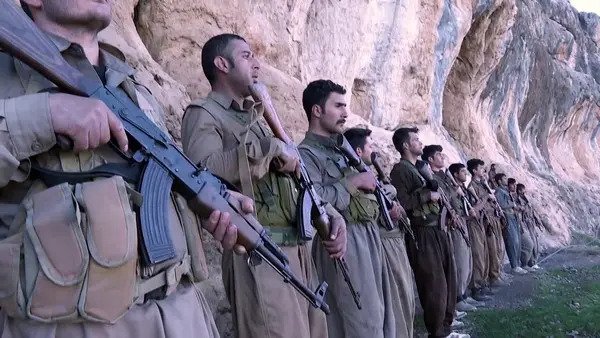
Reports of an Iraqi-Iranian understanding concerning the relocation of members of Iranian Kurdish opposition groups from Iraq’s Kurdistan Region have raised questions about the future of these groups, the limits of Iraq’s independent security decision-making, and the persistence of Iranian influence over Iraq’s political and security affairs. These developments have gained additional significance amid a lull in the confrontation between the United States and Iran and the completion of the withdrawal of American forces from Iraq in September, according to the report. This evolving context has opened the door to a reassessment of regional power dynamics and their implications for the security policies of Baghdad and Tehran.
The issue extends beyond the future of Iranian Kurdish opposition groups that have maintained a presence in northern Iraq for decades. It also concerns the nature of relations between the two countries, the limits of legitimate bilateral security cooperation, and the extent to which Iraqi institutions can make independent decisions that respect national sovereignty and constitutional and legal obligations without becoming instruments for resolving another state’s domestic political disputes.
According to circulating reports, Iraqi and Iranian officials recently reached an agreement to relocate members of Iranian Kurdish opposition groups from the Kurdistan Region. Iran’s ambassador to Iraq, Mohammad Kazem al-Sadegh, confirmed this account, stating that the two countries had agreed either to expel groups that Tehran describes as “separatist terrorists” or to hand their members over to Iran.
Iraqi officials, by contrast, confirmed that the meeting had taken place with the participation of representatives from the Kurdistan Regional Government (KRG), but did not announce an agreement to expel or extradite members of these groups. Iraq’s National Security Advisory Agency stated that the discussions, chaired by National Security Advisor Qassim Aboudi, focused on resolving outstanding issues under the bilateral security agreement between the two countries.
This discrepancy between the accounts highlights the sensitivity of the issue, as well as possible differences in how the outcome of the talks was interpreted or politically presented. While the Iranian account portrays the understanding as a step toward ending the presence of opposition groups on Iraqi territory, Baghdad’s public position has remained more cautious, without confirming a decision to expel or hand over their members.
Accordingly, the Iranian announcement alone is insufficient to establish that Baghdad has definitively agreed to transfer opposition members to Tehran. Similarly, confirmation that the meeting took place and addressed the bilateral security agreement does not clarify the measures Iraqi authorities may subsequently adopt. Understanding the actual substance of the arrangement, the scope of the parties’ mutual commitments, and the potential implementation mechanisms remains essential to assessing the issue’s future trajectory.
The sensitivity of the matter is rooted in the longstanding presence of Iranian Kurdish opposition groups in northern Iraq, particularly in areas within the Kurdistan Region. Tehran regards these groups as a security threat, while some opposition representatives maintain that their political activities are primarily focused on Kurdish areas inside Iran.
In this context, Hazhar Barnji, the United States representative of the Kurdistan Democratic Party of Iran (KDPI), stated that the party had received no official notification of a decision to relocate its members from either the Iraqi federal government or the Kurdistan Regional Government. He also affirmed the party’s respect for Iraqi sovereignty and international law, noting that its principal political activities remain focused on Iranian Kurdistan.
These statements highlight the gap between Tehran’s announcements regarding security understandings and the positions expressed by those directly affected by the potential relocation of opposition groups. They also suggest that translating political understandings into concrete measures could encounter complications involving the federal government’s position, the role of the Kurdistan Regional Government, and the nature of existing security arrangements.
It is therefore necessary to distinguish between addressing security concerns associated with cross-border armed activities and adopting measures that affect the legal status of individuals and groups residing in Iraq. Security cooperation between states does not eliminate the need to establish legal responsibilities, observe due process, or assess the risks individuals might face if forcibly transferred to another country.
The issue represents a broader test of Baghdad’s ability to balance its relationship with Iran against the need to preserve independent national decision-making. Despite American efforts to limit Tehran’s regional influence, critics argue that Iran continues to possess significant instruments of influence within Iraq, including its relationships with armed factions and political actors.
The issue has become more significant amid changes in the American military presence. The withdrawal of US forces does not necessarily mean the end of regional competition or the disappearance of external influence in Iraq. Rather, it raises questions about the ability of official institutions to manage political and security balances with greater independence.
The principal measure of Iraqi decision-making autonomy, therefore, is not whether Baghdad adopts a confrontational stance toward Iran or other external powers. It is whether state institutions can formulate policies in accordance with the national interest and within the framework of the constitution and the law, while ensuring that all armed forces remain subject to official state authority.
Iran’s calculations are also shaped by concerns about the possible expansion of Kurdish opposition movements’ influence. Tehran fears that these movements could attract broader popular support inside Iran and develop into a more consequential political challenge. This concern illustrates the interaction of security, political, and domestic considerations.
The presence of opposition groups outside their country of origin may provide them with greater opportunities for movement, organization, and communication. This, in turn, may encourage the state concerned to seek restrictions on their activities through security arrangements with host countries.
However, assessing these concerns requires a clearer understanding of the nature of the groups’ activities, the available evidence regarding the threats they pose, and the distinction between political activity and armed operations. Understanding Iran’s position therefore requires viewing the issue as part of a broader set of concerns involving border security, the management of opposition movements abroad, and the preservation of domestic stability, rather than treating it as an isolated military matter.
Another important dimension is the legal and humanitarian controversy surrounding the potential transfer of Iranian opposition group members to Iran, particularly with regard to their rights and safety if they face the risk of persecution or treatment that violates their fundamental rights.
Any measures involving their relocation or extradition should therefore be based on a clear legal assessment and compliance with relevant international obligations, with appropriate safeguards and due process. This requires reconciling a state’s right to protect its security with respect for the sovereignty of the host country and adherence to the legal rules governing the treatment of groups and individuals residing on its territory.
In this context, Iraq’s handling of Iranian Kurdish opposition groups becomes an indicator of how the country translates the principle of sovereignty into practical policy. If Baghdad bases its decisions on clear legal procedures and institutional coordination between the federal government and the Kurdistan Regional Government, it may be able to manage external pressure while preserving its national and international obligations. If immediate political considerations take precedence over legal safeguards, however, concerns about the independence of Iraqi decision-making and the credibility of its institutions may intensify.
Overall, developments surrounding the reported Iraqi-Iranian understanding on Kurdish opposition groups reveal a complex interaction between regional security, political influence, national sovereignty, and legal and humanitarian obligations. While Tehran seeks to address what it regards as a security threat posed by opposition groups based in northern Iraq, Baghdad faces the challenge of managing its relationship with Iran without compromising its decision-making autonomy or neglecting its legal responsibilities.
The significance of these developments will depend on the actual nature of the understandings reached, the extent to which they are translated into concrete measures, and the legal safeguards accompanying their implementation. Baghdad’s handling of the issue will also reflect its ability to reconcile security cooperation with neighboring countries with the protection of national sovereignty and individual rights.
Ultimately, Iraq’s challenge is not to choose between cooperating with Iran and rejecting such cooperation. Rather, it is to place that cooperation within a clear institutional and legal framework that ensures security decisions are driven by Iraq’s national interests, rather than by external pressure or domestic power structures that operate beyond the effective authority of the state.
Most read



Read also