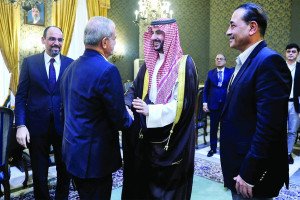
Witkoff’s Diplomatic Rounds and the “Scenarios” for Dialogue

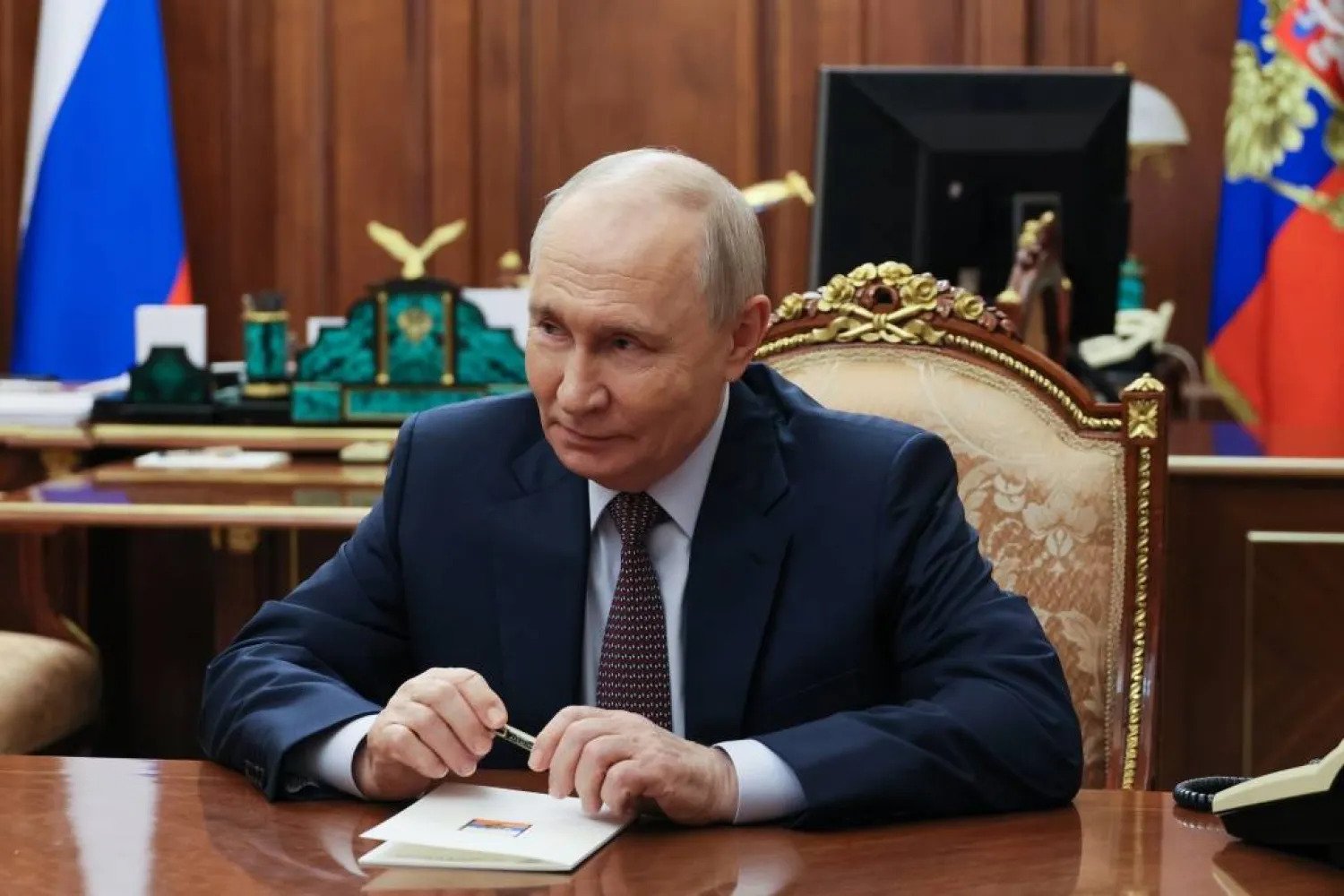
The current state of the Ukrainian crisis, coupled with Europe’s increasingly firm stance on putting pressure on Ukrainian President Volodymyr Zelenskyy, may be among the factors prompting Washington to reconsider its decisions regarding Kyiv.
Intelligence cooperation has resumed following a telephone call between the Ukrainian president and U.S. Secretary of State Marco Rubio. This was followed by a meeting in Norway’s capital, Oslo, where Zelenskyy and presidential envoy Steve Witkoff held detailed discussions.
The meeting, described by the Americans as productive, paved the way for Witkoff’s trip to Moscow to meet Russian President Vladimir Putin and agree on resuming trilateral talks involving the United States, Russia, and Ukraine. The first round of renewed negotiations could take place in Abu Dhabi before the U.S. midterm elections.
The situation appears to be moving toward more substantive discussions of the most intractable issues, particularly following Witkoff’s remarks about presenting the Russian side with specific proposals developed during discussions in Oslo with European and Ukrainian representatives. However, this does not mean that the fundamental obstacles to a settlement have been removed. Territorial concessions and acceptance of Moscow’s control over one-fifth of Ukraine remain among the principal points of contention, alongside the security guarantees demanded by Kyiv and European capitals.
Russian experts therefore expect the parties to face three possible scenarios once negotiations resume.
The first scenario: Protracted technical dialogue with little progress.
Under this scenario, discussions would continue for extended periods without resolving the outstanding issues, including mechanisms for imposing a temporary truce or launching comprehensive political dialogue. This outcome would do little to change conditions on the ground and would offer no significant prospect of progress toward a settlement. As American enthusiasm wanes—potentially because of the approaching midterm elections—the parties could find themselves facing essentially the same political and military realities.
The second scenario: Partial de-escalation and a roadmap for negotiations.
This scenario would involve the parties easing current tensions through agreements on an energy-sector truce, refraining from attacks on infrastructure in both countries, and establishing a roadmap for gradually addressing the principal issues involved in a settlement.
This outcome appears more consistent with the interests of both Russia and Ukraine. It would reduce pressure on critical sectors in both countries and help them navigate the winter without major difficulties in energy supplies. At the same time, however, it would neither establish a mechanism for a comprehensive truce or ceasefire nor require recognition of the current territorial boundaries. In effect, all parties would retain their existing positions while accepting a partial reduction in military escalation.
The third scenario: Failure to launch or sustain negotiations.
Under this scenario, the parties would fail either to convene trilateral talks or to reach agreement on any of the proposed options for temporary de-escalation. According to the experts cited, this outcome appears somewhat unlikely, given substantial American pressure and the shared need among Russia, Ukraine, and European countries to reduce tensions, even if only partially.
In any case, conditions do not yet appear sufficiently mature for a political settlement to be considered imminent. Meanwhile, President Donald Trump seems prepared to deliver what he can present as achievements to American voters ahead of the midterm elections. He has demonstrated his capacity for maneuvering and securing what has been described as the “diesel deal,” which reportedly helped reduce fuel prices by approximately 6 percent. He has also sought to demonstrate his ability to bring the two sides toward de-escalation and to reinforce Washington’s position as the principal actor capable of playing a decisive role in containing international crises.
Trump also appears capable of maintaining dialogue with Putin and Chinese President Xi Jinping, even under difficult circumstances. This is taking place within the framework of a preliminary agreement to hold a trilateral meeting among the leaders on the sidelines of the Asia-Pacific Economic Cooperation (APEC) summit in China next month.
Meanwhile, developments following the conclusion of the “diesel deal” have demonstrated that maneuvering by Trump and Putin has indeed helped shift the priorities of the principal actors in the conflict. As Ukraine seeks to preserve continued Western support, particularly from the United States, it appears increasingly willing to reduce pressure on Russia’s oil sector. This could represent a significant shift in the balance of power on the ground.
On the European side, discussions with American negotiators in Miami and subsequently in Oslo have demonstrated European efforts to develop alternatives to Ukraine’s dependence on American intelligence and technical support. At the same time, however, European governments are more concerned than ever about potential changes in Washington’s position on key European security issues and the security landscape that may emerge after the conflict ends.
Ultimately, Putin appears to be the biggest beneficiary so far. He has succeeded in easing pressure on Russia’s energy sector, opening broad channels for dialogue and cooperation with the American administration, and securing the removal of a significant portion of U.S. sanctions imposed on his country—all without having to make territorial concessions or halt the fighting.
Originally published in the Saudi newspaper Asharq Al-Awsat.
Most read

Read also