The “Mecca Pact+1”: Can Tehran’s Consultations Reshape the Regional Security Equation?

From military deterrence to reciprocal guarantees and reconstruction: An opportunity to build a regional security framework that shields Middle Eastern states from the consequences of a US–Iran confrontation
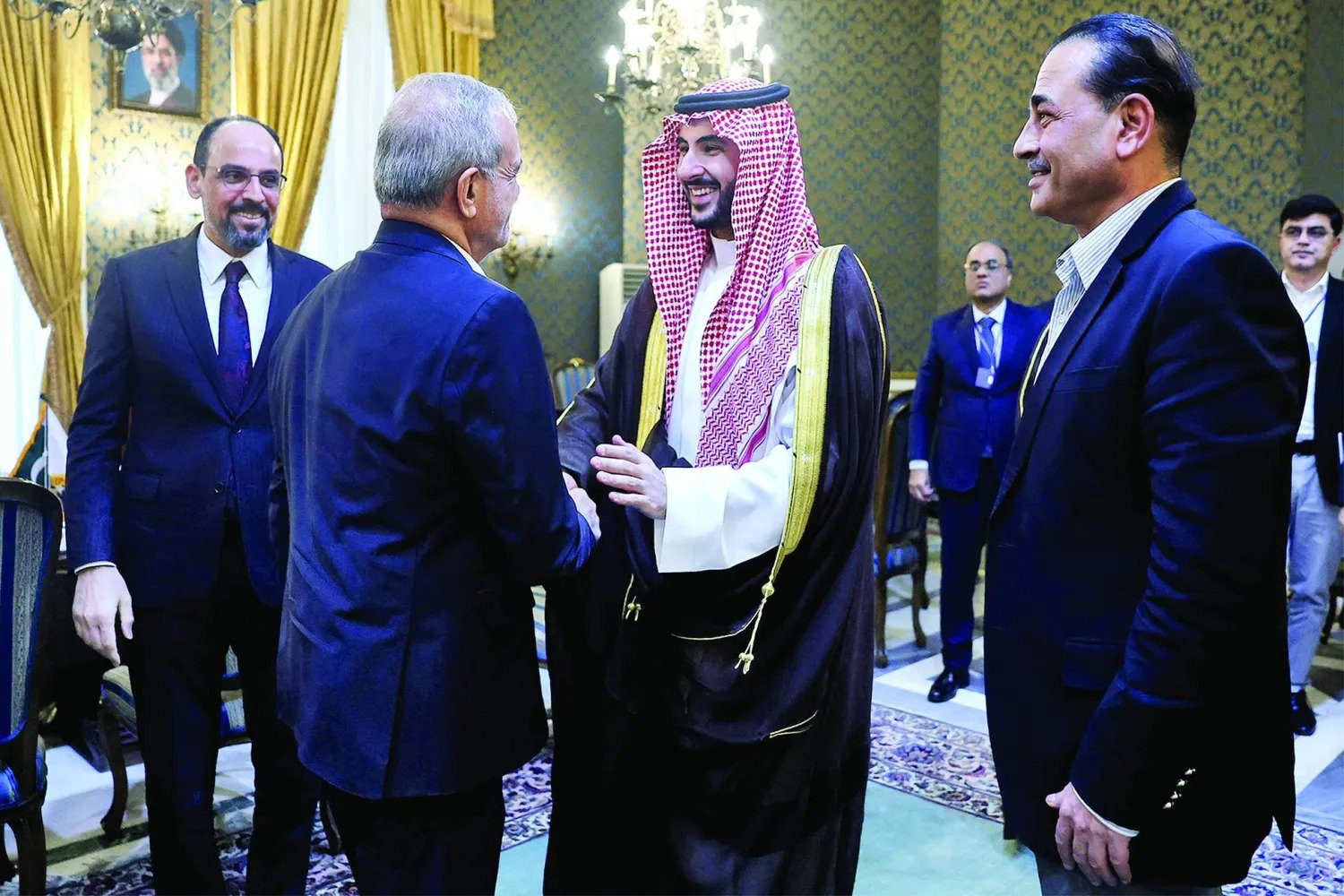
The quadrilateral meeting hosted by Tehran on 26 October 2026, bringing together Saudi Arabia, Türkiye, Pakistan and Iran, represents a diplomatic development worth watching amid efforts to establish regional security arrangements that extend beyond the traditional concept of collective defence. The central question is no longer simply how to confront military threats, but how to prevent conflicts involving external powers from spreading into neighbouring countries and creating risks for regional stability, national economies and critical infrastructure.
The initiative assumes added significance amid reports that American and Israeli military operations against Iran could resume, potentially prompting Iranian retaliation against neighbouring states if they are perceived to have participated in or facilitated such attacks. Under these circumstances, Gulf countries face a clear strategic dilemma: how can they maintain their security partnerships with international powers while preventing their territories, airspace and military facilities from becoming launching grounds for operations that could draw the region into a wider confrontation?
This dilemma underscores the importance of a regional approach that distinguishes political and military alliances from actual responsibility for the use of force. A country’s security relationship with an external power should not, in itself, make it a legitimate target for military retaliation unless its involvement in an attack or its direct assistance in carrying it out can be established. Similarly, regional stability requires states to refrain from allowing their territories, airspace or military installations to be used for unlawful operations against their neighbours.
From a defence pact to a broader regional security framework
The Tehran consultations create an opportunity to reconsider the purpose of the Mecca Pact and expand its scope beyond deterrence and collective defence towards a framework for reciprocal security understandings, conflict resolution and the protection of vital economic interests. In this context, the proposed “Mecca Pact+1” offers a vision of bringing Iran into a broader security understanding involving Saudi Arabia, Türkiye and Pakistan, with the possibility of extending participation to Iraq and Kuwait in the future.
Such an approach would not necessarily entail the creation of a new military alliance or the elimination of political differences among participating countries. Rather, its purpose would be to establish common rules for managing disputes and preventing them from escalating into armed confrontation. The success of any regional security framework depends not only on military capabilities but also on clear understandings concerning non-aggression, respect for sovereignty, the investigation of disputed military incidents and limits on the use of non-state armed groups in regional conflicts.
The inclusion of Lebanon, Yemen and Iraq in regional discussions is particularly significant given the complex interaction between conflicts in these countries and the interests of regional powers. However, broadening the dialogue to encompass these issues should not become a mechanism for dividing influence at the expense of the countries concerned. Instead, it should support political settlements and strengthen the capacity of national institutions to maintain a legitimate monopoly on the use of force, while respecting each country's sovereignty and its people's right to determine their political future.
An understanding with Iran could help reduce tensions and encourage restraint, but it would not, by itself, resolve conflicts shaped by overlapping domestic, regional and international factors. A sustainable approach must therefore combine regional dialogue with political processes tailored to each crisis, rather than assume that an agreement among governments will automatically resolve every conflict.
Reciprocal guarantees: The real test of any security understanding
The first step towards a sustainable security framework would be the establishment of clear, reciprocal commitments. Under the proposed arrangement, Iran would undertake not to attack participating countries in retaliation for military operations conducted by external powers, provided those countries had neither participated in nor facilitated the attacks. In return, the participating states would pledge not to allow their territories, airspace or military facilities to be used for unlawful operations against Iran.
The significance of this arrangement lies in its distinction between actual responsibility for an attack and mere geographical or political association with the party that carried it out. Translating these principles into practical commitments, however, requires addressing a sensitive question: how can compliance be verified during a crisis, when accusations spread rapidly and uncertainty surrounding military operations can itself become a source of escalation?
One possible response would be to establish joint mechanisms for investigating military incidents, exchanging information on aircraft and maritime movements, and examining the use of military facilities, with independent technical expertise available when necessary. Such mechanisms should make it possible to establish the facts without unduly compromising legitimate national security interests. They should also prevent suspicion or political alignment from becoming sufficient grounds for retaliatory attacks.
The commitments would also need to address the conduct of armed groups receiving support or assistance from participating governments. An agreement prohibiting direct military operations while allowing them to continue indirectly through non-state actors would have limited effectiveness. At the same time, any such arrangements must remain consistent with the lawful right of self-defence under international law and focus on preventing escalation based on unsubstantiated allegations or presumed responsibility.
Reconstruction: Turning security into a shared interest
Security guarantees cannot be complete if they amount solely to promises of non-aggression. Persistent fears that critical infrastructure could be destroyed may keep regional countries on permanent alert, even in the absence of direct military confrontation. Against this backdrop, a mechanism for reconstruction cooperation emerges as a possible component of an expanded Mecca Pact+1 framework.
The proposal would commit participating countries to helping one another repair damage to civilian and economic infrastructure caused by external military attacks, according to their respective capabilities and the scale of the damage. Assistance could include engineering expertise, specialised equipment, construction materials and emergency financing, with priority given to energy installations, electricity generation, water desalination facilities, ports, hospitals and transport networks.
The importance of this approach stems from the fact that damage to infrastructure in one Gulf or regional country does not necessarily remain confined within its borders. It can affect energy exports, maritime transport, supply chains and regional trade. Supporting an affected country would therefore represent not merely an act of solidarity but also an investment in the stability of the region as a whole.
To make such a mechanism operational, participating governments could agree in advance on procedures for requesting assistance, financing arrangements, inventories of available equipment and expertise, and criteria for determining priorities. These preparations would accelerate emergency responses and reduce the need to negotiate practical details after damage has occurred.
Nevertheless, reconstruction assistance must be distinguished from legal responsibility for the destruction. Regional cooperation in repairing damage would not absolve a state responsible for an internationally wrongful act of its legal obligations to provide reparation. Reconstruction could proceed alongside separate processes addressing responsibility and compensation, with neither replacing the other.
This vision also finds a moral foundation in the principle of cooperation in righteousness and piety expressed in the Qur’an: “And cooperate in righteousness and piety, but do not cooperate in sin and aggression” (Al-Ma’idah, 5:2). The principle can support collective efforts to rebuild what war has destroyed while rejecting participation in aggression against neighbouring states.
Washington and Tehran: A regional role in opening a path to negotiations
The ambitions associated with the quadrilateral consultations should not be limited to preventing war from spreading into neighbouring countries. The initiative could also provide an entry point for efforts to de-escalate tensions between the United States and Iran, provided it does not become a substitute for direct negotiations between the two parties or an attempt to impose a settlement on them from outside.
Potential areas for mediation include the cessation of hostilities, guarantees for commercial navigation through the Strait of Hormuz, and the resolution of maritime and military restrictions affecting trade. Discussions could also address phased arrangements concerning sanctions, Iran’s frozen assets and outstanding issues related to its nuclear programme.
The Strait of Hormuz is important well beyond the immediate bilateral dispute. It is a vital route for oil exports and international maritime trade, and any disruption to shipping can affect freight and insurance costs as well as the reliability of energy supplies to importing economies. Restoring safe commercial passage is therefore a shared interest of regional countries and the global economy, rather than a demand serving only one party to the conflict.
Participating countries could help create the political conditions for renewed dialogue, identify areas where reciprocal understandings might be possible, and support the implementation of agreements directly related to Gulf security and maritime navigation. They cannot, however, independently lift American sanctions or make binding decisions concerning Iran’s nuclear programme. These issues require direct negotiations and the necessary legal and political agreements among the parties concerned.
A phased approach would be crucial to the success of any settlement. It would be unrealistic to expect either party to make substantial concessions without confidence that the other would fulfil its corresponding obligations. Each significant step should therefore be linked to a reciprocal, verifiable measure, supported by clear mechanisms for monitoring implementation and resolving disputes.
In this context, the diplomatic experience of Pakistan and Qatar could provide a useful foundation for mediation efforts. Rather than creating a parallel negotiating process that might complicate the situation, the regional framework should reinforce existing diplomatic channels and focus on issues directly affecting Gulf security and maritime stability.
Elections and political timing: An opportunity for diplomacy, not a guarantee of de-escalation
The Tehran consultations are taking place at a sensitive regional and international moment, shortly before Israel’s parliamentary election on 27 October 2026 and the US midterm elections on 3 November, amid reports that renewed military operations against Iran remain under consideration. This timing adds uncertainty to the diplomatic landscape, but it does not establish that the elections will determine the course or outcome of the confrontation.
Although the period before the newly elected US Congress takes office on 3 January 2027 could provide additional space for diplomatic initiatives, the American administration would retain its executive authority over foreign and military policy. Efforts to prevent escalation should therefore not depend solely on electoral outcomes, but on shared interests, workable agreements and mechanisms designed to prevent another military confrontation.
The proposed security framework should not become an instrument for confronting the United States or Israel, nor a means of using military threats to compel Iran to accept demands made by an external power. Its primary purpose should be to protect participating countries, strengthen their independence in security decision-making and prevent their territories from being used in operations that could expose them to retaliation or threaten their economic interests.
For Saudi Arabia in particular, the challenge lies in balancing international partnerships with the requirements of regional security. Protecting oil facilities, maritime routes and economic infrastructure is inseparable from avoiding involvement in conflicts that do not serve national interests or bearing the consequences of military decisions made by other powers.
This does not require abandoning existing security partnerships. Rather, it calls for defining their limits in ways that preserve national decision-making autonomy and prevent military cooperation from becoming an automatic commitment to participate in operations that conflict with national interests or international law.
Iraq and Kuwait: Broadening participation and strengthening Gulf security
The participation of Iraq and Kuwait in an expanded arrangement could be significant given their direct interests in Gulf security, stable energy exports and maritime transport routes. Their involvement could also make regional arrangements more inclusive and reduce the risk of security gaps among the countries bordering the Gulf.
Broader participation would not necessarily require every country to assume identical collective-defence obligations. Instead, cooperation could develop through several levels, including intelligence-sharing, maritime coordination, crisis consultations, reconstruction assistance and reciprocal commitments to non-aggression.
Such a gradual approach would allow participating countries to engage in areas consistent with their capabilities and priorities without having to abandon political reservations or surrender their sovereign decision-making authority. It would also support the gradual building of trust rather than assume the existence of complete strategic alignment among countries with different international relationships and threat perceptions.
From a diplomatic opening to a sustainable security framework
The Tehran consultations remain an initial step and are not, by themselves, sufficient evidence that the participating countries have reached a comprehensive security agreement or overcome their differences. Their significance lies in the possibility of moving from crisis management after an incident to arrangements designed to prevent crises in the first place, and from exclusive reliance on military deterrence to a combination of political guarantees, economic cooperation and reconstruction.
The process could begin with explicit commitments to non-aggression and to preventing the use of national territories, airspace and military facilities for unlawful operations against participating states. These would be accompanied by mechanisms for verifying military incidents and resolving disputes. Further arrangements could then address the protection of critical infrastructure, emergency assistance and reconstruction, before expanding the dialogue to maritime security, regional conflict resolution and mediation between Washington and Tehran.
The success of this vision will depend on whether governments are prepared to turn general principles into specific, verifiable commitments that apply equally to all participants. It also requires recognition that regional security cannot rest on assigning one country responsibility for the fears of others, assuming that international partnerships confer immunity from accountability, or treating those partnerships as justification for military attacks.
The broader objective of Mecca Pact+1 should be to establish a framework that protects the sovereignty and security of participating countries, reduces the likelihood of their being drawn into conflicts they neither initiated nor supported, and contributes to the peaceful settlement of disputes. From this perspective, the true value of the Tehran consultations will not be measured solely by the number of participating countries, but by their ability to establish new rules of regional conduct that make Gulf security a shared responsibility and place the protection of people, economies and critical infrastructure at the centre of future security arrangements.
Most read



Read also