Sudan and China: Can Beijing Become the Gateway to State Reconstruction, or Merely Finance a Deferred Crisis?

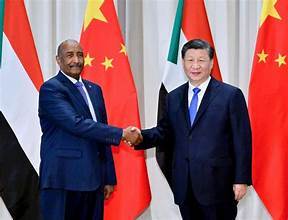
As Sudan continues to grapple with one of the most severe economic and financial crises in its modern history, the battle for the country’s future is no longer confined to military fronts or political power struggles. It has increasingly shifted to a more fundamental arena: the survival of the national economy and the state's ability to restore its core functions. Against this backdrop, the ongoing discussions between the Sudanese Agricultural Bank and the China–Africa Development Fund carry significance far beyond agricultural financing or development projects. They raise a broader strategic question concerning China’s role in rebuilding Sudan’s economy and reshaping the country’s economic trajectory in the post-war era.
Sudan is not merely seeking additional investments; it is searching for a partner capable of providing capital, technology, and access to markets at a time when state finances are deteriorating and opportunities for support from traditional international financial institutions remain limited. In this context, Beijing appears increasingly positioned to play a role that extends beyond financing to influencing the very economic model that may govern Sudan for decades to come.
The Economics of War and the Search for a Lifeline
The war has fundamentally transformed Sudan’s economic landscape. Productive sectors, public services, and infrastructure have suffered extensive damage, while government revenues and foreign exchange reserves have declined sharply. At the same time, the gap between the formal and informal economies has widened, significantly reducing the state's ability to manage monetary policy and stabilize the national currency.
The central challenge facing Sudan is not simply a shortage of liquidity or financing; it is a profound crisis of production. The strength of a national currency ultimately depends not on monetary measures alone, but on the economy’s capacity to generate value-added production and sustainable export revenues. This reality places agriculture at the center of any realistic recovery strategy, as it remains one of the few sectors capable of generating substantial foreign exchange earnings within a relatively short timeframe.
Consequently, the negotiations with China should not be viewed merely as an effort to secure loans or financial assistance. Rather, they reflect an attempt to reactivate Sudan’s longstanding comparative advantage—its vast agricultural resources—as the most viable starting point for economic reconstruction.
Looking East Again: Economic Realignment or Geopolitical Shift?
Sudan’s renewed engagement with China revives the long-standing “Look East” policy that has periodically shaped the country’s economic strategy. Yet the circumstances surrounding this renewed partnership differ significantly from those that characterized the oil-based cooperation between Khartoum and Beijing during the 1990s and early 2000s.
At that time, China was seeking new energy sources while Sudan sought to develop its oil sector despite Western sanctions. Today, however, the relationship is evolving within a different context: Sudan is attempting to rebuild its economy amid the devastation of war, while China continues to expand its economic footprint across Africa through development financing, infrastructure investments, and food security initiatives.
From this perspective, Sudan’s growing economic engagement with Beijing cannot be separated from broader shifts in the international system, where economic instruments increasingly serve as tools of geopolitical influence. China’s interest in Sudan extends beyond investment opportunities. The country occupies a strategic location connecting the Red Sea, the Horn of Africa, and the African interior, while possessing some of the largest underutilized agricultural resources in the world.
From Raw Material Exports to Economic Power
Sudan’s current predicament reveals a deep structural contradiction. Despite possessing abundant agricultural land, water resources, and livestock wealth, the country remains heavily dependent on exporting low-value raw commodities.
For decades, Sudan’s economic model has relied on the export of raw cotton, sesame, gum arabic, and live livestock. Such a model limits export earnings and leaves the economy highly vulnerable to fluctuations in global commodity markets.
The real challenge, therefore, is not merely increasing agricultural production, but developing integrated value chains that encompass processing, storage, packaging, logistics, and marketing. This is where partnership with China could prove particularly significant—not simply as a source of capital, but as a development partner with extensive experience in transforming agriculture from a primary sector into a sophisticated industrial and export-oriented engine of growth.
If Sudan succeeds in moving from exporting raw commodities to exporting processed products, it could substantially increase export revenues, improve its trade balance, strengthen foreign exchange reserves, and ultimately provide the foundation for a more stable national currency.
Financing Reconstruction in a High-Risk Environment
Despite the attractiveness of Sudan’s economic potential, the country’s primary obstacle remains political and security risk. The ongoing conflict continues to undermine investor confidence, while weakened institutions and damaged infrastructure constrain the government’s ability to provide conventional guarantees sought by international investors.
This reality underscores the need for innovative financing mechanisms based on risk-sharing rather than traditional sovereign borrowing. Models that link financing to export revenues or productive assets, as well as equity-based partnerships, may offer Sudan access to capital without deepening its debt burden.
However, the success of such arrangements ultimately depends on the state’s ability to restore a minimum degree of institutional stability and legal predictability. Regardless of risk tolerance, investors require an environment where future outcomes can be reasonably anticipated.
Can Sudan Become a Regional Food Hub?
Beyond the immediate financial negotiations lies a more ambitious vision: redefining Sudan’s position within the regional economy. Rather than being viewed primarily as a state trapped in recurring crises, Sudan could emerge as a critical pillar of Arab and African food security.
The country possesses many of the prerequisites necessary for such a role, including vast agricultural lands, diverse water resources, strategic geographic proximity to Middle Eastern and African markets, and a growing global demand for food products.
Yet realizing this vision requires far more than agricultural investment alone. It demands substantial improvements in transportation networks, energy infrastructure, ports, logistics systems, and institutional capacity capable of managing production and exports according to global competitive standards.
China: An Opportunity for Recovery or a Risk of Dependency?
While cooperation with Beijing offers significant opportunities, international experience suggests that Sudan should avoid becoming overly dependent on a single economic partner. The success of Sudan’s economic recovery will not be measured by the volume of Chinese financing it secures, but by its ability to utilize that financing to build a diversified, productive, and sustainable economy.
The real risk does not lie in engaging with China. Rather, it lies in reproducing an economic model that relies heavily on external financing without addressing underlying structural weaknesses. In such a scenario, new investments could merely postpone future crises rather than resolve them.
Conclusion
The ongoing negotiations in Beijing reflect an important shift in Sudan’s economic trajectory, but they also reveal a deeper challenge concerning the nature of the Sudanese state in the aftermath of war. Sudan does not lack resources, nor does it lack potential partners. What it lacks is a stable environment and effective institutions capable of transforming potential into sustainable economic power.
The strategic question, therefore, is not simply what China can offer Sudan, but what Sudan can do with this opportunity. If Khartoum succeeds in linking investment to production, industrialization, and institutional reform, its partnership with Beijing could mark the beginning of a new era of economic recovery. If structural weaknesses remain unaddressed, however, these agreements may join a long list of missed opportunities that have characterized Sudan’s development trajectory for decades.
In this sense, Beijing may represent the beginning of the solution—but it is certainly not the solution in its entirety.
Most read