From the Strait of Hormuz to Global Environmental Security: When War Becomes a Threat to Nature

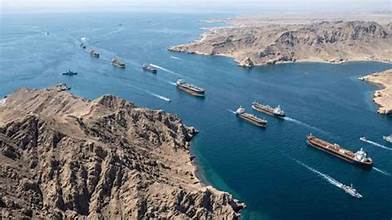
For decades, discussions about the Strait of Hormuz have centered on oil prices, energy security, naval deployments, and the prospect of military confrontation between the United States and Iran. Yet the current conflict has revealed a far less visible—and potentially more enduring—dimension. The strategic waterway through which nearly one-fifth of the world's oil supply passes is no longer merely a chokepoint for the global economy; it is also emerging as a potential source of an environmental crisis whose consequences could outlast the war itself by many years.
The recent study published in Biological Invasions does not describe a localized environmental incident. Rather, it warns of what could be described as the globalization of invasive marine species, driven by the prolonged immobilization of thousands of vessels in the Arabian Gulf and the Gulf of Oman. Ships traditionally viewed as carriers of energy and commerce may, under wartime conditions, become floating platforms transporting invasive organisms capable of transforming marine ecosystems across continents.
Wars Do Not Destroy People Alone
Strategic assessments have traditionally measured the costs of war through casualties, physical destruction, economic losses, and disruptions to energy markets. Environmental consequences have often been treated as secondary concerns, despite their potential to become the longest-lasting legacy of armed conflict.
Marine organisms that accumulate on ship hulls during extended periods of inactivity do not recognize political borders. Once maritime traffic resumes, these organisms can be transported to distant ports where favorable ecological conditions may allow them to establish themselves, triggering biological invasions that are extraordinarily difficult—and often impossible—to reverse.
Previous experiences illustrate the scale of the challenge. The spread of the zebra mussel across North America's Great Lakes evolved into one of the world's most costly invasive-species crises, inflicting billions of dollars in economic damage while disrupting fisheries, aquaculture, water infrastructure, and native biodiversity.
What is unfolding in the Strait of Hormuz, therefore, should not be viewed as a regional environmental concern but as a potential issue of global ecological security.
Hormuz: From an Energy Chokepoint to an Ecological Corridor
The Strait of Hormuz has long represented one of the Middle East's most important geopolitical pressure points. Control over maritime traffic through the strait has traditionally translated into leverage over global energy markets.
Today's crisis, however, reveals another unintended consequence of disrupting maritime navigation.
With more than 1,500 vessels reportedly stranded inside the Gulf, alongside hundreds more anchored in the Gulf of Oman, the region has effectively become a vast natural laboratory for biological fouling—the accumulation of microorganisms, algae, mollusks, and other marine organisms on ship hulls.
Combined with the Gulf's exceptionally warm and saline waters, these conditions create an ideal environment for rapid biological growth. Many of the region's marine species have already evolved remarkable tolerance to high temperatures and salinity, increasing their chances of surviving long ocean voyages once shipping resumes.
In this sense, the Strait of Hormuz risks evolving from a strategic energy corridor into a global pathway for biological invasions.
Environmental Security Is Becoming National Security
This emerging threat reflects a broader transformation in the concept of security itself.
National security can no longer be understood solely in terms of military deterrence, territorial defense, or uninterrupted energy supplies. Increasingly, it also encompasses the resilience of ecosystems upon which global economies depend.
Invasive species can devastate fisheries, damage maritime infrastructure, increase port maintenance costs, undermine food security, and impose long-term economic burdens on coastal nations.
Environmental protection, therefore, is no longer the exclusive concern of ecologists. It has become an integral component of economic security, maritime security, and national resilience.
An Unconventional Weapon Without Intent
Ironically, the environmental risks emerging from Hormuz are not the result of biological warfare or deliberate ecological sabotage.
Instead, they are an unintended consequence of military confrontation and prolonged disruption of commercial navigation.
This reflects one of the defining characteristics of modern conflict: wars increasingly generate cascading effects far beyond the battlefield itself, influencing climate resilience, global supply chains, food security, public health, and biodiversity.
The true cost of war is therefore no longer confined to what occurs during combat. It also includes the indirect consequences that continue to unfold long after the fighting has ceased.
Toward a New Concept of Maritime Security
These developments may ultimately reshape international maritime governance.
The International Maritime Organization, along with national port authorities, is likely to adopt stricter regulations governing hull cleaning and biofouling management before ships are allowed to enter international ports. Vessels arriving from conflict-affected regions may increasingly face mandatory environmental inspections in addition to traditional customs and security procedures.
Future maritime security frameworks may therefore encompass not only freedom of navigation and anti-piracy operations but also biosecurity measures designed to prevent the global spread of invasive marine species.
Just as ports today enforce customs, immigration, and health regulations, tomorrow they may impose equally rigorous environmental requirements to protect fragile ecosystems from biological contamination.
Conclusion
The unfolding situation in the Strait of Hormuz demonstrates that contemporary conflicts are no longer confined to military or economic competition. They are increasingly generating transnational environmental threats whose consequences extend well beyond the states directly involved in the fighting.
A war that initially disrupted shipping lanes may ultimately reshape marine ecosystems thousands of miles away, adding a new dimension to the global costs of armed conflict—one no less significant than disruptions to energy markets or international trade.
Protecting strategic maritime corridors, therefore, can no longer mean safeguarding only the flow of oil and commercial goods. It must also include protecting the ecological systems upon which global prosperity ultimately depends.
This may prove to be one of the defining realities of twenty-first-century warfare: conflicts are measured not only by the number of missiles fired, but also by the environmental consequences that continue to travel across the world's oceans long after the guns fall silent.
Most read




Read also