Sudan Between Chemical Weapons Allegations and the Battle for International Legitimacy

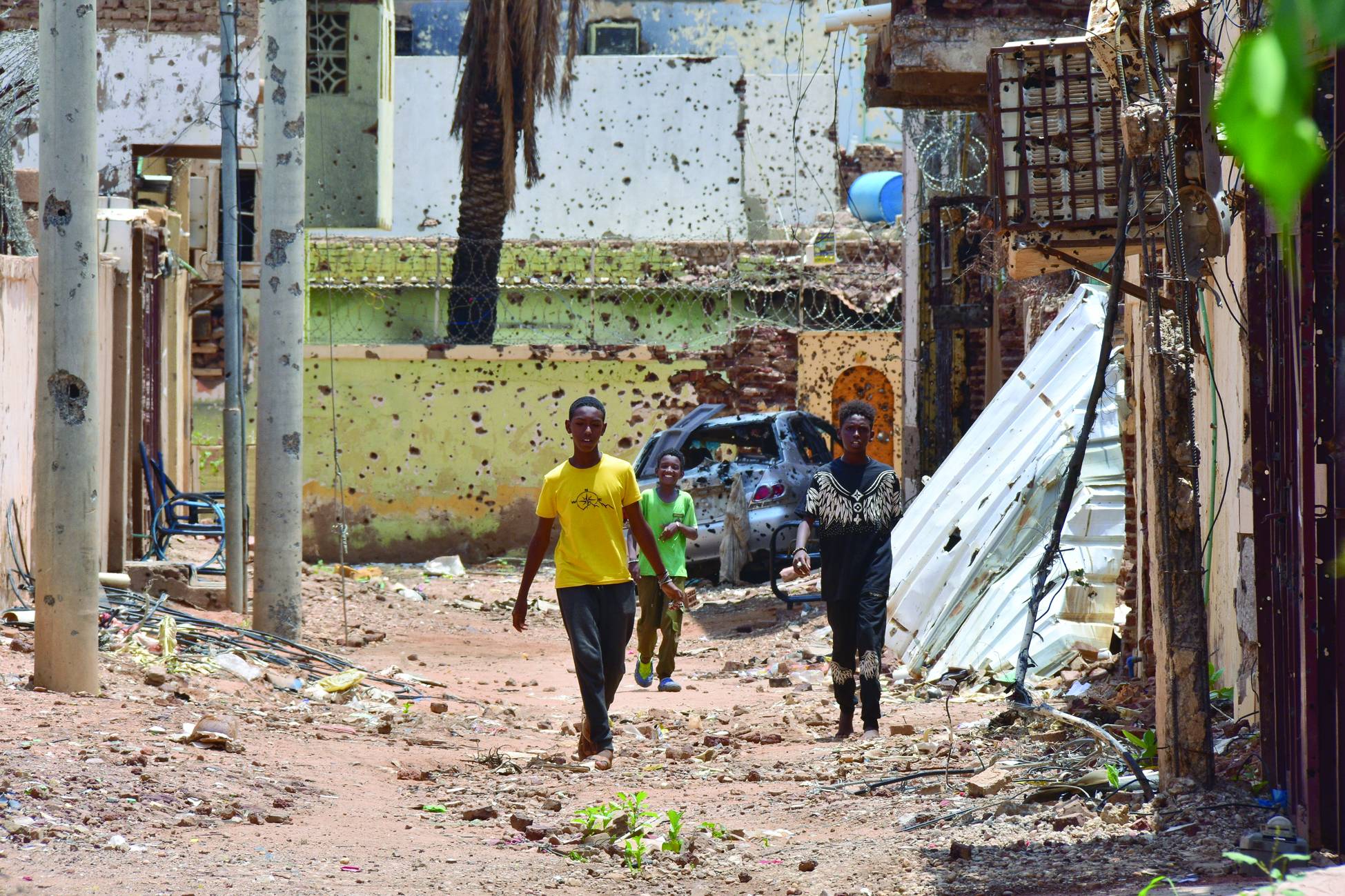
Sudan's conflict is no longer confined to the battlefield between the Sudanese Armed Forces (SAF) and the Rapid Support Forces (RSF). Increasingly, it has expanded into a parallel struggle over international legitimacy. The controversy surrounding allegations of chemical weapons use, and the subsequent U.S. sanctions, illustrates how the conflict has evolved into a contest fought simultaneously on military and diplomatic fronts, with each side seeking to shape international opinion as much as it seeks territorial advantage.
Khartoum's declaration that it is prepared to cooperate with the Organisation for the Prohibition of Chemical Weapons (OPCW) carries political significance well beyond a simple rebuttal of Washington's accusations. The Sudanese government is attempting to shift the debate away from political allegations and toward the legal framework established under the Chemical Weapons Convention, thereby challenging the legitimacy of the U.S. sanctions while portraying itself as committed to multilateral institutional mechanisms rather than unilateral political pressure.
The announcement is particularly significant because it marks the first official disclosure that Sudan and the United States maintained a bilateral consultative mechanism for more than a year to discuss the allegations. By revealing the existence of these consultations, Khartoum seeks to demonstrate that the dispute did not emerge suddenly but had been addressed through direct diplomatic channels. According to the Sudanese government, it repeatedly proposed that American experts travel to Sudan to conduct on-site inspections—a proposal that, it claims, Washington declined.
The United States, however, continues to maintain that domestic investigations cannot substitute for the independent technical procedures conducted by the OPCW. This position reflects Washington's determination to preserve the credibility of the international chemical weapons verification regime by refusing to recognize investigations carried out solely by governments facing allegations themselves. Consequently, the disagreement extends beyond the substance of the accusations to the more fundamental question of who possesses the authority and legitimacy to investigate and reach technical conclusions.
Beneath this legal dispute lies a broader geopolitical contest.
Washington's approach to Sudan is shaped by wider strategic concerns, including regional stability, Red Sea security, and counterterrorism. Khartoum, by contrast, argues that the sanctions reflect political calculations more than legal or technical evidence, emphasizing that the United States imposed punitive measures without publicly presenting material proof or fully utilizing the investigative procedures available under the Chemical Weapons Convention.
These developments come at a time when Sudan's relationship with international institutions is already under considerable strain. The government previously rejected cooperation with the independent UN Fact-Finding Mission established by the Human Rights Council to investigate violations committed during the conflict, later opposing the extension of its mandate on grounds of alleged bias against the Sudanese Armed Forces.
Khartoum has sought to distinguish between that mission and the OPCW, arguing that the former investigates violations of international human rights and humanitarian law, whereas the latter performs technical verification of alleged chemical weapons use. Even so, the distinction highlights the broader diplomatic challenge confronting Sudan: balancing its resistance to what it views as politicized international mechanisms while attempting to demonstrate openness toward institutions it considers technically impartial.
The chemical weapons controversy cannot be separated from the broader strategic dynamics of the war itself.
The U.S. sanctions—which include restrictions on exports, financing, and non-humanitarian assistance—serve not only as instruments of economic pressure but also as political signals to the international community regarding the legitimacy of Sudan's military-led government. Such measures could significantly affect Khartoum's prospects for restoring international confidence, attracting foreign investment, and eventually financing post-war reconstruction.
Meanwhile, developments on the battlefield continue to reinforce the intensity of the conflict.
The deadly attack in North Kordofan, which reportedly killed fifteen civilians and wounded several others, underscores that the war remains far from resolution despite growing diplomatic engagement. Continued attacks on civilian communities suggest that neither side has achieved a decisive military advantage and that both continue to rely on attritional warfare, with civilians bearing an ever-increasing humanitarian cost.
The Sudanese government's accusation that the Rapid Support Forces carried out the attack—while the RSF has yet to issue any public response—also illustrates the parallel information war accompanying the military campaign. Both sides continue to compete for domestic and international legitimacy by shaping narratives surrounding responsibility for violence and humanitarian violations.
Taken together, these developments indicate that Sudan's conflict has entered a phase in which legal and diplomatic legitimacy has become an integral component of the broader war effort. Control of territory alone is no longer sufficient to strengthen a party's strategic position. The ability to maintain international legitimacy—or, at minimum, to limit diplomatic isolation and economic sanctions—has become an increasingly important determinant of the conflict's trajectory.
Khartoum therefore faces a dual challenge. It must simultaneously wage an ongoing military campaign against the Rapid Support Forces while managing an increasingly complex diplomatic confrontation with Western governments and international institutions aimed at defending its legitimacy and refuting the allegations against it.
The United States, for its part, appears committed to combining political and economic pressure with legal arguments in an effort to constrain the Sudanese government's room for maneuver and encourage greater compliance with international expectations.
In this context, the controversy over chemical weapons is no longer merely a technical question of whether prohibited weapons were used. It has evolved into one of the central arenas in the struggle over Sudan's future, where legal considerations intersect with geopolitical calculations, and where international legitimacy has become as strategically important as success on the battlefield.
Most read



Read also