Southern Lebanon After UNIFIL: The Struggle to Shape a New Security Order and Define the Limits of Sovereignty

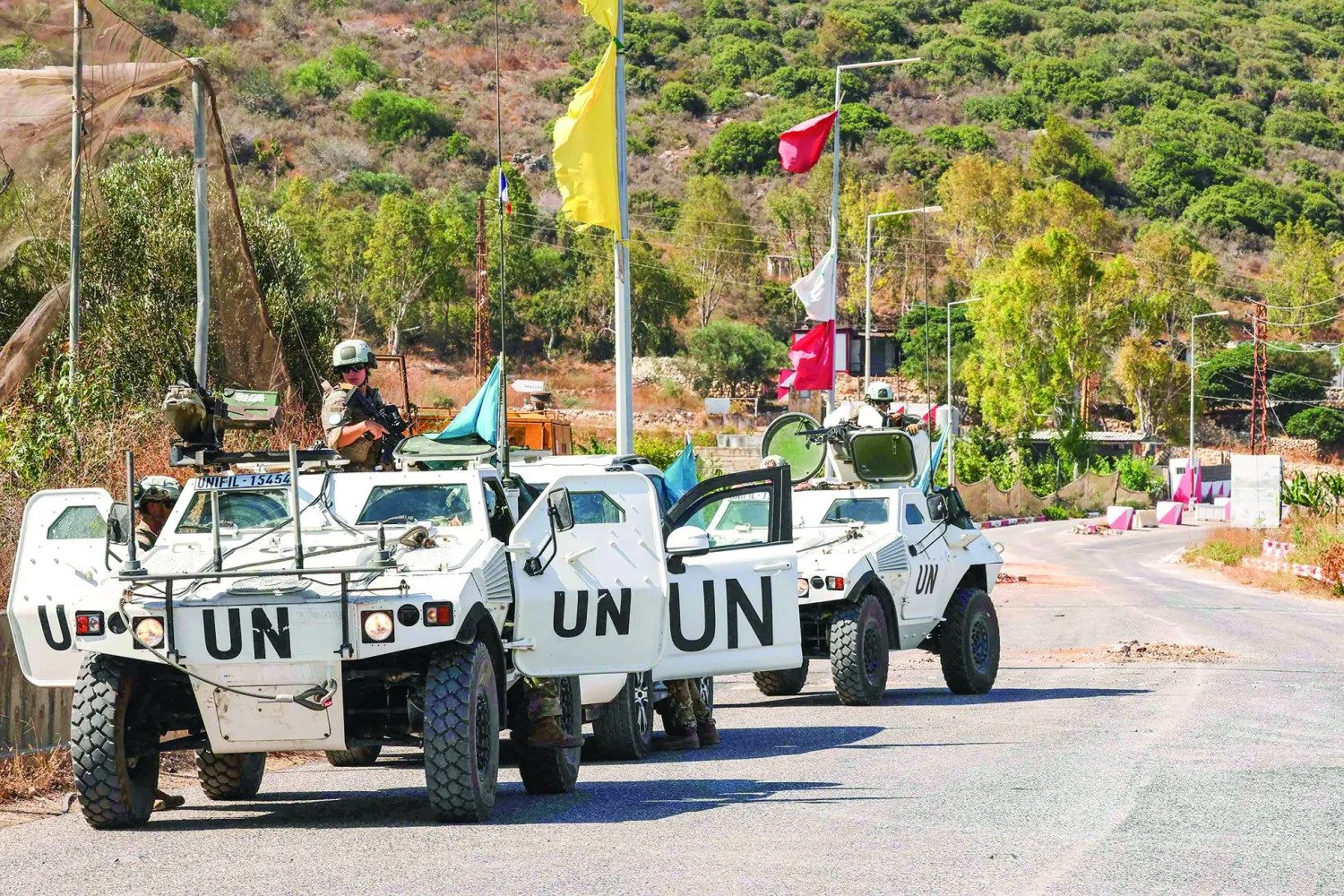
The French-American diplomatic efforts concerning the future security arrangements in southern Lebanon appear to be about far more than finding a technical alternative to the United Nations Interim Force in Lebanon (UNIFIL) following its withdrawal. Rather, they signal the beginning of a broader international debate over the security framework that should govern the region in the post-war phase. The issue is no longer simply about maintaining border monitoring or preventing military violations. It increasingly concerns the reshaping of the security and political balance in the south, determining who will have the authority to verify compliance with ground-level commitments, and defining the role of the Lebanese state in this evolving equation.
Statements by French and American officials reveal growing recognition that the end of UNIFIL's mission, or a reduction in its presence, could create a security vacuum that would be difficult to contain in an already fragile environment. This is particularly concerning given the unresolved disputes over the implementation of arrangements related to the cessation of hostilities, the withdrawal of Israeli forces, the deployment of the Lebanese army, and the future military presence of Hezbollah in border areas. The search for a "new security structure" is therefore not merely an administrative response to the conclusion of an international mission. It is an attempt to redesign the security landscape in southern Lebanon in accordance with the realities of the post-war period.
From Border Monitoring to Reshaping the Security Equation
The central challenge facing French-American efforts is the establishment of a mechanism capable of verifying the implementation of mutual commitments, particularly Hezbollah's withdrawal from designated areas and the deployment of the Lebanese army there, alongside Israel's withdrawal. This reflects a shift in international priorities: from treating the consolidation of a ceasefire as an immediate objective to building a monitoring framework capable of ensuring its durability and reducing the risk of renewed confrontation.
Yet this shift raises a fundamental question about the identity of the body responsible for verification, the scope of its mandate, and the legal framework governing its activities. Security monitoring is never entirely neutral when it involves an issue as sensitive as Hezbollah's weapons and the military deployment in southern Lebanon. Depending on its design and authority, a verification mechanism could become an instrument of political and security pressure on the Lebanese state, or a gateway to redefining Hezbollah's position within the country's domestic political equation.
From this perspective, Lebanese concerns over the American proposal to assign the task to a civilian group are understandable. The issue is not necessarily the civilian status of its members, but rather the nature of the mandate they would receive, the authority overseeing their work, and whether their powers would extend beyond information gathering and compliance assessment to a supervisory or operational role that could impinge on Lebanese sovereignty.
French-American Differences: A Disagreement Over Means or Strategic Vision?
Although Paris and Washington publicly share the objectives of preventing a security vacuum and preserving stability, their differing approaches to the proposed new structure reveal contrasting assessments of how the next phase should be managed.
The American proposal, as outlined in the report, appears to favor the creation of a civilian group tasked with verification. This may reflect Washington's preference for a more flexible mechanism than conventional military arrangements, potentially allowing for more direct monitoring of compliance. However, the proposal raises Lebanese concerns about its legitimacy, political acceptability, and the possibility that it could evolve into a supervisory framework operating outside established international structures.
France, by contrast, appears more intent on keeping any new arrangements within the framework of existing UN Security Council resolutions, particularly Resolution 1701, while also drawing on the trilateral agreement, or framework agreement. This position reflects Paris's desire to preserve a degree of legal and institutional continuity and avoid moving toward a new formula that might lack either international consensus or Lebanese acceptance.
The differences between the two countries do not necessarily indicate a fundamental strategic disagreement. They may instead reflect competing views over the mechanism's structure and the limits of its authority, rather than over the ultimate objective. Both Washington and Paris agree on the need to prevent a return to the previous security situation in southern Lebanon and to strengthen the role of the Lebanese army. Their differences concern how these goals should be achieved and what guarantees should be provided to both Israel and Lebanon.
Resolution 1701 and the Test of Lebanese Sovereignty
Adopted by the UN Security Council in 2006, Resolution 1701 remains the central reference point for the French approach. Yet the real challenge lies not in reaffirming the resolution, but in determining how it should be implemented in light of the transformations southern Lebanon has undergone during the latest war.
The resolution establishes arrangements related to the cessation of hostilities, the strengthening of the Lebanese army's deployment alongside UNIFIL, and the requirement that the area between the Blue Line and the Litani River be free of armed personnel, weapons, and military equipment other than those belonging to the Lebanese state and UNIFIL. Translating these principles into reality, however, depends on the Lebanese state's ability to exercise its authority, Israel's compliance with withdrawal requirements, and domestic consensus over the question of exclusive state control of weapons and security decisions.
This brings Lebanon's most complex dilemma into focus: how can state authority be strengthened without creating the impression that the process is being carried out in response to external dictates? And how can an internationally backed verification mechanism be established without turning it into a framework for external oversight of Lebanon's security decisions?
The success of any new arrangement will depend on ensuring that the Lebanese state is a central participant in defining its mandate and operational procedures, rather than merely an entity expected to implement commitments formulated outside its institutions. Sovereignty cannot be strengthened simply by increasing the number of monitoring bodies or expanding their powers. It requires empowering the Lebanese army and legitimate state institutions to play an effective and sustainable role in managing security throughout the country.
Hezbollah and the Dilemma of Moving from Military Balance to State Authority
The debate over UNIFIL's future cannot be separated from the issue of Hezbollah's weapons, which lies at the heart of the security and political dilemma in southern Lebanon. International calls to verify Hezbollah's withdrawal from border areas reflect a determination to prevent the re-emergence of the conditions that led to the confrontation. At the same time, they reopen an exceptionally sensitive domestic debate over the future relationship between the state and Hezbollah, and the limits of the military role the group has maintained outside the formal national security framework for decades.
Politically, this issue cannot be resolved through field-monitoring procedures alone. Any security arrangement that lacks domestic Lebanese consensus could encounter serious implementation difficulties or become a new source of internal tension and division. The weapons issue is tied to domestic power balances, regional dynamics, Hezbollah's strategic calculations, and the broader future of the confrontation with Israel.
The challenge, therefore, is not simply to verify the absence of Hezbollah's military presence in designated areas. It is to develop a broader national vision concerning the state's exclusive authority over decisions of war and peace, the Lebanese army's role in protecting the country's borders, and the need to prevent southern Lebanon from once again becoming an arena for settling regional disputes.
Israel and Security Guarantees: From Withdrawal to Entrenching Facts on the Ground
At the same time, Israel's demand for security guarantees cannot be overlooked. It seeks assurances that threats along its northern border will not return. The establishment of a new verification mechanism could form part of its efforts to secure stricter arrangements, enabling it to monitor and assess Lebanon's implementation of its commitments.
The danger, however, lies in the possibility that these guarantees could become a means of legitimizing a continued Israeli military presence or imposing unilateral restrictions on Lebanese sovereignty. The security equation cannot be balanced if it focuses exclusively on monitoring Lebanese obligations without establishing a comparable mechanism to oversee Israel's withdrawal and prevent air, land, and maritime violations.
Any new structure must therefore be based on the principle of reciprocal obligations, rather than monitoring one side alone. Stability in southern Lebanon cannot be achieved solely by guaranteeing Israel's security. It must also involve protecting Lebanese territory, respecting the country's sovereignty, and ending the Israeli military presence in areas from which it is required to withdraw.
Beirut Faces a Test of Negotiation and Strategic Priorities
The anticipated visit to Beirut by the US Permanent Representative to the United Nations carries significance beyond its diplomatic character. It is expected to shed light on Washington's vision for the next phase and reveal the extent to which the United States is prepared to take Lebanese reservations about the proposed arrangements into account.
More importantly, Beirut must move beyond waiting for external initiatives and formulate a clear national position on the nature of the security structure it needs. The absence of a unified Lebanese vision could leave international powers free to shape the arrangements according to their own security and political priorities, potentially confronting the Lebanese state with difficult choices at a later stage.
The Lebanese government needs an approach that brings together three interdependent priorities: securing a full Israeli withdrawal, strengthening the Lebanese army's deployment and operational and logistical capabilities, and ensuring that any new international mechanism operates under a clear legal mandate and has the acceptance of the Lebanese state. Achieving these objectives also requires domestic consensus on the role of legitimate state institutions in managing security, rather than relying on imposed realities or external backing.
Beyond UNIFIL: An Opportunity to Build the State or Reproduce External Oversight?
Ultimately, UNIFIL's future is not merely a question of the conclusion of an international mission. It is a test of the Lebanese state's ability to reclaim its role in managing security and exercising sovereignty amid overlapping international and regional pressures.
If Beirut succeeds in using this moment to reassert the authority of state institutions over security decisions, strengthen the capabilities of the Lebanese army, and secure Israel's compliance with its withdrawal obligations, the transition could create an opportunity for a more stable security arrangement. But if the next phase is treated merely as a matter of replacing one monitoring mechanism with another, without addressing the underlying political and security causes of the crisis, southern Lebanon will remain vulnerable to renewed confrontation, even under a new international framework.
The fundamental question raised by the French-American initiatives is therefore not simply who will replace UNIFIL, but who will define the rules governing security in southern Lebanon, and in whose interests will the new structure operate? Between the international drive to guarantee border security and Lebanon's need to safeguard its sovereignty, the future of the south will ultimately depend on the state's ability to transform security arrangements from externally imposed constraints into a genuine opportunity to restore its authority and role.
Most read


Read also