The US Blockade on Iran: From Maritime Confrontation to the Strangulation of Supply Networks and the Economy

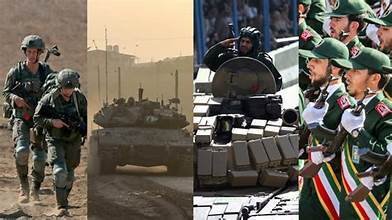
The latest developments between Washington and Tehran reveal that the confrontation is entering a more complex phase. The maritime blockade is no longer merely a tool for pressuring Iranian oil exports; it has become part of a broader strategy aimed at drying up sources of revenue, disrupting military supply networks, and preventing Iran from rebuilding its defense capabilities. The US Central Command’s establishment of the “Iron Gate” Task Force reflects a shift toward expanding the scope of the blockade to include land transportation routes and the Caspian Sea, placing Iran’s networks of cooperation with Russia and Central Asian countries under renewed pressure.
Tehran, meanwhile, is seeking to demonstrate its ability to withstand economic and military pressure by threatening to broaden its response to any attack on Iranian vessels and insisting that the blockade will not achieve its objective of bringing the Iranian economy to collapse. These statements are closely linked to Iran’s efforts to preserve its deterrence posture and prevent Washington from assuming that maritime and economic pressure can force an Iranian capitulation without incurring military or strategic costs.
The significance of the “Iron Gate” initiative lies in its reflection of a shift in the nature of US pressure. Rather than limiting its efforts to intercepting vessels and restricting Iranian oil exports, Washington is moving toward targeting the logistical infrastructure that Iran relies on to obtain military equipment, dual-use technologies, and materials subject to international sanctions. This means that the confrontation is no longer confined to Iranian commercial activity; it increasingly concerns the country's ability to maintain external networks and secure its military and economic requirements.
Russia, the Caspian Sea, and Central Asia are particularly important in this context, serving as alternative routes in Iran’s strategy for circumventing sanctions. If Washington succeeds in disrupting these channels, it will have extended the scope of pressure from the maritime domain to the broader regional supply network. However, the effectiveness of this approach will depend on Washington’s ability to coordinate intelligence, financial, and legal efforts with its partners without triggering a direct confrontation with regional actors connected to these networks.
The Strait of Hormuz, meanwhile, remains Tehran’s most sensitive strategic lever. Threats to maritime navigation through the strait would not affect only the United States or Iran; their consequences would extend to global energy markets, supply chains, and international trade. Consequently, any continued disruption of maritime traffic or expansion of the naval confrontation could transform the crisis from a bilateral conflict into an international economic crisis, driving up energy, insurance, and shipping costs while exposing oil-importing countries to direct repercussions.
Ultimately, Washington appears to be shifting its approach toward Iran from traditional containment and sanctions to a strategy of comprehensive economic and logistical strangulation. Tehran, in turn, is betting on diversifying its supply routes and raising the costs of the blockade by threatening to expand the scope of its military response.
The next phase will be shaped by each side’s ability to withstand the costs of attrition and by the willingness of regional and international actors to become involved in this evolving equation. The central question is no longer simply whether the United States can blockade Iran, but whether it can achieve its objectives without turning the Strait of Hormuz and global energy networks into a theater of open-ended confrontation whose consequences may prove increasingly difficult to contain.
Most read



Read also