
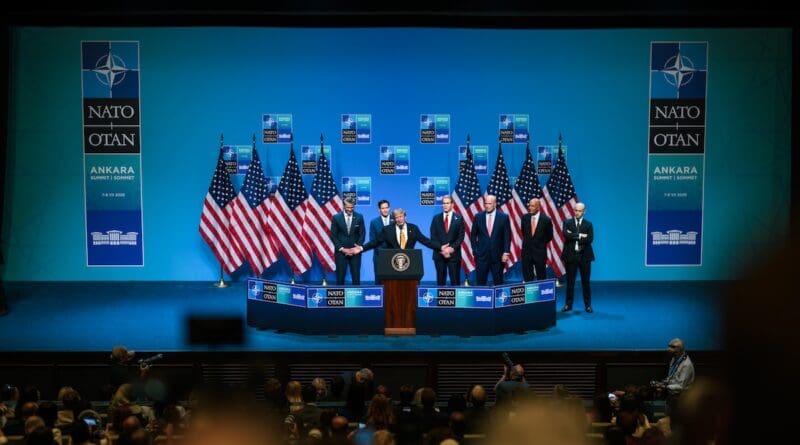
The NATO Summit held in Ankara in July 2026 marked another watershed in the evolution of the Alliance. Coming at a time when the Ukraine war has entered its fifth year, Russia continues to test NATO’s resolve, and the United States under President Donald Trump displays increasing unpredictability in its foreign policy, the summit represented both reassurance and warning. NATO reaffirmed its collective commitment to Ukraine, announced unprecedented defence-industrial initiatives, pledged annual military assistance of at least €70 billion, and accelerated plans to increase defence expenditure towards 5 percent of GDP by 2035. More importantly, the summit underscored a strategic shift from political declarations to implementation, signaling that NATO is preparing for a prolonged period of confrontation with Russia rather than expecting an early negotiated settlement.
Yet beneath the optimistic rhetoric of alliance unity lies a more complex reality. President Trump’s repeated criticism of European allies, his insistence that Europeans shoulder a larger share of defence responsibilities, his ambiguous commitment to Ukraine, and his focus on domestic political priorities continue to generate uncertainty regarding the long-term reliability of American leadership. While NATO appears stronger institutionally, its future increasingly depends upon whether Europe can transform itself from a security consumer into a genuine security provider.
The Strategic Context
The Ukraine conflict has fundamentally altered European security calculations. Russia’s economy has suffered under sanctions, its military has sustained heavy casualties, and Ukrainian strikes have increasingly targeted strategic infrastructure deep inside Russian territory. Nevertheless, Moscow continues to demonstrate both military resilience and political determination.
For NATO, therefore, the challenge is no longer simply helping Ukraine survive. It is preventing Russian aggression from becoming a successful model of coercive revisionism. Any perception that Russia can outlast Western political will would have profound implications not only for Europe but also for the Indo-Pacific, where China closely observes Western cohesion and resolve.
Consequently, NATO’s strategy has shifted from crisis management to long-term deterrence, involving enhanced forward deployments, expanded industrial production, integrated missile defence, artificial intelligence, autonomous systems, and strengthened logistics. The Ankara Summit clearly reflected this transformation.
Ankara Summit: From Commitments to Delivery
One of the most significant outcomes of the summit was NATO’s emphasis on implementation rather than promises. Secretary General Mark Rutte repeatedly stressed that defence spending is no longer merely about percentages of GDP but about producing deployable military capability.
The Alliance announced more than US$50 billion in defence procurement contracts, launched the “Drone Edge” initiative worth US$40 billion over five years, accelerated development of AI-enabled command systems, and approved major investments in NATO’s fuel infrastructure and transatlantic military cloud architecture. These initiatives indicate recognition that future conflicts will depend as much on industrial capacity and technological superiority as on troop strength.
Equally significant was NATO’s commitment to provide Ukraine with at least €70 billion annually in military assistance, equipment, training, and logistical support. Rather than treating Ukraine as a temporary recipient of aid, NATO increasingly views it as the Alliance’s forward defensive shield against Russian expansionism.
Trump’s Ambiguous Leadership
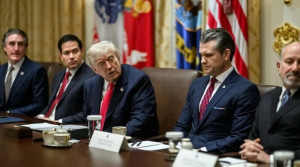
President Trump dominated the summit despite not introducing any fundamentally new strategic initiatives. His principal contribution remained political pressure on European allies to increase defence spending. President Trump immediately upon his arrival began castigating European countries for not supporting Washington as part of its war in Iran specially Spain. Secretary General Mark Rutte has corrected the record, saying that certain states’ refusals to let the US use European airbases for its air campaign were “isolated” incidents and he pointed out that 5,000 US aircraft had taken off from European bases at the peak of the conflict, illustrating that “Europe again is one big platform of power projection for the United States”.
However, Trump’s unpredictability continues to complicate Alliance planning. His repeated statements questioning aid to Ukraine, occasional criticism of NATO itself, renewed interest in Greenland, and shifting positions on Iran illustrate a foreign policy driven more by immediate political calculations than consistent strategic doctrine.
For European capitals, this creates an uncomfortable paradox. Trump may simultaneously strengthen NATO through financial pressure while weakening confidence in American strategic reliability.
Europe’s Strategic Awakening
Perhaps the most enduring consequence of the Ukraine war has been Europe’s strategic awakening. For decades after the Cold War, most European governments prioritised economic integration while allowing defence capabilities to decline. The American security umbrella appeared permanent, enabling substantial reductions in military expenditure.
The Russian invasion of Ukraine fundamentally shattered these assumptions. Germany’s Zeitenwende, Poland’s rapid military expansion, Finland and Sweden’s NATO membership, increased ammunition production, expanded defence-industrial cooperation, and growing investments in missile defence all reflect recognition that Europe must assume greater responsibility for its own security.
The Ankara Summit demonstrated that this transformation is accelerating. Although several member states remain below NATO spending targets, the overall trend is unmistakable. European defence is no longer viewed as optional insurance but as an essential component of national sovereignty.
NATO’s Industrial Revolution
Modern wars are increasingly decided not merely by battlefield tactics but by industrial endurance.The Ukraine war has exposed severe Western shortages in artillery ammunition, air defence interceptors, drones, missiles, electronic warfare systems, and precision-guided munitions. Russia’s ability to sustain prolonged production despite sanctions has highlighted the importance of defence manufacturing capacity.
NATO’s new focus on industrial resilience therefore represents one of the summit’s most important developments. Increased procurement, multinational production agreements, common standards, AI-enabled logistics, integrated supply chains, and expanded fuel infrastructure collectively indicate preparation for sustained high-intensity conflict.
The launch of the Drone Edge initiative also recognises that unmanned systems are rapidly transforming warfare. Ukraine has demonstrated that inexpensive autonomous platforms can destroy high-value assets, alter battlefield dynamics, and reduce dependence on traditional force structures. Future NATO doctrine will likely integrate manned and unmanned systems across all domains. So far America’s arms industry continues to earn huge profits from defence procurement contracts awarded by NATO member states and Ukraine.
Ukraine: From Partner to Security Pillar
Ukraine’s role within European security architecture has changed dramatically since 2022.Initially viewed primarily as a recipient of military assistance, Ukraine has evolved into Europe’s most experienced conventional military force. Its battlefield innovations in drones, electronic warfare, distributed command systems, cyber operations, and civilian resilience provide lessons unmatched elsewhere in Europe.
While formal NATO membership remains politically contentious, practical integration continues steadily through interoperability, joint exercises, intelligence sharing and procurement cooperation.In effect, Ukraine increasingly functions as a de facto eastern pillar of NATO’s security architecture .The longer the conflict continues, the deeper this integration is likely to become.
Emerging Challenges
Despite its apparent unity, NATO confronts several significant challenges.
First, sustaining political consensus across thirty-two democracies over a prolonged conflict will become increasingly difficult. Electoral cycles, economic pressures, inflation, migration, and domestic political polarisation may weaken public support for continued military expenditure.
Second, industrial expansion requires years rather than months. Defence production cannot be increased overnight. Labour shortages, supply chain disruptions, and limited manufacturing capacity remain significant constraints.
Third, managing escalation with Russia demands careful calibration. NATO seeks credible deterrence without provoking direct confrontation. This balancing act becomes increasingly difficult as Western weapons become more sophisticated and Ukrainian strikes extend deeper into Russian territory.
Fourth, China’s growing partnership with Russia creates a broader strategic challenge. Chinese technological support, dual-use exports, and strategic coordination with Moscow complicate Western deterrence planning.
Finally, uncertainty regarding future American policy remains the Alliance’s greatest political variable. Even if institutional commitments remain intact, doubts about presidential resolve can influence adversary calculations.
NATO’s Way Forward
NATO’s future depends upon adapting to an era characterised by prolonged strategic competition rather than episodic crises.
First, Europe must institutionalise increased defence spending irrespective of changes in Washington. Defence investment should become politically sustainable rather than personality-dependent.
Second, NATO must continue integrating Ukraine into its military ecosystem even if formal membership remains delayed. Joint production, common logistics, intelligence cooperation, and technological integration should continue expanding.
Third, defence-industrial cooperation requires greater emphasis. Shared production facilities, multinational procurement, standardised equipment, and resilient supply chains will prove decisive during extended conflicts.
Fourth, technological superiority must remain central. Artificial intelligence, autonomous systems, cyber resilience, quantum technologies, space capabilities, and integrated command networks will increasingly determine military effectiveness.
Fifth, NATO must strengthen partnerships beyond Europe. Cooperation with Australia, Japan, South Korea, and New Zealand reflects recognition that authoritarian challenges are increasingly global rather than regional.
Finally, strategic communication deserves greater attention. Maintaining public support across democratic societies requires transparent explanation of why sustained investment in deterrence remains less costly than confronting successful aggression later.
Conclusion
The Ankara Summit demonstrated that NATO remains politically resilient despite persistent questions surrounding American leadership. Rather than fragmenting under pressure, the Alliance has adapted by accelerating defence investment, strengthening industrial capacity, reaffirming support for Ukraine, and encouraging greater European responsibility.
Yet NATO’s greatest test still lies ahead. Success will depend less upon summit declarations than upon sustained political commitment, industrial mobilisation, technological innovation, and strategic patience. The Ukraine war has evolved into a contest of endurance in which economic resilience, production capacity, and alliance cohesion may ultimately prove more decisive than battlefield victories alone. The Ukraine war has demonstrated that future conflicts will reward nations possessing robust industrial ecosystems capable of sustaining prolonged operations.
President Trump’s wavering approach has become the catalyst for Europe’s strategic maturity. If European nations successfully translate increased spending into credible military capability while maintaining transatlantic cohesion, NATO will emerge stronger, more balanced, and better prepared for an era of prolonged great-power competition.
The future of NATO, therefore, is unlikely to be defined solely by Washington’s political fluctuations. It will increasingly depend upon Europe’s willingness to assume greater responsibility, Ukraine’s continued resilience, and the Alliance’s ability to adapt faster than its adversaries. In that sense, Ankara may ultimately be remembered not merely as another summit but as the moment NATO decisively transitioned from post-Cold War assumptions to the realities of twenty-first-century strategic competition.
Many European governments now acknowledge that reliance upon permanent American military guarantees is no longer prudent. Trump’s transactional approach to alliances has accelerated European defence integration far more effectively than previous administrations advocating multilateral cooperation. Ironically, his criticism has achieved what decades of diplomatic persuasion failed to accomplish.US dominance within NATO is far from over as yet.
Most read