Lebanon's Arms Monopoly and Washington's Guarantees: Can a Political Settlement Be Reached Before Time Runs Out?

The debate over the state's exclusive right to bear arms in Lebanon has evolved beyond a purely domestic issue tied to the implementation of the ceasefire agreement. It has become a test of the Lebanese state's ability to redefine its relationship with armed non-state actors, as well as a measure of Washington's capacity to translate diplomatic pressure into a sustainable political settlement. Between these two trajectories, Hezbollah finds itself at one of the most delicate moments in its political and military history, amid a rapidly changing regional landscape.
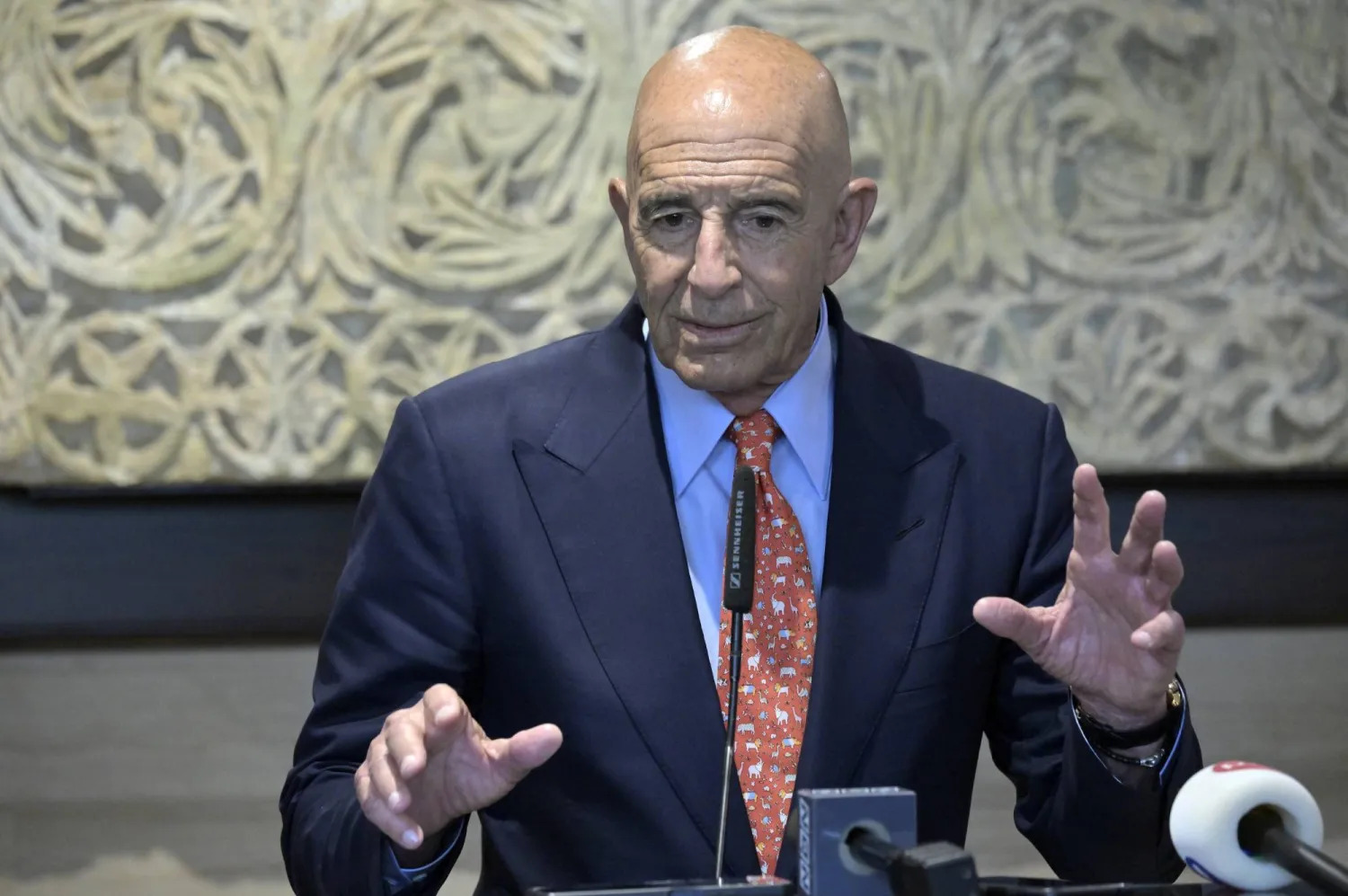
Preparations for the anticipated visit of U.S. Special Envoy Tom Barrack underscore that Beirut views the mission as far more than a routine diplomatic engagement. Instead, it represents an opportunity to move beyond a fragile ceasefire toward a broader political and security framework. Lebanon's three senior leaders have therefore worked to formulate a unified vision centered on an implementation mechanism that places the monopoly of arms firmly in the hands of the state, while conditioning its execution on credible U.S. guarantees that Israel would undertake parallel commitments, including ending military violations, withdrawing from the remaining occupied positions in southern Lebanon, releasing Lebanese detainees, and fully implementing UN Security Council Resolution 1701.
This approach reflects a notable shift in Lebanon's official thinking. The issue is no longer framed as a unilateral process of disarming Hezbollah, but rather as part of a comprehensive political and security package based on reciprocity. Such a framework seeks to create the political space for Hezbollah to transition gradually toward accepting the state's exclusive authority over arms without portraying the move as capitulation to external pressure.
The principal obstacle, however, remains Hezbollah itself. Recent statements by Secretary-General Naim Qassem reveal an attempt to strike a careful balance between maintaining a mobilizing rhetoric aimed at preserving cohesion within the party's support base and leaving sufficient political flexibility to continue negotiations through Parliament Speaker Nabih Berri. Consequently, the party's current posture appears to be less about making a definitive strategic choice than about buying time while awaiting greater clarity regarding regional developments—particularly the future of U.S.-Iran relations and the prospects for renewed negotiations between Washington and Tehran.
Yet time may not work in Hezbollah's favor. Signals emerging from Washington suggest that the current diplomatic window is not open indefinitely. The United States is seeking an official Lebanese commitment to the principle of the state's monopoly over arms, even without imposing a strict timetable for the dismantlement of Hezbollah's military capabilities. As a result, time itself has become a significant instrument of political pressure, complementing military and economic leverage.
At the same time, Lebanese officials recognize that no transition toward exclusive state control of weapons can realistically occur while Israel continues military operations and targeted strikes inside Lebanese territory. Beirut therefore insists that tangible American guarantees—not merely political assurances—are indispensable to persuading Hezbollah to engage in a phased settlement. Any restructuring of the relationship between the state and the party requires a stable security environment that prevents Israel from exploiting Lebanon's internal transformation for additional strategic gains.
The domestic dimension is equally significant. Hezbollah is seeking not only security guarantees but also a political payoff that would allow it to justify a strategic shift before its constituency. Integrating the party's military capabilities into a national security framework led by the Lebanese state requires a political narrative demonstrating that such a decision resulted not from coercion or defeat, but from tangible achievements, including ending Israeli occupation, securing the release of Lebanese detainees, and establishing a new deterrence equation that safeguards Lebanon's sovereignty.
Meanwhile, the success of any political settlement remains closely linked to the reconstruction of the country's war-ravaged areas. Reconstruction itself has become contingent upon Lebanon's implementation of internationally required economic and institutional reforms. Security, politics, and economics have therefore become inseparable components of a single equation: rebuilding southern Lebanon cannot be separated from rebuilding the Lebanese state itself, international financial assistance remains conditional upon reform, and sustainable security cannot be achieved without resolving the longstanding issue of weapons existing outside the authority of state institutions.
Ultimately, Lebanon stands at a decisive crossroads. Either American mediation succeeds in producing a formula that reconciles the country's sovereignty with Hezbollah's security concerns, or the current state of political paralysis continues, leaving the ceasefire vulnerable to collapse at any moment. Between these two outcomes, U.S. guarantees have emerged as the critical variable that will determine whether the state's monopoly over arms becomes a practical cornerstone of Lebanon's future political order or remains an elusive objective postponed until broader regional settlements eventually take shape.
Most read