How the Houthis’ Escalation Strategy Is Backfiring on Yemen


The escalation in the Red Sea can no longer be viewed merely as a geographical extension of the conflict in Yemen, nor simply as another theater in the region’s increasingly interconnected confrontations. Rather, it has become a complex test of the relationship between military power and its economic and social costs. While the Houthi movement seeks to leverage Yemen’s position overlooking one of the world’s most vital maritime corridors as a source of influence extending far beyond the country’s borders, the potential consequences of this escalation reveal a striking strategic paradox: the greater the Houthis’ ability to disrupt international shipping, the greater the risk that the costs of such disruption will rebound on Yemen itself—economically, socially, and in humanitarian terms.
This paradox is particularly significant because Yemen enters any new cycle of escalation from a position of extreme vulnerability. Years of conflict have left the economy burdened by institutional fragmentation, declining productive activity, disrupted or unpaid salaries, eroding purchasing power, and widespread poverty. At the same time, the country remains heavily dependent on imports to meet its population’s needs for food, medicine, fuel, and other essential commodities.
As a result, disruption to maritime traffic through the Red Sea and the Bab al-Mandab Strait does not remain an external event for Yemenis. Its effects move rapidly from sea lanes to ports, from ports to markets, and ultimately from markets to household budgets. This is precisely where the danger lies in turning Yemen’s maritime geography into a permanent instrument of regional confrontation.
From Geography to an Instrument of Power
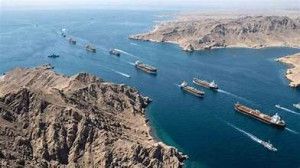
The Bab al-Mandab Strait is one of the most important sources of Yemen’s geopolitical significance. Situated at the southern gateway to the Red Sea, Yemen occupies a strategic position linking maritime traffic through the Suez Canal with trade routes connecting Asia, Europe, and global markets.
The Houthis recognized the strategic value of this geography early on. The most consequential development, however, has been their transition from controlling coastal territory to attempting to use the maritime domain itself as an instrument of political and military pressure.
In this sense, threats against commercial shipping should not be understood merely as isolated military operations. They form part of a broader strategy aimed at transforming the ability to threaten one of the arteries of global trade into a source of political and regional leverage.
Even without physically closing a maritime corridor, the Houthis can significantly increase the perceived risks surrounding it. In global maritime trade, disruption does not necessarily require a complete blockade. A heightened threat of attack may be enough for shipping and insurance companies to reassess risk, raise premiums and surcharges, reroute vessels, or impose additional costs.
A geographically limited military threat can therefore generate economic consequences far beyond the immediate theater of operations.
The problem is that Yemen, because of both its location and the fragility of its economy, is not insulated from this chain of consequences. It sits at its very center.
The Paradox of Power and Cost
The fundamental strategic dilemma is that the same instrument that gives the Houthis greater external leverage may simultaneously impose mounting costs at home.
Pressure on maritime shipping may enhance the group’s regional visibility and strengthen its ability to position itself as an actor in conflicts extending beyond Yemen. Yet that same strategy increases risks to shipping, insurance, and transportation along maritime routes on which Yemen itself depends for much of its essential imports.
This creates a clear tension between the political returns of escalation and the economic costs borne by society.
When insurance premiums for vessels rise, shipping costs increase, or maritime companies adopt additional precautionary measures and longer routes, those expenses do not remain confined to corporate balance sheets. They move through the supply chain—from shipping companies to importers, wholesalers, retailers, and ultimately consumers.
In a functioning economy, governments may be able to absorb part of such shocks through subsidies, financial reserves, monetary policy, or social protection programs. Yemen, however, has extremely limited institutional and fiscal capacity to cushion these pressures. The ordinary citizen therefore becomes the final—and weakest—link in the chain through which the costs of escalation are transmitted.
Any new disruption in the Red Sea can consequently translate into additional inflation in Yemeni markets.
When War Moves from the Sea to the Marketplace
The economic mechanism through which this occurs is relatively straightforward.
Escalation begins by raising security risks in the Red Sea and Bab al-Mandab. Insurance premiums and maritime transportation costs then increase, shipping routes may be altered, and deliveries can be delayed. These additional costs are subsequently transferred to importers, wholesalers, and retailers before eventually appearing in higher prices for food, medicine, fuel, and other essential goods.
The impact becomes far more dangerous, however, when this chain collides with an economy already suffering from declining incomes, limited employment opportunities, and a prolonged salary crisis.
Households that might once have been able to absorb a modest increase in prices no longer necessarily possess that financial margin. With each new wave of inflation, the consequences extend beyond higher expenditure. Families are forced to alter their way of life: reducing food consumption, postponing medical purchases, giving up essential services, pulling children out of school in some cases, borrowing money, or selling household assets.
The true impact of escalation, therefore, cannot be measured solely by the percentage increase in commodity prices. It must also be assessed by its capacity to push additional segments of society from economic vulnerability into outright deprivation.
For ordinary Yemenis, reports of ships, missiles, and maritime tensions are not distant geopolitical developments. Their consequences can quickly materialize in the price of a sack of flour, a package of medicine, or the cost of fuel and transportation.
The Conflict Economy Magnifies the Crisis
Yet attributing Yemen’s economic pressures solely to maritime escalation would oversimplify the problem.
The Yemeni economy already suffers from structural distortions accumulated over years of war, institutional fragmentation, declining investment and production, shrinking employment opportunities, and burdens imposed on commercial activity, including fees and levies that businesses operating in Houthi-controlled areas have repeatedly complained about.
This means that an external shock caused by disruption to maritime trade does not strike a stable economy. It enters an environment already characterized by profound vulnerability.
The consequences are therefore multiplied.
An importer facing higher shipping costs may simultaneously confront additional fees and operating expenses, forcing more of the burden onto consumers. Consumers, meanwhile, face rising prices without corresponding increases in income, particularly amid persistent salary disruptions and declining employment opportunities.
A self-reinforcing economic cycle can thus emerge: higher import costs lead to higher prices; higher prices reduce consumption; weaker consumption depresses commercial activity; declining economic activity reduces employment and income; and lower incomes further erode purchasing power.
If this cycle persists, the crisis ceases to be merely a temporary inflationary shock and becomes a deeper process of economic and social erosion.
The Houthis Between External Legitimacy and Domestic Pressure
Politically, this dynamic presents the Houthis with a more complex challenge.
Through their regional military activities, the movement has sought to present itself as a force capable of influencing issues far beyond Yemen’s borders, thereby increasing its political and symbolic weight. Yet the continuation of this strategy raises a fundamental question about the ability of any de facto authority to balance its regional ambitions with its responsibilities toward the population under its control.
External influence does not eliminate domestic pressures.
The longer the economic crisis persists, and the wider the gap becomes between political rhetoric and everyday living conditions, the more complicated the relationship becomes between perceived military achievements and their social costs.
The Houthis may be able to use external confrontation to reinforce political mobilization for a period of time, but economics follows a different logic. Political rhetoric alone cannot compensate for declining incomes or rising food and medicine prices.
This reveals one of the central limitations of an escalation strategy: military power may expand the sphere of influence, but it cannot by itself manage the costs generated by that influence.
The Risk of Sliding into a Wider Escalation Cycle
A second challenge concerns the nature of escalation itself.
Threats and military operations in the Red Sea do not occur in a vacuum. They unfold within a security environment involving regional and international powers with direct interests in protecting maritime navigation and global trade. Every expansion of the threat therefore increases the likelihood of military retaliation, while every retaliatory strike creates the possibility of further counter-escalation.
A potentially self-reinforcing cycle can emerge:
Threats to shipping lead to military retaliation; retaliation triggers counterattacks; operations expand; shipping and insurance risks rise further; and economic pressures on Yemen and the wider region intensify.
The deeper danger is that Yemen could evolve from a country experiencing an internal war with regional dimensions into a permanent platform for international confrontation over Red Sea security.
Such a transformation would carry far-reaching strategic consequences because it could redefine the Yemeni conflict itself. Instead of international attention remaining focused on political settlement, the internal conflict, and the humanitarian crisis, Yemen could increasingly become part of a broader security agenda centered on maritime corridors and regional and international rivalry.
In that scenario, ending Yemen’s war risks becoming secondary to containing maritime threats.
Three Possible Trajectories
Three principal trajectories can be envisaged for the future of the crisis.
The first is limited and calibrated escalation, in which threats or attacks continue intermittently without producing widespread disruption to maritime traffic. Under this scenario, economic costs would persist but might remain relatively manageable, while uncertainty and elevated shipping and insurance costs would continue.
The second is gradual and reciprocal escalation, in which Houthi operations expand and external military responses intensify. This scenario would be considerably more dangerous for Yemen, potentially increasing transportation and insurance costs, damaging infrastructure, weakening economic activity, and further complicating prospects for a political settlement.
The third is gradual political containment, through incorporating Red Sea security into broader political and security arrangements that connect maritime de-escalation with the Yemeni peace process and wider regional understandings. This would be the least costly scenario for Yemen’s population, but it would require complex agreements among local, regional, and international actors whose interests and priorities often diverge.
There is, however, a possible fourth trajectory: a prolonged state of managed instability, in which escalation and de-escalation alternate without producing a durable settlement. Under such a scenario, maritime security would remain a recurring instrument of political pressure, while the Yemeni economy would face repeated cycles of uncertainty and disruption.
Who Ultimately Pays the Price of Geography?
The Red Sea crisis ultimately exposes a deeper reality about the Yemeni conflict: the geography that gives the country exceptional strategic importance can, in the absence of a stable state and a resilient economy, shift from being a source of strength to a source of vulnerability.
The Bab al-Mandab gives Yemen considerable importance in global calculations of trade and maritime security, but it also makes the country highly sensitive to any disruption in those same sea lanes.
The central question, therefore, is not simply how effectively the Houthis can threaten shipping or influence international trade. It is whether such leverage can be converted into sustainable political gains without generating even greater economic and social losses inside Yemen.
Strategies should not be judged solely by their ability to impose costs on adversaries. They must also be assessed by their capacity to protect the society in whose name they are pursued from bearing the unintended consequences.
In Yemen’s case, that equation appears profoundly imbalanced. Every increase in risk across the Red Sea can raise shipping costs; every rise in shipping costs can filter into domestic markets; and every new wave of inflation confronts a society whose capacity to absorb further shocks has already been severely depleted by years of war, poverty, and declining incomes.
The Yemeni citizen thus becomes the final link in a chain of conflict that may begin with a missile or a threat at sea, pass through insurance companies, shipping lines, ports, importers, and markets, and end at the table of a family forced to decide which necessity it can afford to give up this time.
Herein lies the harshest paradox: the Red Sea may provide the Houthis with leverage extending far beyond Yemen’s borders, but Yemenis themselves may ultimately be the first to pay the price of its use.
Most read



Read also